
Lawn Care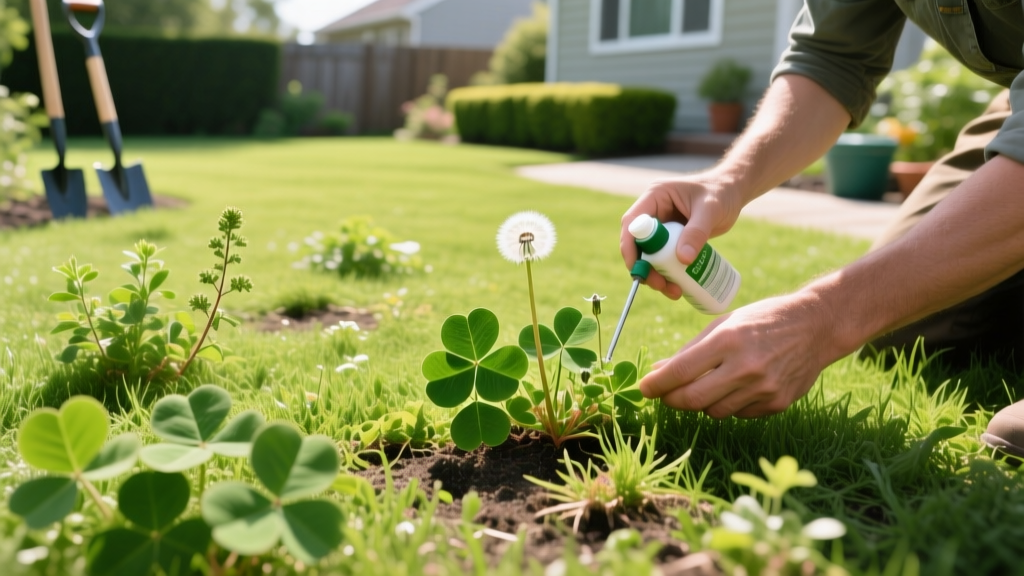
Managing Weeds in Clover as a Ground Cover: Spot-Treatment Guide
The Clover Paradigm Shift: Weed vs. Ground Cover
Transitioning to clover as a ground cover solves drought stress, eliminates synthetic nitrogen requirements, and supports local pollinators. However, it creates a unique weed management paradox. Because white clover (Trifolium repens) and microclover are broadleaf legumes, the standard selective herbicides used on traditional turfgrass—such as 2,4-D, dicamba, and MCPP—will obliterate your clover stand just as effectively as they kill dandelions.
When you establish clover as a ground cover, your weed control strategy must completely invert. Grassy weeds become your primary chemical target, while broadleaf weeds require mechanical or highly targeted non-selective interventions. According to the University of Minnesota Extension, alternative lawns like clover require distinct maintenance protocols to prevent aggressive intruders from outcompeting the legume canopy.
The Golden Rule of Clover Weed Control: Never apply a "weed and feed" or broadleaf selective herbicide to a clover lawn. Always verify the active ingredient targets monocots (grasses) or relies on non-selective contact mechanisms applied with extreme precision.
Identifying Intruders: Weeds That Invade Clover Stands
A pure clover stand is dense, but it is not immune to invasion. The following table categorizes the most common weeds that infiltrate clover ground covers and outlines their specific threat levels to the legume ecosystem.
| Weed Category | Common Species | Threat Level | Primary Control Method |
|---|---|---|---|
| Grassy Weeds | Crabgrass, Quackgrass, Bermuda | Critical - Will choke out clover stolons | Selective grass herbicides (Fluazifop) |
| Taproot Broadleaf | Dandelion, Plantain, Dock | Moderate - Competes for space and light | Mechanical extraction or targeted wicking |
| Creeping Broadleaf | Creeping Charlie, Bindweed, Thistle | Severe - Tangles in clover runners | Sponge-wicking with glyphosate |
| Winter Annuals | Henbit, Chickweed | Low - Usually outcompeted by spring clover growth | Pre-emergent (corn gluten meal) or hand-pulling |
Spot-Treatment Protocols for Clover Ground Covers
Protocol A: Eradicating Grassy Weeds (The Chemical Route)
Grassy weeds are the most dangerous threat to clover as a ground cover because they grow faster and block the sunlight clover needs to fix nitrogen. Fortunately, you can use selective grass herbicides that are completely safe for broadleaf plants.
- Select the Right Active Ingredient: Look for products containing Fluazifop-p-butyl (e.g., Ortho Grass B Gon) or Sethoxydim (e.g., Monterey Grass Out). These target the ACCase enzyme found only in grasses.
- Mixing Rates: For spot-treating, mix 0.5 to 1.0 fluid ounces of Fluazifop concentrate per gallon of water. Add a non-ionic surfactant (1 teaspoon per gallon) to ensure the herbicide sticks to the waxy grass blades.
- Application Timing: Spray when grassy weeds are young and actively growing (typically late spring when soil temperatures hit 65°F). Avoid spraying when temperatures exceed 85°F to prevent clover leaf burn from the surfactant.
- Cost Expectation: A 16 oz bottle of Fluazifop concentrate costs between $25 and $32, which is sufficient to spot-treat up to 4,000 square feet of scattered grassy weeds.
Protocol B: Managing Broadleaf Weeds (The Precision Route)
Because clover is a broadleaf, you cannot spray selective chemicals to kill a dandelion without killing the surrounding clover. You must rely on mechanical extraction or chemical wicking.
- Mechanical Extraction: For taproot weeds like dandelions, use a stand-up weeder (such as the Fiskars 39" Stand-Up Weeder, approx. $35). Ensure you extract the entire taproot; leaving even an inch of root will result in regrowth within 14 days.
- Glyphosate Wicking: For creeping broadleaf weeds like bindweed or thistle that tangle with clover runners, use a sponge-tipped wicking wand. Dip the sponge in a 2% glyphosate solution and physically wipe the weed's leaves. The clover's low, creeping growth habit allows you to wipe the taller weed leaves without touching the clover canopy.
- Organic Acid Burn-down: For small, isolated broadleaf weeds, spot-spray with a 20% horticultural vinegar solution (acetic acid). This is a contact burn-down that will damage any clover it touches, but clover recovers rapidly from its deep root reserves compared to shallow-rooted weeds.
Chemical vs. Organic Spot-Treatment Matrix
Choosing the right intervention depends on the weed type, the size of your clover ground cover, and your tolerance for synthetic chemicals. The University of California IPM program emphasizes integrating mechanical and chemical controls to maintain alternative ground covers effectively.
| Treatment Method | Active Agent / Tool | Target Weeds | Clover Safety | Avg. Cost |
|---|---|---|---|---|
| Selective Grass Killer | Fluazifop-p-butyl | Crabgrass, Fescue, Bermuda | 100% Safe | $28 / pint |
| Mechanical Pulling | Stand-up claw weeder | Dandelion, Plantain, Dock | Safe (minor soil disruption) | $30 - $45 |
| Chemical Wicking | Glyphosate (2% sol.) | Bindweed, Thistle, Mallow | Safe (if applied precisely) | $15 / quart |
| Organic Burn-down | 20% Acetic Acid | Small annual broadleaves | Moderate (will burn clover on contact) | $22 / gallon |
| Pre-emergent Organic | Corn Gluten Meal | Prevents seed germination | Safe (adds nitrogen) | $40 / 50 lbs |
Warning on Pre-emergents: Do not use synthetic pre-emergents like prodiamine if you intend to let your clover self-seed. Corn gluten meal is a natural pre-emergent that inhibits seed root formation but breaks down quickly, providing a nitrogen boost that benefits established clover.
Post-Treatment Recovery: Overseeding Bare Spots
Every time you extract a taproot weed or spot-treat a patch of crabgrass, you leave a void in the soil. If left bare, wind-blown weed seeds will colonize that exact spot within three weeks. You must immediately backfill these voids with pure clover seed.
Keep a supply of pure microclover seed (such as Pennington Smart Seed Microclover, roughly $42 per pound) on hand. After weed removal, rough up the top quarter-inch of soil in the bare spot, sprinkle 10-15 clover seeds, and lightly tamp them down. Water daily for 7 days to ensure germination before new weeds can take hold.
Frequently Asked Questions
Can I use a pre-emergent herbicide on a newly planted clover ground cover?
No. Pre-emergents do not distinguish between weed seeds and clover seeds. If you are establishing clover as a ground cover from seed, you must wait until the clover has been mowed or trimmed at least three times before applying any pre-emergent barrier. For new plantings, rely on frequent, shallow watering to keep the clover moist while allowing the topsoil to dry out slightly, discouraging shallow-rooted weed germination.
Will grass clippings from a neighboring turf lawn harm my clover?
Yes, indirectly. If a neighbor's turf was recently treated with a broadleaf herbicide like 2,4-D or dicamba, and those clippings blow into your yard, they can cause severe twisting and stunting in your clover ground cover. Maintain a physical edge barrier or politely ask neighbors to use a bagger when treating their lawns.
How short should I mow clover to prevent weeds?
Unlike turfgrass, you should not scalp clover. Set your mower deck to 3.0 or 3.5 inches. Mowing at this height allows the clover canopy to remain dense enough to shade out germinating weed seeds while preventing the clover from flowering excessively, which can attract unwanted foot traffic and soil compaction.

