
Lawn Care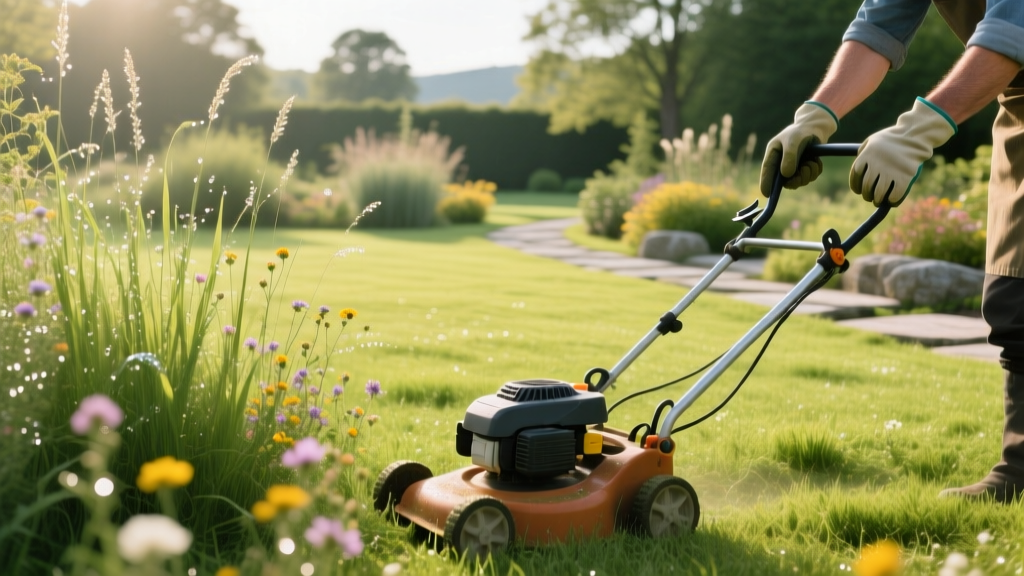
Step-by-Step Meadow Lawn Maintenance: A Seasonal Care Guide
Redefining Lawn Care: The Meadow Lawn Ecosystem
Transitioning from a traditional turfgrass monoculture to a meadow lawn fundamentally shifts your role from a 'lawn mower' to an 'ecosystem manager.' A meadow lawn—a curated landscape of native grasses, sedges, and wildflowers—reduces water usage by up to 80% and eliminates the need for synthetic fertilizers. However, the misconception that meadow lawns require 'zero maintenance' leads to rampant weed takeover and ecological failure. According to Penn State Extension, the first three years of a meadow lawn require active, strategic intervention to ensure deep-rooted natives outcompete aggressive annual weeds.
This guide details the exact, step-by-step maintenance procedures required to keep a meadow lawn thriving, structured around the biological rhythms of native flora.
The Meadow Lawn Maintenance Calendar
Unlike traditional turf that demands weekly mowing from April to October, meadow lawn maintenance is episodic. Below is the operational framework for a mature meadow lawn (Year 3 and beyond).
| Season | Primary Action | Target Outcome | Required Tools |
|---|---|---|---|
| Early Spring | Invasive cool-season grass culling | Prevent rhizomatous spread of quackgrass | Fiskars stand-up weeder, targeted herbicide |
| Late Spring | Pathway and perimeter mowing | Aesthetic framing, tick habitat reduction | Standard rotary mower (set to 3 inches) |
| Summer | Spot-weeding and monitoring | Identify and remove woody invaders | Hori-hori knife, pruning saw |
| Late Fall | The Annual Cut and biomass removal | Seed stratification, prevent soil enrichment | Brush cutter, heavy-duty leaf rake, tarps |
Spring Procedures: Weed Control and Perimeter Management
Culling Invasive Cool-Season Grasses
The greatest threat to a meadow lawn in spring is cool-season invasive grasses, specifically smooth bromegrass (Bromus inermis) and quackgrass (Elymus repens). These grasses break dormancy weeks before your native warm-season meadow grasses (like Little Bluestem or Switchgrass). If left unchecked, they will shade out emerging native seedlings.
Warning: Avoid Pre-Emergent Herbicides
Never apply standard lawn pre-emergents (like prodiamine or dithiopyr) to a meadow lawn. These chemicals will inhibit the germination of native wildflowers and grasses that naturally self-seed in the spring to fill in bare patches. Instead, rely on manual extraction or highly targeted spot-treatments using a wick applicator with glyphosate on non-native grasses only.
Establishing the 'Mowed Frame'
Public perception of meadow lawns often hinges on visual cues of intentionality. To prevent neighbors or municipal code enforcement from mistaking your meadow for an overgrown, neglected yard, maintain a 3-to-5-foot mowed perimeter strip around the property lines, sidewalks, and driveways. Use a standard rotary mower set to 3 inches for these borders. This 'mowed frame' signals deliberate landscape design while the interior meadow grows freely.
Summer Management: Drought Tolerance and Pathway Mowing
The 'No-Water' Rule
Once a meadow lawn is established (typically by Year 2), supplemental watering is counterproductive. Native prairie plants develop root systems extending 6 to 15 feet deep. Watering the surface encourages shallow-rooted weed competition and promotes fungal pathogens like powdery mildew on wildflower foliage. Allow the meadow to rely entirely on natural precipitation.
Pathway Mowing for Access and Pest Control
Tall, dense meadow grasses in mid-summer create ideal microclimates for ticks and rodents. To mitigate this, mow internal pathways through the meadow in late June and early August. Set a heavy-duty walk-behind mower or a commercial zero-turn to its highest deck setting (minimum 4.5 inches). This crushes the lower stems without killing the native grasses, maintaining clear walkways while preserving the upper canopy for pollinators.
Late Fall: The Annual Cut and Biomass Removal
The single most critical maintenance event for a meadow lawn is the annual cut. In nature, grazing animals or winter fires clear dead plant material. In a residential setting, you must replicate this process to prevent the buildup of thatch, which will eventually choke out your wildflowers.
Step-by-Step Annual Cut Procedure
- Timing: Wait until late November or early December, after several hard freezes. This ensures native pollinators (like solitary bees overwintering in hollow stems) have entered dormancy, and birds have finished foraging for late-season seeds.
- Tool Selection: For areas under 1/4 acre, a European-style scythe with an Austrian blade is highly efficient and quiet. For larger areas, use a commercial brush cutter (e.g., Stihl FS 91 R) equipped with a metal clearing blade, not a nylon string head, which will tangle in tough native stalks.
- Cut Height: Cut all vegetation down to a height of 4 to 6 inches. Leaving this stubble provides essential winter cover for beneficial insects and protects the soil from erosion.
- Biomass Removal: Do not leave the cut vegetation on the lawn. As it decays, it will return nitrogen and organic matter to the soil. Meadows thrive in nutrient-poor soils; enriching the soil will cause aggressive, weedy species to outcompete your slow-growing native wildflowers. Rake the material onto tarps and compost it off-site or use it as mulch in non-meadow garden beds.
Cost Analysis: Meadow Lawn vs. Traditional Turf
While the initial installation of a meadow lawn (site preparation, native seed mixes at $150-$300 per 1,000 sq ft) is higher than laying sod, the long-term maintenance costs drop dramatically. The University of Minnesota Extension notes that lawn alternatives significantly reduce annual labor and input costs. Below is a comparative breakdown for a standard 5,000 sq. ft. yard.
| Annual Expense Category | Traditional Turf Lawn | Mature Meadow Lawn |
|---|---|---|
| Mowing (Fuel/Labor/Service) | $600 - $1,200 | $0 - $150 (Perimeter only) |
| Fertilizer & Soil Amendments | $150 - $300 | $0 |
| Irrigation (Water Bills) | $200 - $500 | $0 |
| Herbicides & Pest Control | $100 - $250 | $30 (Spot treatment only) |
| Aeration & Dethatching | $100 - $200 | $0 |
| Total Annual Maintenance | $1,150 - $2,450 | $30 - $180 |
Frequently Asked Questions
Can I convert an existing lawn to a meadow without tilling?
Yes, through a process called 'solarization' or 'smothering.' Cover the existing turf with overlapping layers of thick, uncoated cardboard and top it with 3-4 inches of low-nitrogen compost or arborist wood chips. Leave this in place for an entire growing season (6-8 months). Tilling is discouraged because it brings dormant weed seeds to the surface, guaranteeing a massive weed flush when you plant your meadow seeds.
How do I handle municipal weed ordinances with a meadow lawn?
Many municipalities have outdated ordinances mandating turfgrass under 8 inches tall. To comply while maintaining your meadow, utilize the 'mowed frame' technique mentioned in the spring procedures. Additionally, register your yard as a certified wildlife habitat or pollinator sanctuary through local conservation districts, which often provides legal exemptions or 'yard sign' protections against neighbor complaints.
When should I overseed a meadow lawn?
Overseeding is best done immediately after the late fall annual cut, while the ground is still workable but cold. This allows the seeds to undergo natural 'cold stratification' over the winter, which breaks seed dormancy for species like Purple Coneflower (Echinacea purpurea) and Wild Bergamot (Monarda fistulosa). Broadcast seeds at a rate of 1 to 2 lbs per 1,000 sq ft, and rely on the natural freeze-thaw cycles of winter to work the seeds into the soil.

