
Lawn Care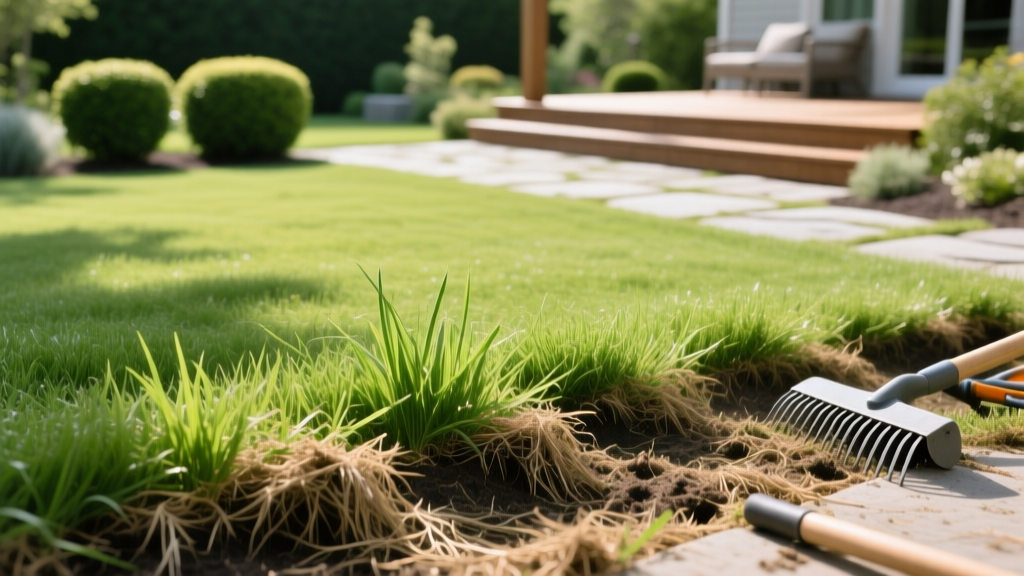
Meaning of Thatching in Lawns: Identification and Management Guide
Decoding the Meaning of Thatching in Turfgrass Science
When homeowners search for the meaning of thatching, they frequently encounter linguistic confusion. In architecture, thatching refers to building roofs with dry vegetation. In turfgrass science, however, the term bifurcates into two distinct concepts: the noun thatch (the physical organic layer) and the verb thatching or dethatching (the mechanical or biological process of removing that layer). Understanding this distinction is the first step toward diagnosing and treating a suffocated lawn.
Thatch is a tightly intermingled layer of living and dead organic matter—primarily stems, stolons, rhizomes, and roots—that accumulates between the zone of green vegetation and the undecomposed mineral soil surface. While a thin layer acts as an insulating mulch, excessive thatching blocks water infiltration, harbors fungal pathogens like Rhizoctonia solani (brown patch), and creates a spongy surface that prevents fertilizer from reaching the root zone.
Myth vs. Fact: The Grass Clipping Fallacy
Myth: Leaving grass clippings on the lawn causes thatch buildup.
Fact: Grass clippings are composed of 85% water and highly degradable cellulose. They decompose within weeks. True thatch is composed of lignin-rich tissues (crowns, stolons, and rhizomes) which are highly resistant to microbial breakdown and take months or years to decompose.
The Biological Mechanics: Why Thatch Accumulates
Thatching occurs when the rate of organic matter production exceeds the rate of decomposition by soil microorganisms. This imbalance is rarely an accident; it is usually driven by specific cultural and environmental triggers.
- Excessive Synthetic Nitrogen: Heavy applications of quick-release synthetic fertilizers (like Urea 46-0-0) force rapid top-growth and stolon production. The sheer volume of lignin-rich tissue overwhelms the local microbe population.
- Acidic Soil pH: Thatch-degrading bacteria and fungi thrive in a pH range of 6.2 to 6.8. When soil pH drops below 5.5, microbial activity plummets, halting the decomposition process entirely.
- Soil Compaction: Compacted soils lack the oxygen necessary for aerobic microbes to break down organic matter. Furthermore, compaction forces grass roots to grow laterally within the thatch layer rather than penetrating the mineral soil, exacerbating the problem.
- Pesticide Overuse: Broad-spectrum fungicides and certain insecticides can inadvertently sterilize the topsoil, killing the very earthworms and fungi responsible for natural thatch breakdown.
How to Identify and Measure Thatch Depth
You cannot manage what you do not measure. Visual inspection of the lawn surface is insufficient; you must perform a physical cross-section analysis. According to Penn State Extension, the threshold for intervention is strictly tied to the physical depth of the layer.
The Spade Plug Test: Step-by-Step
- Water the lawn lightly 24 hours before testing to soften the soil profile.
- Using a sharp, flat-edged spade, cut a triangular or cylindrical plug of turf at least 3 inches deep. Extract the plug carefully to keep the layers intact.
- Identify the green crown tissue, the brown spongy thatch layer, and the dark mineral topsoil.
- Use a standard tape measure to measure only the brown, spongy layer. Do not include the green grass blades or the dark soil in your measurement.
Thatch Depth Action Matrix
| Measured Depth | Lawn Status | Required Action | Estimated Cost (per 1,000 sq ft) |
|---|---|---|---|
| < 1/2 Inch | Optimal / Healthy | Maintain current mowing and fertilization practices. No intervention needed. | $0 |
| 1/2 to 3/4 Inch | Warning Zone | Apply liquid biological dethatchers; perform core aeration to introduce soil microbes to the thatch layer. | $15 - $45 |
| > 3/4 Inch | Critical / Suffocated | Mechanical power raking or verticutting is mandatory. Biological methods are too slow at this depth. | $85 - $140 (Equipment Rental) |
Mechanical vs. Biological Dethatching: A Decision Framework
Once you have determined that your lawn has crossed the 1/2-inch threshold, you must select a remediation strategy. Modern turf management offers both aggressive mechanical and passive biological routes. As noted by University of Minnesota Extension, the choice depends heavily on the severity of the buildup and the grass species.
Biological Dethatching
How it works: Liquid formulations containing saprophytic bacteria and enzymes (e.g., N-Ext D-Thatch) are sprayed onto the lawn. These microbes digest lignin and cellulose, converting thatch into usable humus.
Best for: Thatch between 1/2" and 3/4"; lawns prone to stress; warm-season grasses sensitive to scalping.
Drawback: Takes 4 to 8 weeks to see results; requires soil temperatures above 60°F for microbial activation.
Mechanical Power Raking
How it works: A gas-powered machine with vertically spinning flail blades physically rips the thatch layer out of the turf canopy and deposits it on the surface for raking and disposal.
Best for: Thatch exceeding 3/4"; severe compaction issues; immediate remediation before overseeding.
Drawback: Highly stressful to the turf; can tear out healthy rhizomes; requires extensive cleanup and disposal of debris.
Seasonal Timing: When to Dethatch by Grass Type
Executing a dethatching procedure at the wrong time of year can devastate a lawn, leaving it vulnerable to weed invasion and drought stress. Timing must align with the grass's peak growth cycle to ensure rapid recovery.
Cool-Season Grasses (Kentucky Bluegrass, Tall Fescue, Perennial Ryegrass)
Optimal Window: Late August to early September.
Soil Temperature Target: Dropping from 75°F down to 65°F.
Rationale: Fall provides cool air temperatures and warm soil, triggering aggressive root and rhizome growth. Dethatching in spring is strongly discouraged for cool-season grasses, as the impending summer heat will stress the recovering turf and invite crabgrass germination in the exposed soil.
Warm-Season Grasses (Bermuda, Zoysia, St. Augustine, Centipede)
Optimal Window: Late May to early June.
Soil Temperature Target: Consistently above 70°F.
Rationale: Warm-season grasses must be fully out of dormancy and actively growing before mechanical stress is applied. Dethatching too early in the spring (when soil is still cool) can result in severe stunting and allow opportunistic weeds to colonize the bare spots before the turf canopy closes.
Frequently Asked Questions
Does core aeration remove thatch?
Core aeration does not physically remove thatch from the lawn. Instead, it extracts plugs of mineral soil and deposits them on top of the thatch layer. As these soil cores break down over 2 to 3 weeks, they introduce thatch-degrading microbes directly into the organic layer, accelerating natural decomposition. It is a preventative and mild-corrective measure, not a removal tool for severe buildup.
Can I use a manual thatch rake for my whole lawn?
Manual thatch rakes (equipped with curved, C-shaped tines) are effective only for small patch repairs or lawns under 500 square feet. For a standard 5,000-square-foot suburban lawn, using a manual rake is physically prohibitive and often fails to penetrate deeply enough to remove the basal thatch layer. Renting a mechanical power rake or hiring a professional landscaping crew is the standard protocol for full-yard remediation.
Summary: The Path Forward
Understanding the meaning of thatching transitions you from reactive lawn care to proactive turf management. Test your soil depth annually using the spade plug method. If your thatch exceeds 1/2 inch, correct your soil pH to the 6.2–6.8 range, reduce quick-release nitrogen applications, and deploy biological or mechanical dethatching during your grass species' peak seasonal growth window.

