
Lawn Care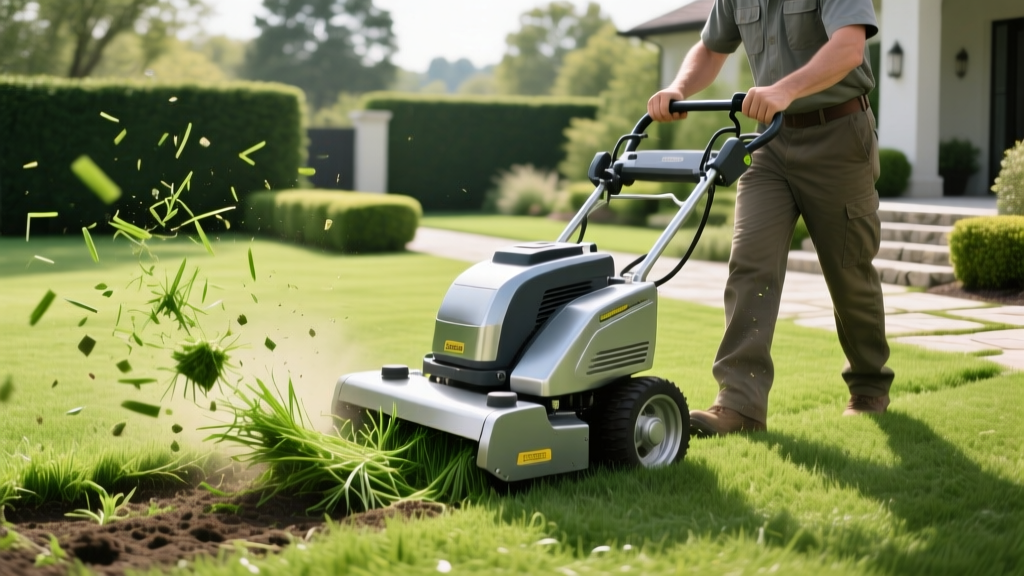
Using a Grass Removal Machine to Eradicate Invasive Lawn Weeds
The Limits of Chemical Weed Control on Rhizomatous Grasses
When aggressive grasses like Bermudagrass (Cynodon dactylon), Quackgrass (Elymus repens), or Torpedograss invade ornamental beds or desirable cool-season lawns, they transition from turf to invasive weeds. Homeowners often default to systemic herbicides like glyphosate or fluazifop, but chemical playbooks frequently fail against these species. According to the University of California Agriculture and Natural Resources (UC ANR), Bermudagrass rhizomes can penetrate soil up to 6 to 8 inches deep, storing massive carbohydrate reserves that allow the plant to survive multiple chemical applications.
When chemical eradication stalls, mechanical extraction becomes the necessary intervention. Using a dedicated grass removal machine—specifically a walk-behind sod cutter or a turf stripper—physically severs the primary rhizome network, removing the biological engine of the weed. This playbook details the exact machinery, operational parameters, and post-extraction protocols required to permanently clear invasive grasses from your landscape.
Choosing the Right Grass Removal Machine
Not all turf-removal equipment is suited for weed eradication. Standard lawn mowers or dethatchers only remove surface stolons, leaving the deep rhizomes intact. For true eradication, you must slice below the primary root crown. Below is a comparison matrix of the three primary machines used in professional weed-removal playbooks.
| Machine Type | Primary Use Case | Cut Depth Capability | Avg. Daily Rental (2026) | Eradication Efficacy |
|---|---|---|---|---|
| Walk-Behind Sod Cutter | Removing top 2-3 inches of turf and shallow rhizomes in flat, open areas. | Up to 3.0 inches | $110 - $160 | High (Requires follow-up for deep rhizomes) |
| Tractor-Mounted Turf Stripper | Large-scale commercial removal; rolls turf into continuous sheets. | Up to 4.0 inches | $250 - $350 | Very High (Extracts deeper root mats) |
| Skid-Steer Harley Rake (Power Box Rake) | Pulverizing soil and sifting out rhizome fragments after initial cutting. | N/A (Surface tilling) | $180 - $220 | Moderate (Risk of spreading fragments if not sifted) |
Expert Selection Tip: For residential lawn renovation or clearing invaded garden beds, the walk-behind sod cutter (e.g., Ryan Classen or Billy Goat SC182 models) is the optimal grass removal machine. It offers the precision needed to navigate tight spaces while achieving the 2.5-inch depth required to sever the upper rhizome layer of most invasive grasses.
The Mechanical Extraction Playbook: Step-by-Step
Operating a grass removal machine requires precise soil preparation and blade calibration. Skipping these steps will result in machine stalling, blade damage, or incomplete rhizome extraction.
- Hydrate the Soil Profile (48 Hours Prior): Water the target area to deliver exactly 1 inch of moisture. The soil must be friable—moist but not muddy. If the soil is too dry, the sod cutter blade will chatter and bounce over compacted rhizomes. If too wet, the machine's drive wheels will slip, and the extracted turf will tear.
- Calibrate Blade Depth and Pitch: Set the sod cutter blade to 2.5 inches. Adjust the blade pitch slightly downward (aggressive angle) for dense Quackgrass, or neutral for softer Bermudagrass. Engage the blade in a hidden test patch to verify it slices cleanly beneath the thatch layer.
- Execute a Grid-Cut Pattern: Run the machine in parallel strips, overlapping each pass by 1 inch. Do not attempt to turn the machine while the blade is engaged in the soil; this will tear the drive belt and leave uncut islands of weeds.
- Roll and Extract: As the machine cuts, the invasive grass will form continuous ribbons. Roll these ribbons immediately. Do not leave them on the soil overnight, as exposed rhizomes can re-root if a sudden rainstorm occurs.
CRITICAL WARNING: Rhizome Fragmentation
Never use a rotary tiller to break up the remaining soil after using a grass removal machine. Tilling invasive grasses chops their rhizomes into hundreds of 1-inch fragments. According to Penn State Extension, a single Quackgrass rhizome fragment as small as 0.5 inches can generate a new, fully viable plant. Always extract, never till.
Never use a rotary tiller to break up the remaining soil after using a grass removal machine. Tilling invasive grasses chops their rhizomes into hundreds of 1-inch fragments. According to Penn State Extension, a single Quackgrass rhizome fragment as small as 0.5 inches can generate a new, fully viable plant. Always extract, never till.
Post-Extraction Soil Protocol
Mechanical removal extracts roughly 85% to 90% of the rhizome mass. The remaining 10% consists of deep vertical roots that snap off below the 2.5-inch blade depth. To achieve total eradication, you must implement a post-extraction protocol.
Option A: Solarization (Chemical-Free)
If you are removing grass in mid-summer (June through August), cover the bare soil with 2-mil clear polyethylene plastic. Anchor the edges with soil. The trapped solar radiation will raise soil temperatures to 120°F–140°F at a 2-inch depth, cooking the remaining rhizome fragments over 4 to 6 weeks.
Option B: Targeted Spot-Treatment
If removing grass in spring or fall, wait 14 days after mechanical extraction. The remaining deep rhizomes will push up new, pale-green shoots. Once these shoots reach 2 inches in height, apply a targeted spot-spray of a 2% glyphosate solution. Because the plant's energy reserves were severely depleted by the mechanical removal, this single, low-volume application will translocate to the remaining roots and cause total systemic collapse.
Cost Analysis: 2026 Rental vs. Professional Service
Deciding whether to rent a grass removal machine or hire a landscape contractor depends on the square footage and accessibility of the weed infestation.
- DIY Rental (Up to 2,000 sq ft): Expect to pay $135 for a 4-hour sod cutter rental, plus $40 for a heavy-duty equipment trailer hitch if your vehicle requires it. Include $60 for disposal fees at your local green waste facility. Total DIY cost: ~$235.
- Professional Eradication Service: Landscape contractors typically charge $0.45 to $0.85 per square foot for mechanical turf stripping and hauling. For a 2,000 sq ft area, professional service will cost between $900 and $1,700. This is recommended if the terrain has a slope greater than 15%, as walk-behind sod cutters become highly dangerous on steep inclines.
Frequently Asked Questions
Can I use a grass removal machine on rocky soil?
No. Sod cutters and turf strippers require relatively clear soil. Subsurface rocks larger than 2 inches in diameter will dull the carbide blade instantly or snap the drive belt. If your soil is heavily compacted with construction debris, you must manually probe the area with a soil probe or use a heavy-duty rock rake before deploying the machine.
Will a sod cutter remove deep taproot weeds like dandelions?
A sod cutter will slice off the top 2.5 inches of a dandelion's taproot, but the lower portion will remain and regenerate. Grass removal machines are specifically engineered for lateral, rhizomatous, and stoloniferous grassy weeds. For deep taproot broadleaf weeds, manual extraction tools like the Grandpa's Weeder or targeted broadleaf herbicides remain the superior playbook.
How do I maintain the blade on a rented sod cutter?
Rental yards typically provide freshly sharpened blades, but if you notice the machine chattering or leaving uncut strips, the blade is dull. You can remove the blade (using a 9/16-inch wrench on most Billy Goat models) and sharpen it with an angle grinder. Maintain the original factory bevel, and always disconnect the spark plug wire before performing any blade maintenance.

