
Lawn Care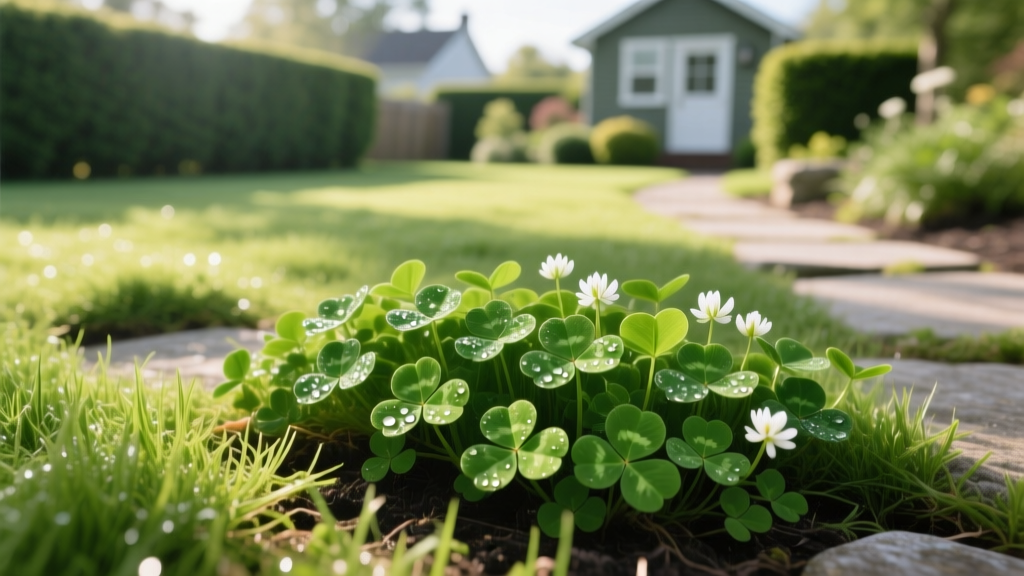
Micro Clover Ground Cover: Spot-Treatment Guide for Turfgrass
The Ecological Conflict: Eco-Lawn vs. Traditional Turf
Micro clover (Trifolium repens miniature cultivars like 'Pirouette' and 'Rivendell') is heavily marketed in 2026 as a drought-tolerant, nitrogen-fixing eco-lawn alternative. When intentionally planted, it provides a lush, low-maintenance carpet that reduces fertilizer needs by up to 60%. However, when its aggressive stolons breach the borders of a traditional Kentucky Bluegrass, Perennial Ryegrass, or Tall Fescue lawn, it transitions from a sustainable ground cover to a highly competitive weed. Unlike standard white clover, micro clover grows denser, roots at every stolon node, and tolerates lower mowing heights, making it exceptionally difficult to eradicate without damaging the surrounding desirable turf.
This guide provides a technical, spot-treatment framework for eliminating micro clover invasions in traditional turfgrass lawns, focusing on precise chemical selection, surfactant chemistry, and application protocols that standard consumer guides often overlook.
Botanical Identification: Micro Clover vs. Standard White Clover
Before mixing any herbicide, accurate identification is mandatory. Misidentifying micro clover as standard white clover or Oxalis (wood sorrel) leads to incorrect active ingredient selection and treatment failure. Micro clover has been selectively bred for reduced leaf size and fewer flowers, altering its visual profile in a mixed turf canopy.
| Feature | Micro Clover (T. repens var.) | Standard White Clover | Oxalis (Wood Sorrel) |
|---|---|---|---|
| Leaflet Size | 0.25' - 0.5' (Very small) | 0.75' - 1.5' (Standard) | 0.4' - 0.8' (Heart-shaped) |
| Growth Habit | Dense, low, mat-forming stolons | Aggressive, thick, arching stolons | Upright, fibrous taproots |
| Flowering | Rare (if mowed below 3') | Frequent white/pink globes | Yellow, 5-petal flowers |
| Cuticle Texture | Highly waxy, water-repellent | Moderately waxy | Smooth, minimal wax |
According to weed management data from University of Minnesota Extension, the dense stolon network of clover species allows them to rapidly monopolize soil surface area, shading out turfgrass seedlings and restricting lateral turf spread.
The Chemistry of Resistance: Why Standard 3-Way Herbicides Fail
The most common mistake homeowners make is applying standard '3-way' broadleaf herbicides (typically a mix of 2,4-D amine, MCPP, and Dicamba) to micro clover. While these formulations will cause the clover leaves to cup, twist, and yellow, they rarely achieve complete root and stolon kill.
The Cuticle Barrier
Micro clover possesses a dense, waxy epicuticular layer on its trifoliate leaves. Standard amine-based 2,4-D formulations are highly polar (water-soluble) and bead up on this waxy surface, resulting in poor foliar absorption. Furthermore, micro clover's stolon nodes contain high concentrations of stored carbohydrates. If the herbicide does not translocate fully down to these nodes, the plant will simply regenerate new shoots 14 to 21 days after the initial application.
The Chemical Arsenal: Active Ingredients & Product Picks
To achieve systemic kill, you must utilize active ingredients formulated as esters rather than amines, or incorporate specific synthetic auxins that excel at stolon translocation. Below are the three most effective chemical pathways for spot-treating micro clover in 2026.
1. Triclopyr (Ester Formulation)
Triclopyr is the gold standard for leguminous weeds. The ester formulation easily penetrates the waxy clover cuticle and translocates rapidly to the stolon roots.
Recommended Product: Hi-Yield Triclopyr Ester (8 oz concentrate, approx. $24.99).
Mix Rate: 1.5 fluid ounces per gallon of water per 1,000 sq ft.
2. Quinclorac
While primarily known for crabgrass control, Quinclorac is highly effective against clover species when used in combination with other auxins. It disrupts cell wall formation and induces toxic ethylene production within the clover.
Recommended Product: BioAdvanced All-in-One Lawn Weed and Crabgrass Killer (Contains 2,4-D, Quinclorac, Dicamba).
Mix Rate: 3.2 fluid ounces per gallon (follow label exactly for spot treatments).
3. Fluroxypyr (Professional Grade)
For severe infestations where triclopyr has failed, Fluroxypyr offers superior translocation in cool weather.
Recommended Product: Spotlight Herbicide (Requires commercial applicator license in most states, approx. $85.00 per pint).
Precision Spot-Treatment Protocol
Spot-treating requires strict adherence to mixing and application parameters to prevent turf phytotoxicity (chemical burn to the desirable grass). Follow this exact sequence for optimal results.
- Calibrate the Sprayer: Use a 1-gallon or 2-gallon pump sprayer dedicated solely to herbicide. Ensure the nozzle is adjusted to a coarse, low-pressure fan spray to minimize drift.
- Add the Surfactant (Mandatory): Because of the waxy cuticle, a Non-Ionic Surfactant (NIS) or Methylated Seed Oil (MSO) is non-negotiable. Add 0.25% v/v of surfactant (approximately 1 teaspoon per gallon of water) before adding the herbicide to ensure proper emulsification.
- Mix the Herbicide: Add the measured Triclopyr or Quinclorac concentrate. Agitate the tank thoroughly.
- Timing and Temperature: Apply only when daytime temperatures are between 60°F and 82°F. Applications above 85°F increase the risk of vapor drift, which can damage nearby ornamental shrubs and garden beds.
- Application Technique: Spray the micro clover patches until the leaves are uniformly wet but not dripping. For patches less than 6 inches in diameter, use a foam paintbrush to physically paint the herbicide onto the clover leaves, guaranteeing zero overspray on the turf.
- Post-Application Care: Do not mow the lawn for 48 hours before or 48 hours after application. Do not irrigate for at least 24 hours to allow maximum foliar absorption.
Warning: Surfactant Burn
While surfactants are required for clover penetration, exceeding the 0.25% v/v rate will strip the waxy cuticle off your desirable Kentucky Bluegrass or Fescue, causing severe chemical burn. Always measure surfactant with a graduated cylinder or precise syringe, never by 'glugging' it into the tank.
Organic and Non-Selective Alternatives
For homeowners managing an organic lawn or those dealing with micro clover in garden beds where selective turf herbicides cannot be used, alternative protocols are required.
Iron-Based Herbicides (FeHEDTA)
Chelated iron (FeHEDTA) exploits the physiological difference between broadleaf weeds and monocot grasses. Broadleaves absorb the iron to toxic levels, causing rapid tissue desiccation, while grasses naturally regulate iron uptake.
Product: Fiesta Turf Herbicide (approx. $48.00 per gallon).
Protocol: FeHEDTA is a contact burner with poor systemic translocation. You must apply it at the maximum label rate (3.3 fl oz per gallon) and repeat the application exactly 21 days later to kill the regenerating stolon nodes. Expect a temporary blackening of the clover foliage within 4 hours of application.
Thermal and Mechanical Control
For isolated patches in hardscape cracks or garden borders, thermal weeders (propane torches) delivering 150,000 BTUs will instantly boil the water inside the clover's cellular structure. However, thermal treatment does not destroy the deep taproot, meaning retreatment is necessary every 3 weeks during the growing season. Hand-pulling is only effective if the soil is heavily saturated; pulling dry soil will snap the stolons, leaving the nodes intact to resprout.
Post-Treatment Turf Recovery
Eradicating the micro clover leaves bare voids in the turf canopy. According to NC State University TurfFiles, leaving these voids exposed invites secondary weed invasions, particularly from Prostrate Spurge or Crabgrass.
Within 7 days of the clover showing complete necrosis (browning and collapsing), lightly rake the dead stolon mat to expose the soil surface. Overseed the bare spots with a turf-type tall fescue or Kentucky bluegrass blend matching your existing lawn. Apply a starter fertilizer (e.g., 18-24-12) at a rate of 1 lb of nitrogen per 1,000 sq ft to accelerate turf fill-in. The ultimate defense against micro clover reinvasion is a dense, aggressively growing turf canopy maintained at a mowing height of 3.0 to 3.5 inches, which shades the soil and prevents clover seeds from germinating.
For further reading on long-term cultural practices to suppress broadleaf weeds, consult the Penn State Extension weed management archives, which detail how soil compaction and low nitrogen levels inherently favor leguminous weed encroachment.

