
Lawn Care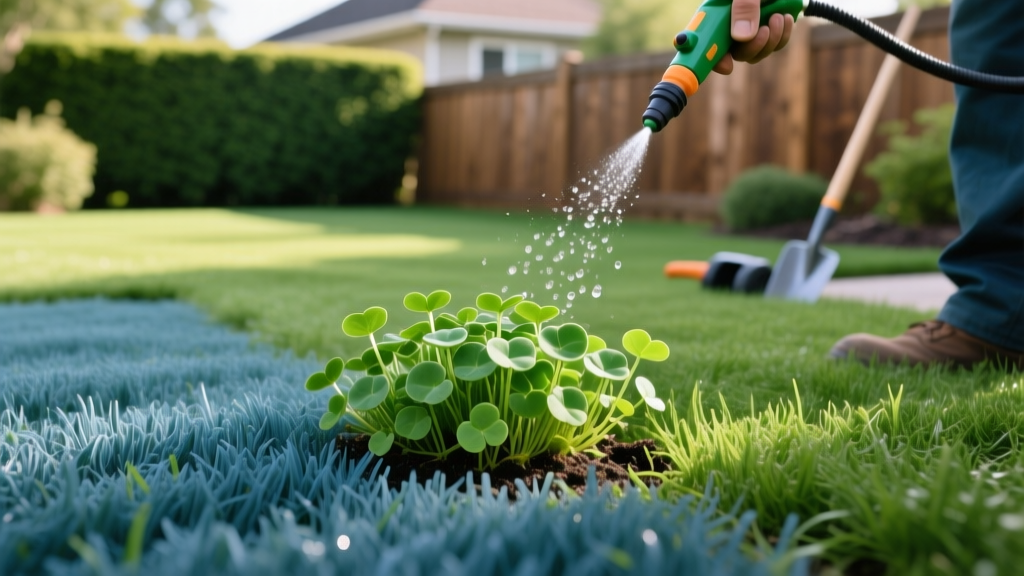
How to Spot-Treat Microclover Weeds in Traditional Turf Lawns
The Dual Nature of Microclover in Turfgrass
Microclover (Trifolium repens cultivars such as 'Pirouette' and 'Nano') occupies a unique and often controversial space in modern lawn care. While heavily marketed by eco-landscapers as a sustainable, nitrogen-fixing lawn alternative, it is classified as a highly aggressive broadleaf weed in the context of a traditional, pure turfgrass lawn. If you are maintaining a pristine Kentucky bluegrass, tall fescue, or bermudagrass stand, microclover's creeping stolons and dense mat-forming habit will rapidly outcompete your turf, especially in low-nitrogen soils.
Unlike standard white clover, microclover is specifically bred for a lower growth habit and smaller leaf structure, allowing it to survive beneath the cutting deck of a standard rotary mower. This makes it incredibly difficult to eradicate through mowing alone. According to turfgrass researchers at the University of Maryland Extension, microclover's ability to fix atmospheric nitrogen gives it a distinct competitive advantage in nutrient-poor soils, allowing it to thrive even when surrounding turfgrass starves. To reclaim your lawn, you must employ precise, targeted spot-treatments rather than broadcast applications that waste herbicide and stress desirable turf.
Identifying Microclover vs. Standard White Clover
Before selecting a chemical or organic control method, accurate identification is critical. Misidentifying microclover as standard white clover or oxalis can lead to ineffective herbicide selection. Microclover features distinct morphological traits that separate it from its larger cousins.
| Characteristic | Microclover (T. repens var. Nano/Pirouette) | Standard White Clover (T. repens) |
|---|---|---|
| Leaflet Size | 1/3 to 1/2 the size of standard clover (approx. 0.5 inches) | Large, broad leaflets (1 to 1.5 inches) |
| Flower Production | Very sparse; rarely produces prominent white blooms | Prolific white/pinkish globe-shaped flowers |
| Growth Habit | Dense, low-growing mat (2-4 inches tall) | Upright, sprawling, often grows 6-8 inches tall |
| Stolon Thickness | Fine, wiry, and highly branched | Thick, fleshy, and easily pulled |
| Mowing Tolerance | Survives easily at 2-inch mowing heights | Often scalped or stressed by low mowing |
Chemical Spot-Treatment Protocols
Standard 2,4-D amine herbicides, which work well on dandelions and plantains, frequently fail against mature microclover. The waxy cuticle on clover leaves repels water-based sprays, and the plant's extensive stolon network allows it to regenerate from untreated nodes. For effective chemical spot-treatment, you must use a systemic herbicide containing Triclopyr or a specialized three-way mix containing Dicamba, MCPP, and 2,4-D.
Formulating the Triclopyr Mix
Triclopyr (available in consumer products like Ortho WeedClear for Lawns or professional formulations like Turflon Ester Ultra) is highly effective on leguminous weeds. When mixing a spot-treatment solution in a 2-gallon pump sprayer, precision is vital to avoid turf phytotoxicity.
- Herbicide Rate: Mix 1.5 fluid ounces of Triclopyr ester per 1 gallon of water.
- Surfactant Requirement: This is non-negotiable. You must add a non-ionic surfactant (NIS) or methylated seed oil (MSO) at a rate of 0.25% v/v (approximately 1/4 teaspoon per gallon). The surfactant breaks the surface tension of the water, allowing the active ingredient to penetrate the clover's waxy cuticle.
- Application Technique: Use a shielded sprayer nozzle or a cardboard baffle to prevent drift onto desirable broadleaf plants or sensitive turf species like centipedegrass.
Warning: Temperature Restrictions
Do not apply Triclopyr or Dicamba-based products when daytime air temperatures exceed 85°F. High temperatures cause these herbicides to volatilize (turn into a gas), which can drift and severely damage nearby ornamental shrubs, trees, and garden beds.
Do not apply Triclopyr or Dicamba-based products when daytime air temperatures exceed 85°F. High temperatures cause these herbicides to volatilize (turn into a gas), which can drift and severely damage nearby ornamental shrubs, trees, and garden beds.
Organic Spot-Control: Chelated Iron (FeHEDTA)
For homeowners managing organic lawns or those who wish to avoid synthetic auxin herbicides, Iron HEDTA (FeHEDTA) is the most effective spot-treatment available. Products like Fiesta Turf Weed Killer utilize chelated iron to induce acute iron toxicity in broadleaf weeds. While grasses can safely absorb and store excess iron, broadleaves like microclover lack this metabolic pathway, causing rapid cellular necrosis and desiccation within hours of application.
Because FeHEDTA is a contact herbicide with limited systemic translocation, it will burn off the top growth of the microclover but may not kill the deep stolon nodes. Therefore, organic control requires a strict two-application protocol. Apply the liquid iron to the point of runoff on a cool, overcast morning. Wait 14 days for the initial foliage to blacken and die back, then apply a second treatment to target the newly emerging shoots from the surviving stolons.
Post-Treatment Turf Recovery and Prevention
Eradicating the weed is only half the battle. Microclover thrives in compacted, low-nitrogen soils. If you kill the clover but do not alter the underlying soil ecology, new seeds will germinate immediately. The University of Minnesota Extension emphasizes that clovers are indicator species for nitrogen deficiency.
- Rake and Dethatch: Once the treated microclover turns brown and brittle (usually 7-10 days post-spray), use a stiff thatching rake to aggressively pull out the dead stolon mats. This opens the soil surface for new seed.
- Core Aeration: If the infested area was heavily compacted, run a core aerator over the bare spots to relieve soil tension and improve water infiltration.
- Overseed and Fertilize: Overseed the bare patches with a turf-type tall fescue or Kentucky bluegrass blend matching your existing lawn. Immediately apply a starter fertilizer high in phosphorus (e.g., 10-18-10) to promote rapid root establishment. A dense, well-fed turf canopy is the ultimate biological barrier against future clover invasion.
Microclover is a symptom of a starving lawn. By spot-treating the weed and simultaneously feeding the turfgrass, you shift the competitive advantage permanently back to your desirable grass species.
Frequently Asked Questions
Will vinegar kill microclover?
Household white vinegar (5% acetic acid) and even horticultural vinegar (20-30% acetic acid) will burn the foliage of microclover, but they are strictly contact burn-down agents. They will not translocate through the stolon network, meaning the microclover will vigorously resprout from the roots within a week. Furthermore, horticultural vinegar is highly caustic, lowers soil pH drastically, and poses severe eye and skin hazards, making it a poor choice for targeted lawn care.
Can I just dig out microclover by hand?
Hand-pulling is generally ineffective for microclover due to its fine, highly branched stolon system. When you pull the main taproot, the brittle stolons snap, leaving dozens of nodes buried in the soil. Each of these nodes will generate a new plant. Hand-weeding is only viable for isolated, single-plant seedlings that have not yet established a stolon network.
How long does it take for Triclopyr to kill microclover?
Triclopyr is a systemic herbicide, meaning it moves slowly through the plant's vascular system. You will typically see leaf curling and epinasty (twisted growth) within 48 to 72 hours. Complete browning and death of the stolon network usually takes 14 to 21 days, depending on soil moisture and active growth rates. Do not reapply if you do not see immediate results; give the chemical time to translocate to the roots.

