
Lawn Care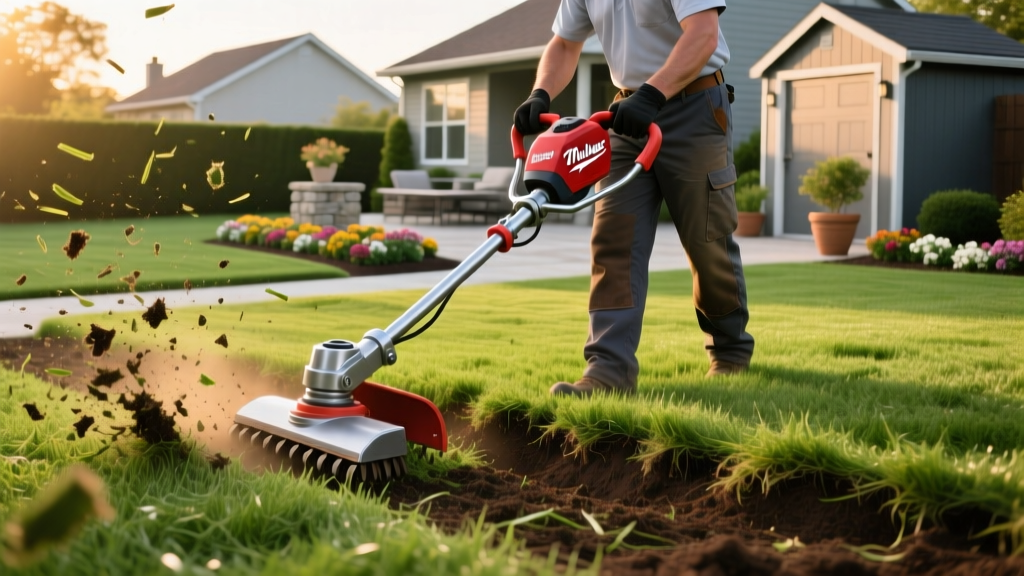
Milwaukee Dethatcher Workflow: Step-by-Step Thatch Removal Guide
The 'Milwaukee Dethatcher' Reality Check
When homeowners search for a Milwaukee dethatcher, they are typically looking to integrate the brand's industry-leading M18 FUEL outdoor power equipment (OPE) lineup into their lawn renovation workflow. As of the 2026 landscaping season, Milwaukee Tool does not manufacture a dedicated, standalone cordless dethatcher or power rake. However, professional turf managers and serious DIYers have developed a highly effective Milwaukee-powered dethatching workflow that leverages the M18 FUEL 21-inch Self-Propelled Mower (Model 2828-20) for preparation and the M18 FUEL Blower (Model 2724-20) for the critical, heavy-duty thatch extraction phase.
Thatch—a tangled layer of living and dead stems, roots, and crowns between the soil surface and the green grass blades—becomes problematic when it exceeds 0.5 inches. According to Penn State Extension, excessive thatch blocks water infiltration, harbors turf diseases like brown patch, and prevents fertilizer from reaching the root zone. While mechanical dethatching requires a dedicated scarifier (often rented or purchased as a corded electric unit), the cleanup and preparation phases are where the Milwaukee M18 FUEL ecosystem dominates, saving hours of manual raking.
Thatch Assessment Matrix: Do You Need Mechanical Extraction?
Before deploying any equipment, you must measure your thatch layer. Use a soil probe or a sharp spade to cut a 3-inch deep wedge into your lawn. Measure the brown, spongy layer above the dark topsoil.
| Thatch Depth | Turf Condition | Required Action | Recommended Tooling |
|---|---|---|---|
| 0.25" or less | Healthy, protective layer | No action required | Standard mowing schedule |
| 0.5" - 0.75" | Early restriction | Core aeration & biological breakdown | Aerator, humic acid applications |
| Over 0.75" | Severe hydrophobic barrier | Mechanical dethatching (scarifying) | Rental dethatcher + Milwaukee Blower |
WARNING: Never use liquid dethatchers (saponin-based enzymes) as a substitute for mechanical extraction when thatch exceeds 0.75 inches. Biological breakdown takes 12 to 18 months and will not resolve severe hydrophobic barriers in a single season.
Step-by-Step Milwaukee-Powered Dethatching Procedure
Timing is critical. Cool-season grasses (Kentucky Bluegrass, Tall Fescue) must be dethatched in early fall (late August to mid-September) when recovery is rapid. Warm-season grasses (Bermuda, Zoysia) should be dethatched in late spring, immediately after full green-up. Follow this exact sequence to minimize turf stress.
Step 1: Scalp the Lawn (Preparation)
Set your Milwaukee M18 FUEL 21-inch Mower (2828-20) to its lowest deck setting, typically 1.5 inches. Mow the entire lawn, bagging all clippings. This removes the green canopy, exposing the thatch layer directly to the mechanical tines of your dethatcher. Leaving the grass tall will cause the dethatcher tines to snag on live blades, tearing the turf rather than slicing the thatch.
Step 2: Mechanical Scarification
Since Milwaukee does not offer a standalone scarifier, utilize a dedicated electric dethatcher (such as a 14-inch or 15-inch corded model) or a gas-powered rental unit. Set the tine depth to penetrate exactly 0.25 inches into the soil surface. Run the machine in a grid pattern: one pass horizontally, one pass vertically. This cross-hatching ensures 100% coverage and lifts the maximum volume of dead organic matter.
Step 3: The Extraction Phase (The M18 FUEL Advantage)
This is where the Milwaukee workflow proves its value. After scarifying, your lawn will be covered in massive, heavy windrows of wet, dense thatch. Manual raking is backbreaking and often leaves 30% of the debris behind, which can smother the remaining grass.
Deploy the Milwaukee M18 FUEL Blower (2724-20). This tool generates 450 CFM (Cubic Feet per Minute) and 120 MPH airspeed. Standard residential blowers (typically 200-300 CFM) will stall against wet thatch clumps. The M18 FUEL's brushless motor and focused concentrator nozzle act like a high-pressure air broom, effortlessly pushing 50-pound piles of thatch to the perimeter of your property for easy bagging or composting.
Pro-Tip for Blower Nozzle Selection: Remove the wide, flat nozzle and attach the narrow concentrator tip included with the 2724-20. The higher velocity air stream is required to break apart compacted, wet thatch mats that have settled into the turf canopy.
Post-Extraction Recovery Protocol
Once the lawn is completely cleared of debris using the M18 FUEL Blower, the soil surface will be exposed, scratched, and primed for renovation. Do not delay the next steps, as exposed soil will dry out rapidly and invite weed germination.
- Core Aeration (Optional but Recommended): If soil compaction is present, run a core aerator over the lawn immediately after dethatching. The tines will penetrate deeper without the thatch barrier.
- Overseeding: Apply a premium turf-type tall fescue or Kentucky bluegrass blend at a rate of 5 to 8 lbs per 1,000 square feet. The grooves left by the dethatcher and aerator provide perfect seed-to-soil contact.
- Starter Fertilizer: Apply a high-phosphorus starter fertilizer (e.g., 18-24-12) to fuel rapid root development in the new seedlings.
- Hydration: Water the lawn deeply immediately after seeding. Maintain the top 1 inch of soil in a constantly moist (but not saturated) state for 14 to 21 days until germination is complete.
Equipment Cost Matrix: Building the M18 FUEL Thatch Kit
Integrating Milwaukee tools into your lawn care program requires an upfront investment in the M18 platform, but it eliminates the recurring costs of gas maintenance and the physical toll of manual raking. Below is a breakdown of the essential equipment for a comprehensive thatch management workflow.
| Equipment Role | Specific Model / Type | Est. Cost (Tool Only) | Frequency of Use |
|---|---|---|---|
| Prep & Scalping | Milwaukee M18 FUEL 21" Mower (2828-20) | $549.00 | Weekly (Spring/Fall) |
| Scarification | Universal 15" Corded Dethatcher | $120.00 - $160.00 | Annually / Bi-annually |
| Debris Extraction | Milwaukee M18 FUEL Blower (2724-20) | $199.00 | Weekly (Fall leaf/thatch cleanup) |
| Power Source | (2) M18 HIGH OUTPUT HD12.0 Batteries | $358.00 | Every OPE session |
For homeowners managing properties over 10,000 square feet, the Milwaukee M18 FUEL OPE lineup provides commercial-grade torque and runtime that far exceeds traditional gas-powered handheld equipment. While you may still need to rent or purchase a third-party scarifier for the physical thatch cutting, utilizing the M18 FUEL Blower for extraction and the M18 FUEL Mower for prep transforms a grueling weekend chore into a streamlined, two-hour maintenance procedure.
Common Dethatching Mistakes to Avoid
- Dethatching Dormant Turf: Scarifying warm-season grasses while they are still brown and dormant in early spring will severely damage the crown and delay green-up by up to six weeks. Always wait for active growth.
- Ignoring Soil Moisture: Never dethatch a bone-dry lawn; the tines will bounce off the hard soil and fail to pull the thatch. Conversely, dethatching a waterlogged lawn will cause severe soil compaction and rutting. Water the lawn lightly 24 hours before the procedure so the soil is firm but slightly yielding.
- Leaving Debris Overnight: Thatch windrows left on the lawn for more than a few hours will begin to mat down and smother the surviving grass blades. Use your Milwaukee blower to clear the lawn entirely in the same session.
By understanding the limitations of the current market and leveraging high-CFM cordless blowers for the heavy lifting, you can achieve professional-grade thatch removal without relying on outdated, gas-powered sweepers or manual thatching rakes. For more regional timing specifics, consult your local university extension office to align your dethatching workflow with your specific USDA hardiness zone.

