
Lawn Care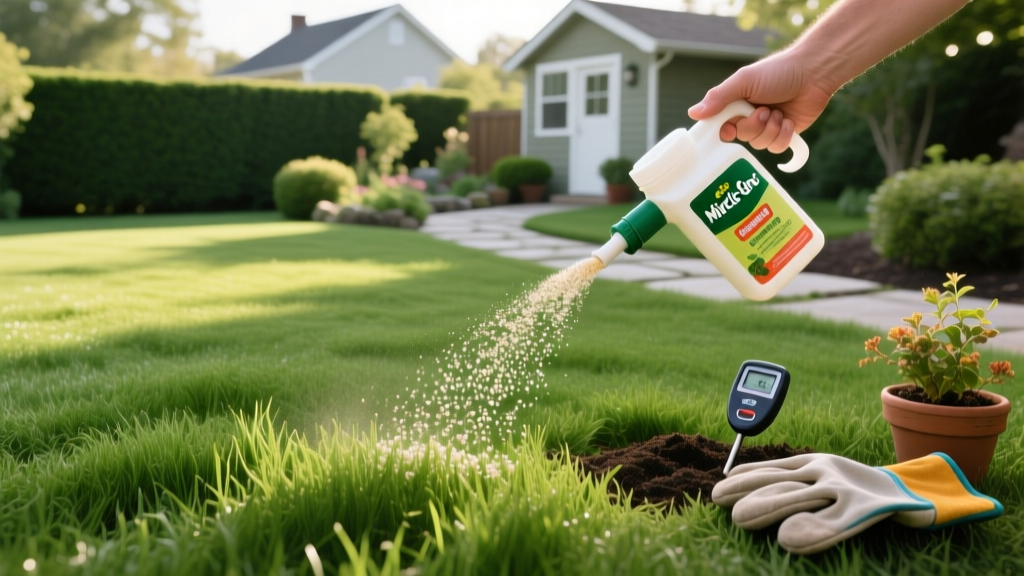
Miracle Gro Lawn Care: Step-by-Step Fertilization Guide
Understanding the Miracle-Gro Nutrient Profile
Applying Miracle-Gro Water Soluble Lawn Food requires more than just attaching a hose and spraying. The flagship formula carries a 36-0-6 N-P-K (Nitrogen-Phosphorus-Potassium) ratio. This specific formulation is engineered for rapid foliar uptake and immediate greening, relying heavily on urea and ammonium sulfate as primary nitrogen sources. Because it contains zero phosphorus, it complies with strict municipal watershed regulations while delivering the exact macronutrients established turfgrass requires for blade growth and cellular density.
However, the high concentration of water-soluble nitrogen (WSN) means application errors—such as overlapping passes or spraying during high-heat windows—can cause severe osmotic stress, commonly known as fertilizer burn. This guide details the exact procedures, environmental thresholds, and calibration steps required to safely integrate Miracle-Gro into your 2026 lawn maintenance program.
Product Matrix: Choosing Your Application Method
Miracle-Gro offers three primary turf nutrition formats. Selecting the correct format depends on your lawn size, budget, and available equipment.
| Product Format | N-P-K Ratio | Coverage & Cost (Approx.) | Best Use Case |
|---|---|---|---|
| Water Soluble Powder | 36-0-6 | 5,000 sq ft / $18-$22 | Large lawns, rapid greening, budget-conscious care |
| Ready-to-Spray Liquid | 30-0-4 | 4,000 sq ft / $14-$16 | Small to medium lawns, zero-mix convenience |
| Shake 'n Feed Granular | 32-0-8 | 4,000 sq ft / $20-$24 | Targeted patch repair, extended 3-month feeding |
For the remainder of this guide, we will focus on the Water Soluble Powder (36-0-6) applied via a hose-end sprayer, as it is the most widely used and technically demanding format in the Miracle-Gro lawn lineup.
Pre-Application Diagnostics and Lawn Prep
Before mixing any solution, you must verify soil and environmental conditions. Urea-based fertilizers require the soil enzyme urease to break down into plant-available ammonium. If soil temperatures are below 50°F (10°C), urease activity stalls, leaving nitrogen on the surface where it can volatilize into the atmosphere as ammonia gas.
Pro Tip: Use a digital soil thermometer at a 2-inch depth. Only apply Miracle-Gro water-soluble formulas when morning soil temperatures consistently read between 55°F and 85°F. For cool-season grasses (Fescue, Kentucky Bluegrass), target early fall or mid-spring. For warm-season grasses (Bermuda, Zoysia), apply during peak summer growth.
Step 1: Mowing and Debris Clearance
- Mow First: Cut your grass to the upper end of its recommended height (e.g., 3 inches for Tall Fescue, 1.5 inches for Bermuda). This removes older, less absorptive leaf tissue and exposes the lower stems for better nutrient uptake.
- Bag or Mulch: If your thatch layer exceeds 0.5 inches, bag the clippings. Thick thatch acts as a hydrophobic barrier, preventing the water-soluble nitrogen from reaching the soil profile and root zone.
- Clear the Canvas: Remove fallen branches, toys, and heavy leaf litter to ensure an unobstructed walking path, which is critical for maintaining a steady spraying pace.
Step-by-Step Hose-End Sprayer Application
The Ortho Dial N Spray (or the included Miracle-Gro universal sprayer) relies on water pressure to siphon and dilute the concentrated powder. Proper calibration prevents over-application.
Step 2: Mixing and Loading
- Measure the Powder: The standard application rate is 1 pound of powder per 1,000 square feet. A standard 5 lb box covers 5,000 sq ft. For the hose-end sprayer jar (typically holding up to 16 oz of dry product), fill it to the designated fill line corresponding to your lawn's square footage.
- Add Warm Water: Fill the sprayer jar halfway with warm water (around 80°F). Warm water dissolves the urea and potassium sulfate granules 40% faster than cold hose water, preventing clogs in the siphon tube.
- Agitate: Secure the lid and shake vigorously for 30 seconds until the solution is a clear, deep blue liquid. Top off with water to the maximum fill line.
Step 3: Calibration and Spraying Technique
According to Scotts application guidelines, maintaining a consistent walking speed and spray pattern is the primary defense against striping (alternating dark and light green bands).
- Set the Dial: If using an adjustable dial sprayer, set it to the manufacturer-recommended setting for liquid lawn foods (usually setting '4' or '5' for standard hose pressure of 40-60 PSI).
- The Criss-Cross Pattern: Spray your lawn in a North-South grid, then immediately re-spray in an East-West grid. This cross-hatching technique guarantees uniform coverage and eliminates missed strips.
- Pacing: Walk at a steady pace of approximately 3 feet per second. Stopping while the trigger is engaged will dump concentrated nitrogen into a single spot, guaranteeing a burn mark within 48 hours.
Warning - Runoff Prevention: Never apply water-soluble nitrogen within 48 hours of a heavy forecasted rainstorm. The EPA warns that nutrient pollution from rapid fertilizer runoff causes severe algal blooms in local watersheds. If rain is imminent, delay application or switch to a slow-release granular alternative.
Post-Application Watering and Recovery Timelines
Unlike granular fertilizers that require immediate heavy watering to dissolve into the soil, Miracle-Gro Water Soluble Lawn Food is designed for foliar absorption. The grass blades absorb a significant portion of the dissolved urea directly through their stomata within the first 4 hours.
The 24-Hour Hydration Rule
Do not water the lawn immediately after spraying. Allow the liquid to dry on the grass blades (typically 2 to 4 hours, depending on humidity). The following morning, initiate a standard irrigation cycle to deliver roughly 0.5 inches of water. This secondary watering pushes any unabsorbed residual nitrogen down into the topsoil, feeding the root zone and preventing surface salt accumulation.
Note on Mowing: Wait at least 48 hours before your next mowing session. Cutting the grass too soon after application physically removes the nutrient-coated leaf tissue before the plant has fully metabolized the nitrogen.
Troubleshooting Common Application Errors
Even with careful measurement, environmental variables can cause turf stress. Here is how to diagnose and fix the most common issues associated with high-nitrogen liquid feeds.
Symptom: Brown, Crispy Grass Tips (Fertilizer Burn)
- Cause: Osmotic stress from salt buildup, usually caused by spraying during peak afternoon heat (above 85°F) when grass stomata are closed, or overlapping spray passes.
- The Fix: Immediately flush the affected area with 1 full inch of water to dilute and leach the excess salts below the root zone. Do not apply any further nitrogen for at least 4 weeks. Recovery typically takes 10-14 days as new crowns push fresh growth.
Symptom: Uneven Greening (Striping or Zebra Patterns)
- Cause: Inconsistent walking speed, failing to use the criss-cross spray pattern, or partial clogging of the sprayer siphon tube by undissolved powder.
- The Fix: Wait 14 days for the initial application to metabolize. Re-calibrate your sprayer with warm water and a fresh mixture, then apply a half-rate (0.5 lbs per 1,000 sq ft) strictly perpendicular to your original spray direction to even out the color gradient.
Long-Term Soil Health Considerations
While Miracle-Gro provides exceptional short-term visual results, relying exclusively on water-soluble, synthetic urea can deplete soil organic matter over time. Penn State Extension turfgrass specialists recommend balancing rapid-release liquid feeds with at least one annual application of slow-release, organic-based granular fertilizer (such as Milorganite or a compost top-dressing) in the late fall. This ensures the soil microbiome remains robust, maintaining the natural cation exchange capacity (CEC) required to hold nutrients between your liquid feeding intervals.
By strictly adhering to these temperature thresholds, mixing ratios, and watering protocols, you can safely leverage the aggressive growth hormones of the 36-0-6 profile to achieve a dense, dark-green turf canopy without compromising your soil's long-term biological health.

