
Lawn Care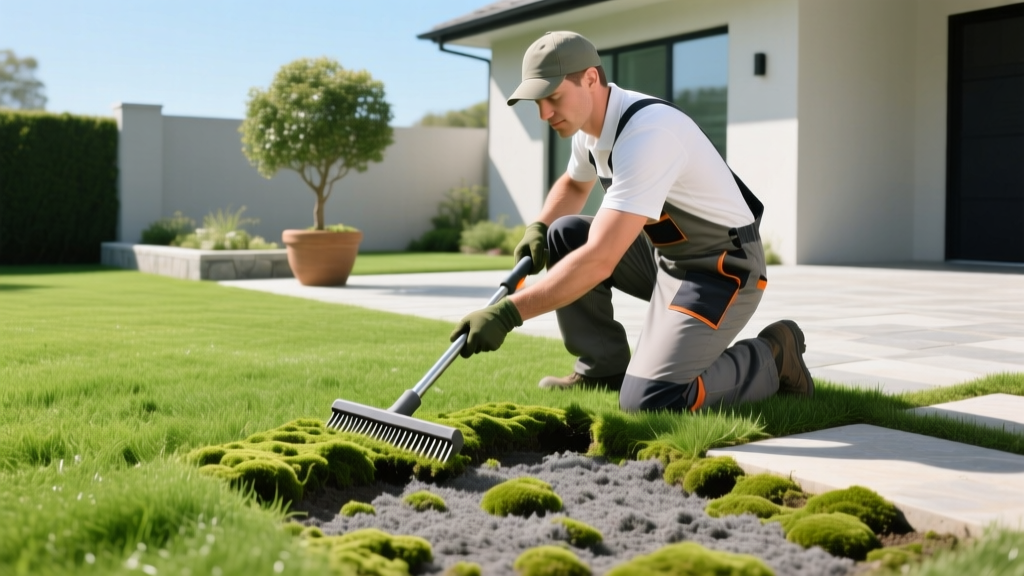
Moss and Grass Control: Step-by-Step Lawn Restoration Procedures
The Environmental Tug-of-War: Why Moss Outcompetes Turf
Moss does not actively kill turfgrass; rather, it opportunistically colonizes areas where environmental conditions have already suppressed grass vigor. When managing the boundary between moss and grass, homeowners often make the critical mistake of treating the symptom (the moss) without correcting the underlying soil and canopy variables. According to the University of Maryland Extension, moss thrives in environments characterized by high soil acidity, severe compaction, poor drainage, and heavy shade. To achieve a permanent transition from a moss-dominated yard to a dense turfgrass lawn, you must execute a systematic, multi-phase restoration protocol.
Diagnostic Matrix: Moss vs. Grass Environmental Preferences
Before purchasing chemical treatments, compare your lawn's current state against this diagnostic baseline to identify the exact failure points in your turf's environment.
| Environmental Variable | Moss Preference | Turfgrass Requirement | Corrective Action Target |
|---|---|---|---|
| Soil pH | 4.5 - 5.5 (Highly Acidic) | 6.0 - 7.0 (Slightly Acidic to Neutral) | Apply pelletized calcitic lime |
| Soil Compaction | Tolerates heavy clay/hardpan | Requires porous, oxygenated root zone | Deep core aeration (3-inch plugs) |
| Light Penetration | Thrives in deep, dense shade | Requires minimum 4 hours direct sun | Canopy thinning (15% light filter) |
| Moisture Retention | Prefers constant surface moisture | Requires deep, infrequent drying cycles | Regrade low spots; install French drains |
Phase 1: Chemical Eradication and Desiccation
The first physical step in reclaiming your lawn is to kill the existing moss colony. While manual racking is possible, it is labor-intensive and often leaves behind microscopic spores that trigger rapid regrowth. The industry standard for moss eradication is ferrous sulfate monohydrate (iron sulfate).
Application Specifications
- Product Selection: Look for a 10% to 20% ferrous sulfate concentration (e.g., Lilly Miller Moss Out! or a generic agricultural-grade iron sulfate).
- Application Rate: Apply 3 to 5 pounds of granular iron sulfate per 1,000 square feet. If using a liquid spray, mix 3 ounces of ferrous sulfate per gallon of water to cover 1,000 square feet.
- Timing: Apply when temperatures are between 60°F and 75°F and the moss is actively moist. Avoid application during drought stress.
⚠️ Warning: Hardscape Staining
Ferrous sulfate will permanently stain concrete, brick, and stone walkways with deep rust-colored marks. Always use a drop spreader (not a broadcast spreader) near hardscapes, and sweep any granules off hard surfaces immediately before watering.
Ferrous sulfate will permanently stain concrete, brick, and stone walkways with deep rust-colored marks. Always use a drop spreader (not a broadcast spreader) near hardscapes, and sweep any granules off hard surfaces immediately before watering.
Within 24 to 48 hours of application, the moss will desiccate and turn a distinct black or dark brown color, indicating cellular death.
Phase 2: Physical Removal and Soil Decompaction
Once the moss is dead, it must be removed to expose the soil surface for seeding and amendment. Leaving a thick mat of dead moss will create a hydrophobic barrier that prevents water and nutrients from reaching the turfgrass root zone.
Step-by-Step Dethatching and Aeration
- Power Raking: Rent a power rake (dethatcher) and set the blade depth to exactly 1/4 inch below the soil surface. Make two passes over the moss-affected areas in perpendicular directions (north-south, then east-west) to aggressively pull up the dead moss and shallow thatch.
- Debris Removal: Rake and bag the extracted moss. Do not compost this material, as the acidic nature and potential spore load can disrupt standard compost pH balances.
- Core Aeration: The Royal Horticultural Society (RHS) heavily emphasizes aeration for long-term moss prevention. Use a gas-powered core aerator to pull soil plugs that are at least 2.5 to 3 inches deep and 0.5 inches in diameter. Space the cores no more than 3 inches apart. This fractures the hardpan clay layer, allowing oxygen to reach the grass roots and improving surface drainage.
Phase 3: Soil Amendment and pH Correction
Moss is a reliable bio-indicator of acidic soil. Most turfgrass species suffer from nutrient lockout when soil pH drops below 5.8. Before applying lime, you must conduct a baseline soil test to determine your exact cation exchange capacity (CEC) and current pH.
Liming Protocol
Assuming a standard clay-loam soil profile with a starting pH of 5.0, you will need to apply pelletized calcitic lime (calcium carbonate) to raise the pH to 6.5.
- Standard Rate: Apply 50 pounds of pelletized lime per 1,000 square feet to raise the pH by approximately 0.5 units.
- Maximum Single Application: Never apply more than 50 pounds per 1,000 square feet in a single day. If your soil test indicates you need a 1.5 pH jump, split the application into three separate treatments spaced 30 days apart to prevent soil salinity shock.
- Integration: The core aeration holes created in Phase 2 will act as vertical chimneys, drawing the lime deep into the root zone rather than leaving it stranded on the surface.
Phase 4: Overseeding with Shade-Tolerant Cultivars
If moss invaded your lawn due to shade from mature trees, planting standard Kentucky Bluegrass (Poa pratensis) will result in failure. You must select grass species genetically adapted to low-light photosynthesis.
Recommended Seed Blends for Moss-Prone Shade
| Grass Species | Cultivar Examples | Shade Tolerance | Seeding Rate (per 1,000 sq ft) |
|---|---|---|---|
| Creeping Red Fescue | Boreal, Dawson | Excellent (Heavy Shade) | 4 - 5 lbs |
| Chewings Fescue | Intrigue, Shadow II | Very Good (Moderate Shade) | 4 - 5 lbs |
| Rough Bluegrass | Sabre III | Good (Damp, Shady Areas) | 2 - 3 lbs |
Seeding Procedure: Broadcast the seed directly over the aerated soil. Follow immediately with a light top-dressing of weed-free compost (1/8 inch thick) to retain moisture and protect the seed from foraging birds. Water the area with a fine mist twice daily for 14 days to maintain constant surface moisture until germination is complete.
Phase 5: Canopy Management and Long-Term Maintenance
Even with perfect soil chemistry, grass cannot survive without adequate photon capture. If your lawn receives less than 3 hours of filtered or direct sunlight, turfgrass will inevitably thin out, and moss will return.
Strategic Tree Pruning
Hire a certified arborist to perform "crown thinning" and "limbing up" on the trees casting shade over your lawn. The goal is to remove 15% to 20% of the inner canopy branches to allow dappled sunlight to reach the turf, and to remove all lower branches up to 8 feet from the ground to allow early morning and late afternoon horizontal sunlight to penetrate the yard.
Cost Breakdown: DIY vs. Professional Restoration
Understanding the financial commitment helps in planning your restoration timeline. Below is an estimated cost matrix for a standard 5,000 square foot moss-affected lawn in 2026.
- DIY Ferrous Sulfate & Lime: $60 - $90 (Materials only)
- DIY Equipment Rental (Dethatcher & Aerator): $120 - $180 (Weekend rates)
- Premium Shade-Tolerant Seed & Compost: $80 - $130
- Professional Full-Service Restoration: $650 - $1,100 (Includes chemical kill, aeration, lime, and hydroseeding)
By systematically addressing the soil pH, physical compaction, and light penetration variables, you permanently alter the microclimate. The grass will establish a dense, aggressive root system that naturally outcompetes moss spores, ensuring a resilient, dark green lawn for years to come.

