
Lawn Care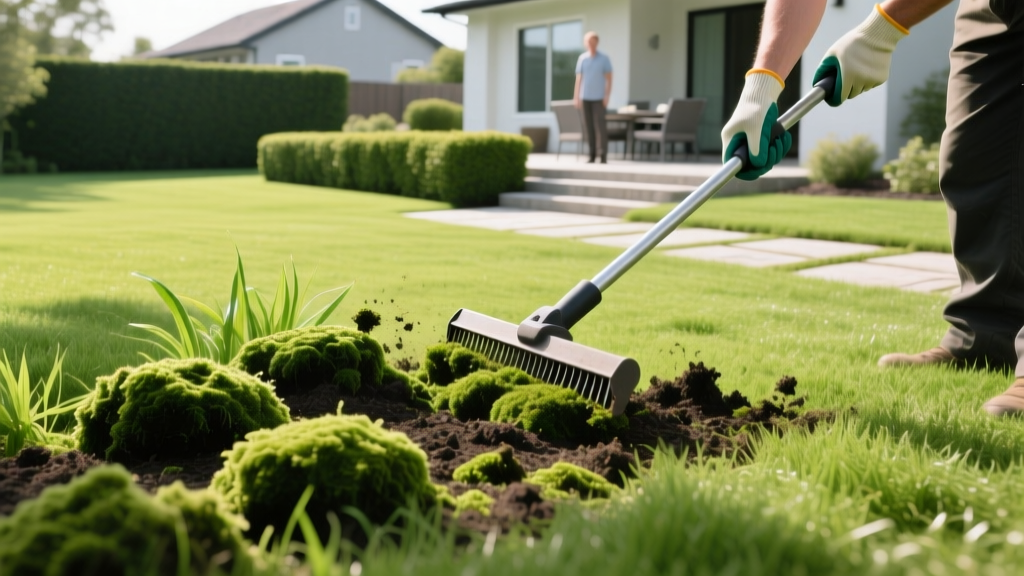
Moss in Grass Lawn: Step-by-Step Eradication and Recovery Guide
The Diagnostic Phase: Why Moss Outcompetes Turfgrass
Moss is not a disease that attacks healthy grass; it is an opportunistic indicator plant that colonizes areas where turfgrass is failing. When homeowners attempt to treat a moss-infested grass lawn by simply applying herbicides, the moss inevitably returns within a single season. This is because moss thrives in the exact conditions that cause turfgrass to decline: soil compaction, high acidity (pH below 5.5), poor surface drainage, and heavy canopy shade. To permanently reclaim your lawn, you must execute a two-pronged approach: chemically and mechanically remove the existing moss, then systematically alter the soil environment to favor grass roots.
The Moss Indicator Principle: According to turfgrass researchers at the University of Minnesota Extension, moss lacks a true vascular system and root structure, allowing it to survive in shallow, compacted soils where grass roots suffocate. Eradication requires fixing the subterranean environment, not just killing the surface foliage.
Step-by-Step Moss Eradication Protocol
Step 1: Chemical Knockdown (Ferrous Sulfate Application)
Do not use glyphosate or broadleaf weed killers on moss; they are entirely ineffective against non-vascular plants. Instead, utilize an iron-based moss killer. The active ingredient to look for is Ferrous Sulfate Monohydrate (typically at a 10% to 15% concentration). Products like Lilly Miller Moss Out for Lawns or Scotts Turf Builder with Moss Control work by drawing moisture out of the moss cells, causing rapid desiccation and iron toxicity to the moss while simultaneously greening your existing grass.
- Application Rate: Apply at a rate of 2 to 3 lbs per 1,000 square feet using a broadcast spreader.
- Timing: Apply in early spring or early fall when temperatures are between 55°F and 75°F, and the moss is actively growing and moist from morning dew.
- Expected Result: Within 24 to 48 hours, the bright green moss will turn dark brown or black, indicating cell death.
Step 2: Mechanical Extraction and Dethatching
Once the moss has turned black and died, it must be physically removed to expose the soil surface for aeration and overseeding. Dead moss left on the lawn will form a hydrophobic thatch layer that repels water and blocks seed-to-soil contact.
For lawns under 5,000 square feet, use a manual thatching rake with curved, serrated tines to aggressively pull the dead moss mat from the soil surface. For larger properties, rent a power dethatcher (vertical mower) from a local equipment supplier. Set the blade depth to precisely 1/4 inch below the soil surface. Rake up the extracted moss debris and compost it; do not leave clumps on the turf.
Step 3: Core Aeration for Compaction Relief
Moss dominates in soils with a bulk density exceeding 1.6 g/cm³, where grass roots cannot penetrate. Core aeration is non-negotiable for long-term recovery. You must extract actual plugs of soil, not just poke holes (spike aeration actually worsens compaction by compressing the soil laterally).
- Equipment: Use a gas-powered core aerator that extracts plugs 2.5 to 3 inches deep and 0.5 to 0.75 inches in diameter.
- Pattern: Make two passes over the lawn in perpendicular directions (a grid pattern) to ensure plug spacing is no more than 3 inches apart.
- Post-Aeration: Leave the extracted soil cores on the lawn to dry and break down naturally; they contain valuable microorganisms that will inoculate the thatch layer.
Correcting the Underlying Environment (Soil & Seed)
Killing the moss only clears the battlefield. To prevent recolonization, you must shift the soil chemistry and biology to favor turfgrass. The University of Wisconsin-Madison Extension emphasizes that adjusting soil pH and improving drainage are the most critical long-term moss deterrents.
Step 4: Targeted Liming and pH Adjustment
Turfgrass requires a soil pH between 6.5 and 7.0 to efficiently uptake nitrogen, phosphorus, and potassium. Moss thrives in acidic soils (pH 4.5 to 5.5). Before applying lime, you must conduct a professional soil test to determine your exact buffer pH. Applying blind doses of lime can induce iron chlorosis in your grass.
| Current Soil pH | Target pH | Calcitic Lime Required (per 1,000 sq ft) | Product Recommendation |
|---|---|---|---|
| 5.0 | 6.5 | 8 - 10 lbs | Espoma Organic Garden Lime |
| 5.5 | 6.5 | 5 - 6 lbs | Espoma Organic Garden Lime |
| 6.0 | 6.5 | 2 - 3 lbs | Jonathan Green MAG-I-CAL |
Apply the lime immediately after aeration. The aeration holes provide a direct conduit for the calcium carbonate to reach the root zone, accelerating the pH buffering process by up to 40% compared to surface application.
Step 5: Shade-Tolerant Overseeding
If your lawn suffers from heavy shade (less than 4 hours of direct sunlight), traditional Kentucky Bluegrass will inevitably fail, allowing moss to return. You must overseed with fine fescue blends. Fine fescues (creeping red fescue, chewings fescue, and hard fescue) possess narrow leaf blades and require significantly less photosynthetic energy to maintain root mass.
- Seed Selection: Use a premium shade blend like Jonathan Green Black Beauty Ultra or Pennington Smart Seed Dense Shade.
- Seeding Rate: Apply at 5 to 6 lbs per 1,000 square feet over the aerated and dethatched soil.
- Starter Fertilizer: Apply a high-phosphorus starter fertilizer (e.g., 18-24-12 NPK) to stimulate rapid root development before winter dormancy.
Long-Term Maintenance Matrix
To ensure the moss does not return, your ongoing maintenance procedures must adapt to the microclimate of your yard. Implement the following adjustments to your seasonal lawn care program:
Canopy Management: Prune lower tree branches up to a height of 8 feet (crown raising) and thin out dense interior canopies. This allows crucial morning sunlight to penetrate and dry the dew off the grass blades, depriving moss of the sustained moisture it requires to germinate spores.
- Mowing Height: Raise your mower deck to 3.5 or 4.0 inches in shaded areas. Taller grass blades produce more shade at the soil level, which suppresses moss spore germination and keeps the soil temperature stable.
- Watering Protocol: Switch from frequent, shallow watering to deep, infrequent irrigation. Apply 1 inch of water per week in a single session to force grass roots deep into the aerated soil profile, away from the shallow-dwelling moss.
- Fall Cleanups: Remove fallen autumn leaves within 48 hours. A wet leaf mat creates the exact dark, humid, and acidic microclimate that triggers aggressive moss expansion in late fall.

