
Lawn Care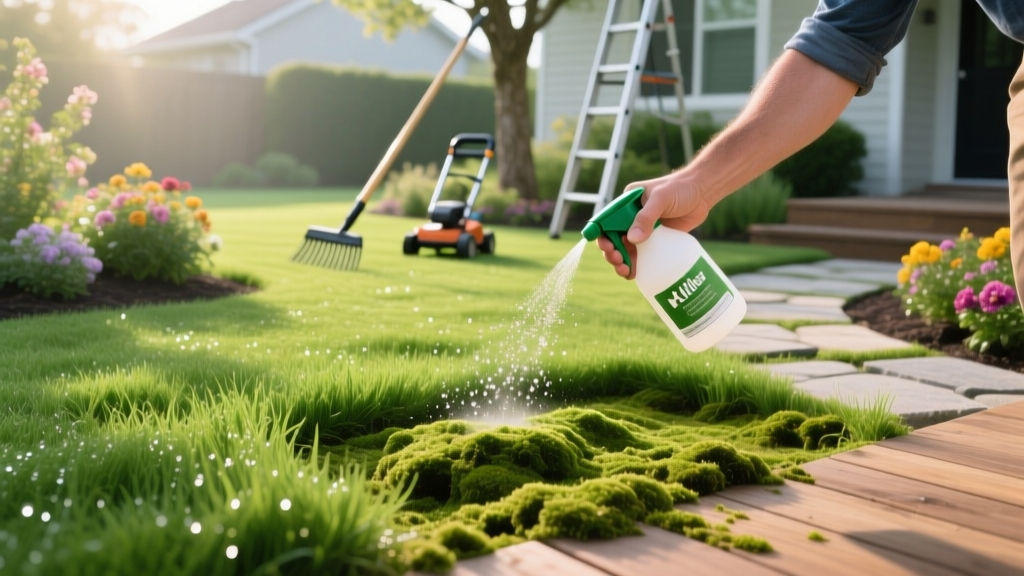
Best Moss Killer for Lawns: 2026 Treatment Playbook and Soil Fixes
The Root Cause Matrix: Why Moss Wins the Turf War
Moss is not merely a stubborn weed; it is an opportunistic indicator plant. According to Penn State Extension, moss thrives in environments where turfgrass is actively failing due to environmental stress. Applying a moss killer for lawns without addressing the underlying soil and canopy issues is a temporary fix that guarantees a recurrence within a single season. Before purchasing chemical treatments, diagnose your lawn using the matrix below to understand why the moss outcompeted your grass.
| Symptom / Condition | Underlying Cause | Required Structural Fix (Post-Treatment) |
|---|---|---|
| Moss in heavy, wet clay soil | Severe compaction and poor drainage | Core aeration and top-dressing with coarse compost |
| Moss under dense tree canopies | Insufficient sunlight (less than 4 hours direct) | Prune lower branches or switch to shade-tolerant groundcover |
| Moss with yellowing, thin grass | Highly acidic soil (pH below 5.5) | Apply pelletized lime at 50 lbs per 1,000 sq ft |
| Moss in low-lying, swampy zones | Improper grading and water pooling | French drains or regrading the yard slope |
Top Moss Killers for Lawns: 2026 Product Comparison
When selecting a moss killer for lawns, the market is dominated by three active ingredients. Each operates through a distinct biological mechanism and carries specific trade-offs regarding speed, safety, and hardscape staining. Below is a detailed breakdown of the most effective formulations available this year.
1. Iron Sulfate (Ferrous Sulfate Monohydrate)
Iron sulfate is the undisputed heavyweight champion of moss eradication. It works by rapidly dehydrating moss tissue, turning it black within 24 to 48 hours. As a secondary benefit, it provides a quick green-up for existing turfgrass due to the iron content.
- Top Product: Lilly Miller Moss Out for Lawns (10 lb bag)
- Estimated Cost: $18 - $22
- Coverage: ~3,000 sq ft
- Application Rate: 3 to 5 lbs per 1,000 sq ft
- Best For: Large, open lawn areas with severe moss infestations.
⚠️ CRITICAL WARNING: Hardscape Staining
Iron sulfate will permanently stain concrete, brick, stone, and pavers a bright, rusty orange-brown. When applying granular iron sulfate, use a drop spreader near hardscapes rather than a rotary spreader, and immediately sweep any stray granules off driveways and walkways before watering.
2. Potassium Salts of Fatty Acids (Insecticidal/Moss Soaps)
For homeowners who need to treat moss near sensitive garden beds, water features, or delicate stonework, fatty acid salts offer a non-staining, organic alternative. These soaps destroy the waxy cuticle of the moss, causing it to dry out and die.
- Top Product: Safer Brand Moss & Algae Killing Soap (32 oz RTU)
- Estimated Cost: $22 - $26
- Coverage: ~1,000 sq ft
- Best For: Spot treatments, patios, roof shingles, and areas adjacent to concrete.
3. Zinc Sulfate Monohydrate
Zinc sulfate is highly effective but acts much slower than iron. It is often used in commercial forestry and roofing, but can be utilized in lawns where iron staining is a concern and rapid results are not required. According to research highlighted by the University of Maryland Extension, zinc alters the soil environment to become inhospitable to moss over a period of several weeks.
- Top Product: Bonide Moss Control Granules (Zinc based)
- Estimated Cost: $25 - $30
- Coverage: Varies by formulation, typically 2,000 sq ft
- Best For: Long-term soil conditioning in heavily shaded, acidic zones.
The 5-Step Moss Eradication Playbook
Killing the moss is only 20% of the battle. The remaining 80% involves removing the dead tissue and preparing the seedbed for new grass. Follow this exact sequence for optimal results in the spring or early fall.
- Mow Low: Drop your mower deck to its lowest setting (approx. 1.5 inches) over the moss-infested areas. This exposes the moss canopy to the treatment and reduces competition for the eventual grass seed.
- Apply the Moss Killer: Using a calibrated spreader, apply your chosen iron sulfate product. Ensure the lawn is slightly damp (from morning dew or a light pre-watering) to accelerate the chemical reaction. Do not apply if heavy rain is forecasted within 24 hours.
- Wait for the Blackout: Allow 48 to 72 hours for the moss to turn completely black and desiccate. Do not water the lawn during this window.
- Aggressive Raking: Use a heavy-duty metal thatching rake or a powered dethatcher to physically rip the dead moss out of the soil. You will likely pull up several wheelbarrows of dead organic matter. Compost this material or dispose of it; do not leave it on the lawn.
- Overseed and Top-Dress: Immediately broadcast a shade-tolerant grass seed blend (such as Jonathan Green Black Beauty Ultra, which contains Poa supina and hard fescues) at a rate of 4 lbs per 1,000 sq ft. Top-dress the bare soil with a 1/4-inch layer of screened compost to retain moisture and protect the seed.
Post-Treatment Soil Remediation
To prevent the moss from returning next spring, you must alter the soil chemistry. The Royal Horticultural Society (RHS) notes that turfgrass struggles to absorb vital nutrients like phosphorus and potassium when soil pH drops below 5.5, giving moss a distinct competitive advantage.
Testing and Adjusting pH
Invest in a professional-grade soil test kit (like the MySoil Professional Soil Test Kit, approx. $29) rather than relying on cheap dye-based liquid testers. If your soil test reveals a pH below 6.0, apply fast-acting calcitic lime. For every 0.5 points you need to raise the pH, apply approximately 50 lbs of pelletized lime per 1,000 square feet. Water the lime in immediately to begin the neutralization process.
Alleviating Compaction
Moss loves anaerobic, compacted soil. If a screwdriver cannot be easily pushed 4 inches into your lawn, the soil is too compacted for turfgrass roots to penetrate. Rent a gas-powered core aerator (approx. $80 for a 4-hour rental) and make two passes over the lawn in perpendicular directions. Leave the extracted soil plugs on the lawn to break down naturally; they will reintroduce beneficial soil microbes to the surface.
Expert Troubleshooting FAQ
Can I use dish soap to kill moss in my lawn?
While ultrasonic dish detergents contain surfactants that can dry out moss, they are highly phytotoxic to turfgrass. Dish soap will strip the protective waxy cuticle off your desirable grass blades, causing severe burning and yellowing. Always use commercially formulated potassium salts of fatty acids (insecticidal soaps) which are engineered to target moss and algae without destroying monocot grass leaves.
Why did the moss turn black but come back two months later?
The moss killer successfully killed the existing plant tissue, but the environmental conditions (shade, compaction, or low pH) remained unchanged. Moss spores are ubiquitous in the environment. If the soil remains acidic and poorly drained, new spores will germinate within weeks. You must follow the kill-step with aeration, liming, and overseeding to establish a dense grass canopy that physically blocks moss spores from reaching the soil.
Is iron sulfate safe for pets and children?
Once iron sulfate granules have been watered into the soil and the lawn surface is completely dry, it is generally safe for pets and children. However, during the application phase, the concentrated iron dust can cause gastrointestinal distress if ingested and is a severe eye irritant. Keep all people and animals off the lawn until the product has been thoroughly watered in and the grass blades have dried, which typically takes 4 to 6 hours depending on ambient humidity.

