
Lawn Care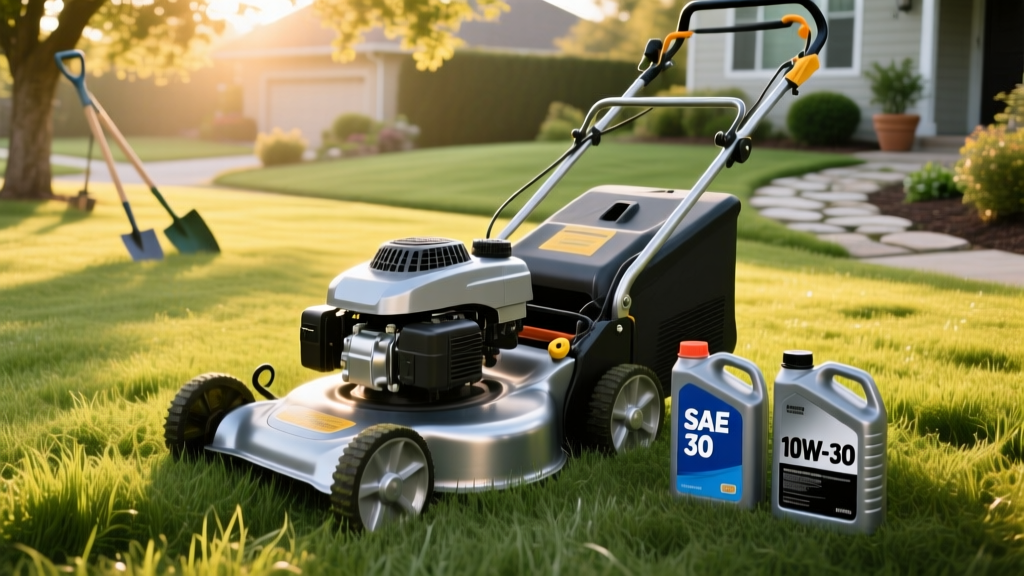
Best Motor Oil for Push Mower Engines: SAE 30 vs 10W-30 Explained
Air-cooled push mower engines operate at extreme thermal limits. Unlike liquid-cooled automotive engines that hover around 200°F, a push mower's crankcase can easily exceed 300°F during mid-summer mowing sessions. Selecting the correct motor oil for push mower engines is not about brand loyalty; it is about matching viscosity, additive packages, and thermal breakdown thresholds to the specific metallurgy of small engines. Using the wrong oil leads to accelerated piston ring wear, carbon sludge buildup, and catastrophic camshaft failure.
The Viscosity Debate: SAE 30 vs. 10W-30 for Small Engines
The most common question in small engine maintenance is whether to use straight-weight SAE 30 or multi-grade 10W-30. The answer depends entirely on your ambient operating temperatures and the engine's internal clearances. According to the American Petroleum Institute (API), viscosity dictates how well the oil maintains a protective film between moving metal parts under load.
SAE 30 is a straight-weight oil. It flows poorly in cold weather but provides a thick, robust film at high operating temperatures. 10W-30, conversely, uses viscosity index improvers (VIIs) to act like a thin 10-weight oil during cold starts and a 30-weight oil at operating temperature. While 10W-30 is versatile, the polymer VIIs can shear down under the extreme mechanical stress of a splash-lubricated mower engine, effectively reducing the oil to a 10W-20 over a 50-hour runtime.
| Oil Grade | Optimal Temp Range | Viscosity Stability | Best Application |
|---|---|---|---|
| SAE 30 (Conventional) | 40°F to 100°F+ | High (No polymer shear) | Summer mowing, heavy wet grass, older flathead engines |
| 10W-30 (Multi-grade) | 0°F to 90°F | Moderate (VIIs can shear) | Spring/Fall mowing, variable climates, modern OHV engines |
| 5W-30 (Full Synthetic) | -20°F to 100°F+ | Very High (Resists shear) | Year-round use, commercial mowing, extreme heat |
The Hidden Danger: ZDDP Levels in Modern Automotive Oils
Many homeowners make the costly mistake of draining leftover automotive oil from their car into their push mower. This is a critical error due to Zinc Dialkyldithiophosphate (ZDDP) regulations. Modern automotive oils (API SP standard) restrict zinc and phosphorus levels to roughly 800 parts per million (ppm) to prevent poisoning the catalytic converters in modern cars.
Small engines do not have catalytic converters. More importantly, they rely on flat-tappet camshafts and splash lubrication, which require 1,000 to 1,200 ppm of ZDDP to prevent metal-on-metal wear. When you use standard automotive oil in a classic Briggs & Stratton flathead or an older Honda GCV160, the insufficient anti-wear additives lead to premature camshaft wipe—a failure mode where the cam lobe literally grinds flat against the lifter, resulting in a dead cylinder and a $300+ engine replacement.
⚠️ Equipment Warning: Never use "Energy Conserving" or "Resource Conserving" automotive oils (often marked with a starburst symbol on the bottle) in a push mower. These oils contain friction modifiers like molybdenum that cause the mower's centrifugal clutch and transmission gears to slip, leading to total drive failure.
Synthetic vs. Conventional: Is the Premium Price Justified?
The push mower oil aisle presents a stark price divide: conventional small engine oil costs roughly $5 to $7 per quart, while full synthetic small engine blends push $10 to $14 per quart. Given that a standard 21-inch push mower only holds 15 to 20 ounces of oil, one quart covers slightly more than one full oil change.
Is the synthetic premium worth the extra $5 per season? For air-cooled engines, the answer is definitively yes. Air-cooled engines suffer from severe localized hot spots, particularly around the exhaust valve and the cylinder head. Conventional mineral oils begin to oxidize and form hard carbon varnish at temperatures exceeding 250°F. Synthetic base stocks (Group III or PAO) resist thermal breakdown up to 350°F, keeping the piston rings free of carbon deposits and maintaining compression over the engine's lifespan. If you mow thick, wet summer grass that forces the engine to run at maximum throttle for extended periods, synthetic oil is a non-negotiable insurance policy against overheating.
Step-by-Step Push Mower Oil Change Protocol
According to Penn State Extension, proper maintenance intervals dictate an oil change every 50 hours of operation or once per mowing season. However, the extraction method is where most homeowners cause engine damage.
- Thermal Preparation: Run the engine for 3 to 5 minutes to reach operating temperature (approx. 180°F). This suspends carbon particulates and metal shavings in the oil, ensuring they are extracted rather than left in the sump.
- Safety Disconnect: Pull the spark plug wire and secure it away from the plug. Never skip this; a flooded carburetor can hydro-lock and turn over if the mower blade is accidentally bumped.
- Extraction (The Siphon Method):strong> Avoid the "tilt method" recommended in outdated manuals. Tilting a modern mower often forces oil through the crankcase breather tube directly into the carburetor intake and air filter. Instead, use a $6 manual siphon pump (like the Lumax LX-1300) inserted down the dipstick tube to extract the oil cleanly.
- Precise Refill: Extract exactly 15 to 24 oz (depending on your specific deck manual). Refill using a clean funnel. Overfilling by just 2 ounces forces oil past the piston rings into the combustion chamber, resulting in thick white smoke and fouled spark plugs.
Troubleshooting Common Oil-Related Push Mower Failures
If your push mower is exhibiting unusual symptoms, the crankcase oil is the first diagnostic checkpoint. Use this troubleshooting matrix to identify the root cause before tearing down the carburetor or replacing the spark plug.
- Symptom: Thick White Smoke on Startup.
Cause: Overfilled crankcase or oil in the combustion chamber from improper tilting.
Fix: Remove the spark plug, pull the starter cord 5 times to expel oil from the cylinder, clean the plug with brake cleaner, and siphon out excess oil to the proper dipstick level. - Symptom: Continuous Blue Smoke and High Oil Consumption.
Cause: Worn piston rings or a scored cylinder wall, often caused by running the engine with low oil or using degraded conventional oil in high heat.
Fix: Perform a cylinder compression test. If compression is below 60 PSI, the engine block requires a top-end rebuild or replacement. - Symptom: Engine Seizes When Hot, Starts When Cold.
Cause: Oil viscosity is too low for the ambient temperature, causing the oil film to shear and metal parts to expand and bind under heat.
Fix: Drain the current oil and refill with SAE 30 or a 5W-30 Full Synthetic designed specifically for small air-cooled engines.
By matching the exact viscosity to your climate, prioritizing high-ZDDP small engine formulations, and utilizing a siphon pump for extraction, you will easily double the operational lifespan of your push mower's engine block.

