
Lawn Care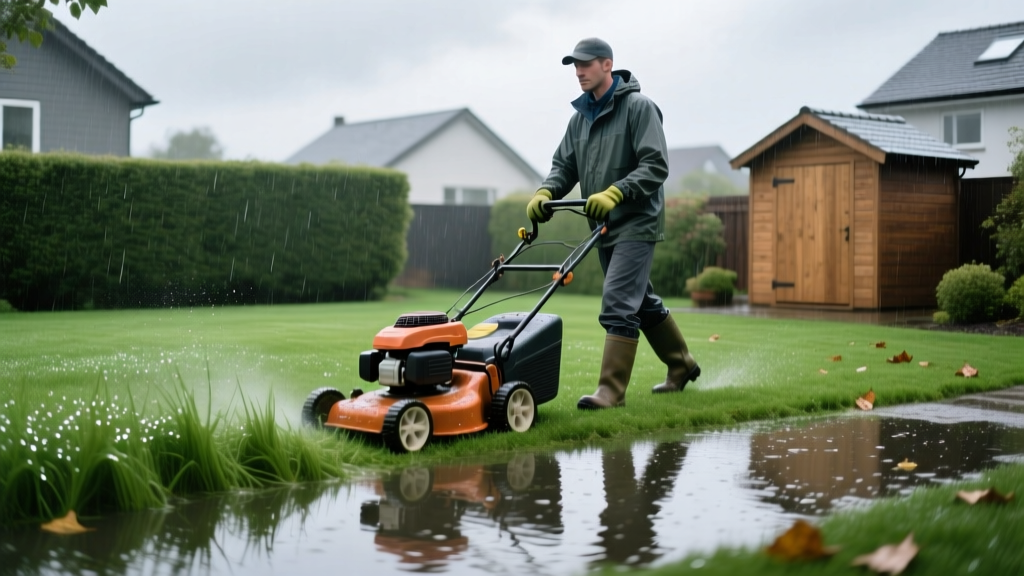
Mowing Lawn in Rain: Step-by-Step Wet Grass Maintenance Guide
Cutting wet turf is generally considered a cardinal sin in agronomy, but unpredictable spring squalls, heavy morning dew, and narrow weekend schedules sometimes force homeowners into mowing lawn in rain. When the grass is saturated, the physical dynamics of the turf change dramatically. Water-logged grass blades become highly turgid and flexible, causing them to bend away from mower blades rather than being cleanly sheared. This results in ragged tears that invite fungal pathogens, while the heavy, wet clippings clump together, smothering the canopy below.
However, if your grass has exceeded the maximum recommended height (typically 4 to 4.5 inches for cool-season fescues and bluegrasses) and a prolonged storm system is moving in, waiting might cause more structural damage to the turf than cutting it wet. This guide provides a rigorous, step-by-step procedure for safely and effectively managing wet grass cuts, minimizing soil compaction, and preventing disease outbreaks.
The Turf Science: What Happens When You Cut Wet Grass
Before engaging your mower, it is critical to understand the mechanical and biological risks associated with wet turf. According to turfgrass researchers at the University of Minnesota Extension, mowing wet grass dulls blades up to three times faster than dry grass. The moisture acts as a mild abrasive when mixed with soil particles kicked up by the wheels.
Biologically, the ragged leaf tips created by tearing wet grass lose moisture rapidly once the sun returns, leading to tip dieback and a whitish, hazy appearance across the lawn. More dangerously, the sap exuding from torn blades creates an ideal breeding ground for fungal spores. Pathogens like Pythium blight and Dollar Spot are easily spread across the lawn by the mower wheels and the splashing of wet clippings, as detailed in Penn State Extension's research on turf diseases.
Pre-Mow Assessment: The Moisture Decision Matrix
Not all wet grass is created equal. Use the following decision matrix to determine if your specific lawn conditions permit mowing, or if you must delay the service.
| Moisture Condition | Soil Status | Action Required |
|---|---|---|
| Morning Dew / Light Fog | Firm, dry surface | Proceed with caution. Wait 2 hours for sun to burn off dew if possible. If forced to cut, use side-discharge. |
| Active Light Drizzle | Slightly damp, no pooling | Conditional Go. Raise deck 0.75 inches. Reduce ground speed by 50%. Avoid slopes entirely. |
| Post-Rain (Saturated) | Soft, footprints remain | Delay. High risk of soil compaction, rutting, and tearing the root crown. Wait until soil drains. |
| Heavy Rain / Puddles | Muddy, standing water | HARD STOP. Severe electrocution risk for electric mowers. Hydro-lock risk for gas mowers. Extreme turf damage. |
Step-by-Step Procedure for Mowing Lawn in Rain
If the assessment matrix dictates that you must proceed, follow these exact mechanical and operational steps to protect both your equipment and your turf.
Step 1: Deck and Blade Configuration
Never use a mulching blade or insert a mulch plug when mowing wet grass. Mulching blades rely on multiple cuts and high-velocity airflow to pulverize clippings; wet grass will instantly pack into the deck, stalling the engine and creating a massive, suffocating clump of dead matter on the lawn.
- Blade Selection: Install a high-lift side-discharge blade. The aggressive fins on a high-lift blade create maximum suction to stand the wet, bent grass blades upright before the cutting edge strikes.
- Deck Coating: Spray the underside of the mower deck with a heavy-duty silicone lubricant or a dedicated mower deck spray (like CRC Mower Deck Cleaner & Protectant). This reduces the surface tension, preventing wet clippings from adhering to the steel.
- Height Adjustment: Raise your cutting height by 0.5 to 0.75 inches above your normal setting. If you normally cut Kentucky Bluegrass at 2.5 inches, raise it to 3.25 inches for this pass. You are aiming to remove only the top 1/4 of the canopy to prevent shock.
Step 2: The Half-Overlap Cutting Pattern
When grass is dry, a standard 10% to 15% overlap between mower passes is sufficient. Wet grass, however, bends laterally as the mower tires push through it.
- Set your ground speed to a maximum of 1.5 to 2.0 mph (roughly a slow walking pace). Pushing the mower faster will result in uncut strips and engine bogging.
- Overlap each subsequent pass by 30% to 40%. This ensures that the grass bent by the right wheel on the first pass is caught and cut by the left side of the deck on the second pass.
- Never make sharp, tight turns on wet turf. The tires will act like erasers, tearing the turf crown and ripping roots from the softened topsoil. Make wide, sweeping turns or use a three-point turn at the end of each row.
⚠️ Critical Safety & Equipment Warnings
According to OSHA landscaping safety guidelines, wet conditions drastically increase slip, trip, and electrocution hazards.
- Corded Electric Mowers: Never use a corded electric mower in the rain or on wet grass. The risk of running over the cord and exposing live wires to moisture is a fatal hazard.
- Battery Mowers (e.g., EGO, Ryobi): While modern 56V lithium-ion mowers carry IPX4 water-resistance ratings for the battery housing, the primary danger is operator traction. Wet grass on even a 10-degree slope can cause the operator to slip under the machine.
- Gas Mowers: Avoid mowing through deep puddles. Water ingested through the air intake or carburetor can cause immediate hydro-locking, bending the connecting rod and destroying the engine block.
Step 3: Real-Time Clump Dispersal
Even with a high-lift blade and silicone spray, wet grass will eventually clump. Do not wait until you finish the entire lawn to address this. Every 15 to 20 minutes, or whenever you notice the engine RPMs dropping, stop the mower, turn off the engine, and wait for the blade to completely stop. Use a wooden scraper or a stiff-bristle brush to knock the packed clippings out of the discharge chute and deck. Leaving wet clumps on the lawn will kill the grass underneath within 48 hours by blocking sunlight and trapping excess moisture against the soil.
Post-Mow Cleanup and Disease Prevention
The maintenance procedure does not end when the mower is parked. Wet mowing requires immediate post-care to protect the turf's biological health and the mower's mechanical integrity.
Equipment Sanitation
Wet grass clippings are highly acidic and will begin to corrode the underside of your steel mower deck within hours. Use a garden hose to blast the underside of the deck, the wheels, and the chute. Once dry, apply a thin layer of WD-40 or fluid film to the deck to displace residual moisture and prevent rust.
Proactive Fungicide Application
Because mowing in the rain inevitably creates micro-tears in the grass blades and spreads moisture across the lawn, you must proactively defend against fungal outbreaks. If temperatures are between 60°F and 80°F with high humidity, apply a preventative systemic fungicide within 24 hours of the cut.
- Active Ingredient: Look for products containing Azoxystrobin (e.g., Scotts DiseaseEx) or Propiconazole. These systemics are absorbed by the torn leaf tips and protect the plant from the inside out.
- Application Rate: For liquid applications, mix 0.2 to 0.4 oz of concentrate per 1,000 square feet, depending on the specific product label. Apply using a pump sprayer for even coverage.
Frequently Asked Questions
Will mowing in the rain ruin my mower blades?
It will not ruin them immediately, but it accelerates dulling significantly. The combination of water, soil grit, and the high tensile strength of turgid grass blades will round off a sharp edge in roughly one-third of the time it takes in dry conditions. Plan to sharpen your blades after every 2 to 3 wet mowing sessions using a metal file or bench grinder, maintaining the original 30-degree bevel.
Can I bag wet grass clippings?
Bagging wet grass is highly discouraged. The clippings will form a dense, heavy mat inside the bagger, blocking airflow and potentially stalling the engine. Furthermore, the extreme weight of a bag full of wet clippings puts immense stress on the mower's rear axle and bagger brackets, which can snap under the load. Always side-discharge when cutting wet turf.
How long should I wait to mow after it stops raining?
The wait time depends on soil drainage, not just the grass blades. On sandy, well-draining soils, you may be able to mow 2 to 3 hours after the rain stops. On heavy clay soils, you may need to wait 24 to 48 hours. Perform the "footprint test": walk across the lawn and observe your footprints. If the soil springs back immediately, it is safe to mow. If your footprints remain indented and the soil feels spongy, the ground is too soft, and mower tires will cause severe sub-surface compaction.

