
Lawn Care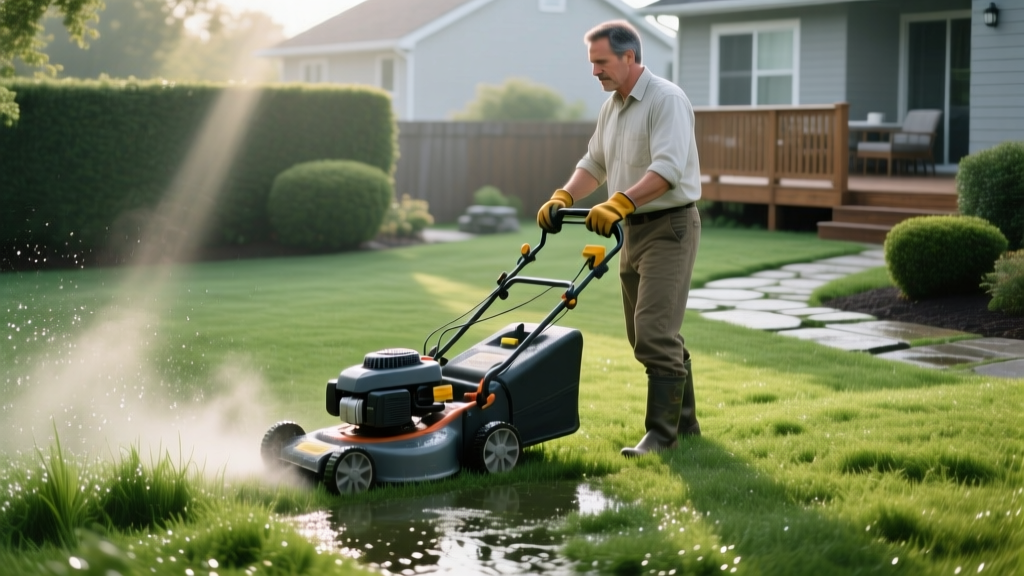
Mowing Lawn Wet Grass: Damage Control, Safety, and Best Practices
The Hidden Costs of Mowing Wet Turf
As a site-condition problem solver, you must view your lawn not just as a visual aesthetic, but as a living biological system interacting with soil physics and plant pathology. Mowing lawn wet grass introduces severe mechanical and biological stressors to this system. When grass blades are saturated, their cellular turgor pressure changes, making them pliable rather than rigid. Instead of being cleanly sheared by the mower blade, wet blades bend and tear. This ragged tearing creates open wounds on the leaf tissue, accelerating moisture loss once the sun emerges and providing direct entry points for opportunistic pathogens.
According to turfgrass pathology research from Penn State Extension, the physical tearing of wet grass significantly increases the spread of fungal diseases like Dollar Spot (Clarireedia jacksonii) and Brown Patch (Rhizoctonia solani). The mower deck acts as a high-velocity centrifuge, atomizing water droplets that carry fungal spores from infected zones directly into the fresh wounds of healthy turf across the entire yard.
Warning: Soil Compaction and Shear Failure
Beyond the canopy, the soil profile suffers. When soil moisture exceeds field capacity (typically above 25% volumetric water content), the shear strength of the topsoil drops dramatically. A standard 21-inch push mower weighing 60 lbs, or a zero-turn riding mower exceeding 800 lbs, will cause micro-rutting. This compresses soil macropores, suffocating roots and destroying the soil structure required for proper drainage and gas exchange.
Beyond the canopy, the soil profile suffers. When soil moisture exceeds field capacity (typically above 25% volumetric water content), the shear strength of the topsoil drops dramatically. A standard 21-inch push mower weighing 60 lbs, or a zero-turn riding mower exceeding 800 lbs, will cause micro-rutting. This compresses soil macropores, suffocating roots and destroying the soil structure required for proper drainage and gas exchange.
The 'Footprint and Towel' Readiness Test
Before engaging the PTO or pulling the starter cord, you must objectively assess the site conditions. Do not rely on visual cues alone; morning dew looks vastly different from post-rain saturation. Use this two-step diagnostic framework:
- The Footprint Test: Walk across the lawn in flat-soled shoes. If your footprints remain visibly depressed in the grass for more than 10 seconds, the soil is too saturated to support mechanical traffic without causing compaction and shear damage.
- The Paper Towel Test: Kneel and press a dry, heavy-duty paper towel flat against the grass canopy for three seconds. If the towel absorbs enough moisture to become translucent or tear, the surface tension on the blades is too high. The mower deck will not be able to generate the necessary airflow to stand the blades up for a clean cut.
Equipment Adjustments for Damp Conditions
If site constraints dictate that you must mow while the grass is damp (such as an impending multi-day storm front), you must reconfigure your equipment to mitigate damage. The aerodynamics of a mower deck are completely altered by high humidity and wet clippings.
Deck Height and Blade Selection Matrix
The University of Minnesota Extension recommends never removing more than one-third of the grass blade in a single pass. When mowing wet grass, this rule must be modified. You need to raise the deck higher than normal to reduce the volume of wet biomass entering the deck, preventing the 'paste' effect that clogs discharge chutes.
| Equipment Variable | Dry Condition Settings | Wet Condition Adjustments | Reasoning |
|---|---|---|---|
| Deck Height | 2.5' to 3.0' | 3.5' to 4.0' | Reduces clipping volume; prevents scalping on softened, rutted soil. |
| Blade Type | Mulching (Medium Lift) | High-Lift / Discharge | Mulching blades recut clippings; wet clippings turn to sludge and clog the deck. High-lift creates maximum airflow to eject wet mass. |
| Ground Speed | Standard (3-4 mph) | Reduced (1.5-2 mph) | Gives the blade extra milliseconds to cut pliable, bending grass blades cleanly. |
| Throttle / RPM | Standard ECO Mode | Maximum Throttle | Maximizes blade tip speed (requires >18,000 ft/min) to slice through water tension on the leaf. |
Post-Mow Mitigation: Cleaning and Curing
Mowing lawn wet grass leaves a thick, acidic layer of chlorophyll-rich sludge packed tightly against the underside of the mower deck. This sludge retains moisture against the steel, accelerating oxidation (rust) and harboring fungal spores. If you mow a lawn with active Brown Patch and fail to clean the deck, you will inoculate the next lawn you mow with those exact same pathogens.
The Sanitation Protocol:
- Immediate Scrape: While the sludge is still damp, use a 3-inch metal putty knife to scrape the underside of the deck, the baffles, and the discharge chute. Do not wait for it to cure into a concrete-like crust.
- Chemical Wash: If disease is present or suspected, spray the undercarriage with a 1:9 ratio of household bleach to water, or a commercial quaternary ammonium turf disinfectant. Allow it to dwell for 10 minutes to kill fungal spores, then rinse thoroughly with a high-pressure hose to prevent chemical corrosion of the deck paint.
- Lubrication: Once dry, apply a light coat of silicone-based mower deck spray or fluid film to the underside. This creates a hydrophobic barrier that prevents wet grass from adhering during your next damp mow.
When You Absolutely Must Mow: The Emergency Protocol
Sometimes, the grass has grown past the 4.5-inch threshold, the soil is soft, and a week of rain is forecasted. You have to mow. Follow this strict operational sequence to save the turf:
- Whip the Dew: If the issue is morning dew rather than deep soil saturation, drag a wide garden hose or a lightweight bamboo pole across the lawn to knock the water droplets off the canopy. Wait 20 minutes for the surface to flash-dry.
- Overlap Passes by 50%: Wet grass clumps heavily on the uncut side of your previous pass. Overlapping your wheel tracks by half ensures the mower is only taking a 10-inch bite of wet grass instead of a full 20-inch bite, drastically reducing deck load.
- Discharge to the Cut Side: If your mower allows side-discharge, always aim the chute toward the already-mowed area. This prevents heavy, wet clumps from being deposited onto uncut, standing grass, which would smother the canopy and block sunlight.
- Double-Cut if Necessary: If the grass is excessively tall and wet, make your first pass at the highest possible deck setting (4.0+ inches) just to knock down the canopy. Make your second pass at your target height (3.0 inches) perpendicular to the first pass.
Safety Considerations on Wet Slopes
The National Safety Council highlights that wet grass reduces tire traction by up to 60%. Operating a walk-behind mower on a wet slope steeper than 15 degrees poses a severe slip-and-fall hazard, where the operator can slide under the active deck. For zero-turn and riding mowers, wet lateral slopes exceeding 10 degrees risk catastrophic rollovers due to the low center of gravity and lack of a differential lock on standard residential models. If the slope is wet, defer mowing until the soil profile drains, or utilize a commercial string trimmer for those specific zones.
Frequently Asked Questions
Can I mow if it's only wet from the irrigation system?
Irrigation water sits primarily on the canopy, whereas rain saturates the soil profile. If your soil passes the Footprint Test (meaning the root zone is not waterlogged), mowing after irrigation is generally safe, provided you use a high-lift blade to manage the surface moisture. However, avoid mowing if you irrigated with greywater or reclaimed water, as aerosolizing that water via the mower deck poses respiratory health risks.
Will leaving wet clumps of grass on the lawn kill it?
Yes. Wet clippings mat together into an impermeable layer that blocks sunlight and traps excessive humidity against the soil surface. This creates a microclimate ideal for Pythium Blight. You must rake or use a leaf blower to break up and disperse any wet clumps immediately after mowing.
Does mowing wet grass dull the mower blade faster?
Interestingly, water itself does not dull steel. However, wet grass clumps and sticks to the deck, creating an abrasive paste of soil particles, silica (naturally present in grass blades), and moisture that accelerates wear on the blade's cutting edge. Expect to sharpen your blade 20% more frequently during extended wet seasons.

