
Lawn Care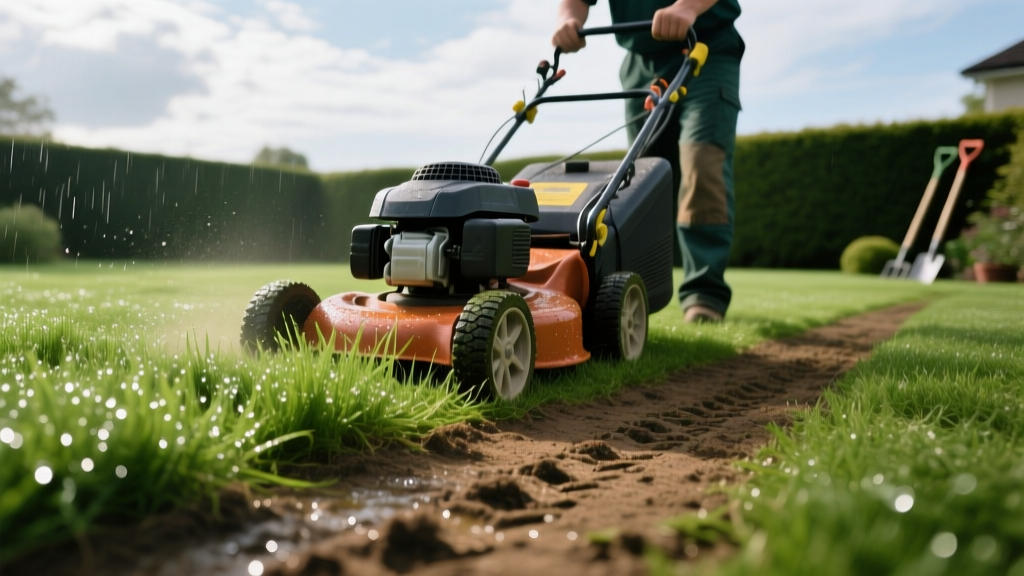
Can You Cut Grass After It Rained? The Traction & Moisture Test
The Physics of Wet Grass and Soil Shear Strength
The short answer to whether you can cut grass after it rained is yes, but only if the soil substrate has recovered its shear strength and the leaf blades have shed surface tension water. Mowing prematurely is not just an aesthetic mistake; it is a mechanical and biological hazard. When turfgrass absorbs water, the leaf blades can hold up to 30% more water weight than their dry mass. This extra weight causes the grass to bend horizontally rather than standing vertically, leading to uneven cuts and severe clumping beneath the mower deck.
More critically, the soil beneath the turf undergoes a drastic reduction in bearing capacity. A standard 21-inch push mower exerts roughly 3 to 5 pounds per square inch (PSI) of ground pressure, while a commercial zero-turn mower can exert 8 to 12 PSI. When soil pores are saturated, this pressure exceeds the soil's shear strength, causing micro-compaction in the root zone and visible rutting in the topsoil. According to the University of Minnesota Extension, mowing on saturated soils restricts oxygen flow to the rhizosphere, stunting root development and inviting anaerobic bacteria.
Warning: The Zero-Turn Rutting Threshold
If you operate a zero-turn mower weighing over 600 pounds, never mow within 12 hours of a 1-inch rainfall on clay-heavy soils. The front caster wheels will tear the turf crown during pivot turns when the soil moisture content exceeds 35% volumetric water content.
The 3-Step Moisture Identification Test
Do not rely on visual cues alone; grass blades can appear dry on the surface while the root zone remains saturated. Use this three-step diagnostic framework to determine if your lawn is mechanically ready for mowing.
1. The Footprint Test (Surface Shear)
Walk across the lawn in flat-soled shoes. If your footprints remain visible for more than 3 seconds, the soil lacks the shear strength to support mower tires without causing sub-surface compaction. Wait an additional 2 to 4 hours and retest.
2. The Swipe Test (Leaf Moisture)
Glide your bare hand or a piece of dark construction paper quickly across the top of the grass canopy. If the paper darkens or your hand is coated in visible water droplets, the surface tension is too high. Mowing now will result in a jagged tear rather than a clean slice, as the water acts as a cushion against the mower blade's impact.
3. The Trowel Test (Root Zone Saturation)
Insert a 6-inch soil probe or a standard garden trowel into the ground at a 45-degree angle. Pull up a core sample. If water actively pools in the hole or the soil core crumbles into a muddy paste when squeezed, the subgrade is saturated. If the core holds its shape but breaks apart cleanly when dropped from waist height, the soil has reached optimal field capacity for mowing.
Soil Type Drainage Matrix
The waiting period after a rain event is entirely dependent on your soil composition. Use the matrix below to calculate your baseline waiting time following a standard 1-inch rainfall event.
| Soil Type | Infiltration Rate | Minimum Wait Time (Post 1-Inch Rain) | Primary Mowing Risk |
|---|---|---|---|
| Sandy Loam | 2.0 - 4.0 inches/hour | 3 - 5 Hours | Scalping due to soft subsurface |
| Loamy Sand | 1.0 - 2.0 inches/hour | 6 - 10 Hours | Tire tracking on slopes |
| Silt Loam | 0.4 - 0.8 inches/hour | 14 - 18 Hours | Severe clumping and deck choking |
| Heavy Clay | 0.05 - 0.2 inches/hour | 24 - 48 Hours | Deep rutting and root shearing |
Mower Deck Setup for Damp Conditions
If the lawn passes the moisture tests but remains slightly damp (such as mowing late in the afternoon after a morning shower), you must alter your mower's mechanical configuration to prevent deck clogging and turf tearing.
- Raise the Cutting Height: Increase your deck height by 0.5 inches above your standard setting. Damp grass bends under the weight of the mower; cutting it at its normal height will result in severe scalping once the grass dries and stands back up.
- Remove the Mulching Baffle: Mulching blades rely on a recirculation vortex to chop clippings into fine particles. Wet clippings stick to the underside of the deck, destroying the vacuum and dropping heavy, suffocating clumps onto the turf. Switch to side-discharge or bagging.
- Reduce Ground Speed: Cut your travel speed by 30%. This allows the mower blade sufficient time to generate the lift required to stand the damp grass upright before the cutting edge makes contact.
Blade Selection for Post-Rain Mowing
The geometry of your mower blade dictates how well it handles residual moisture. High-lift blades are mandatory for damp conditions.
| Blade Type | Lift Angle | Wet Grass Performance | Recommendation |
|---|---|---|---|
| Standard / Flat | Low (10-15°) | Poor. Fails to lift damp blades, resulting in tearing. | Avoid in damp conditions. |
| Mulching | Variable | Terrible. Recirculates wet clippings, causing deck clogs. | Remove baffles if forced to use. |
| High-Lift | High (25-30°) | Excellent. Creates maximum vacuum to stand grass upright. | Required for post-rain mowing. |
| Gator / Serrated | Medium-High | Good. Serrated teeth grip wet blades for a cleaner slice. | Ideal for heavy, damp fescue. |
Disease Vectoring: The Hidden Cost of Early Mowing
The most severe consequence of cutting grass after it rained is the mechanical transmission of fungal pathogens. When leaf wetness persists for more than 10 hours, dormant spores activate. Mower tires and the underside of the mower deck act as highly efficient vectors, transporting pathogens like Sclerotinia homoeocarpa (Dollar Spot) and Pythium aphanidermatum (Pythium Blight) across the entire property.
According to NC State TurfFiles, cutting wet turf creates thousands of micro-abrasions on the leaf surface. These open wounds, combined with the humidity trapped beneath the cut canopy, provide a direct entry point for fungal hyphae. If you must mow a lawn that is transitioning from wet to dry, you must sanitize your equipment to prevent an outbreak.
Equipment Sanitation Protocol
Before mowing a damp lawn, spray the underside of the mower deck and the tire treads with a quaternary ammonium disinfectant (diluted at a 1:10 ratio with water). Allow it to dwell for 3 minutes. This destroys residual fungal spores from previous mowing sessions and prevents cross-contamination between healthy and vulnerable turf zones.
Decision Matrix: When to Mow vs. When to Wait
Use this rapid decision framework when evaluating your lawn after a rain event:
- Scenario A: It rained heavily overnight, but the soil passes the Footprint and Trowel tests. Action: Mow, but raise the deck 0.5 inches, use a high-lift blade, and discharge clippings to the side.
- Scenario B: The rain stopped 3 hours ago, the grass is standing upright, but the Swipe test shows heavy surface moisture. Action: Wait. Drag a piece of chain-link fence or a heavy rubber mat across the lawn to mechanically knock the water droplets off the leaf tips, then wait 60 minutes for evaporation before mowing.
- Scenario C: The soil fails the Footprint test, leaving deep impressions. Action: Do not mow. The risk of sub-surface compaction and root shearing outweighs the aesthetic benefit of a cut. Wait 12 to 24 hours depending on soil type and solar exposure.
Ultimately, cutting grass after it rained requires a shift from a calendar-based mowing schedule to a condition-based mowing strategy. By prioritizing soil shear strength and utilizing high-lift mechanical setups, you can maintain your lawn's health and density without triggering compaction or disease outbreaks.

