
Lawn Care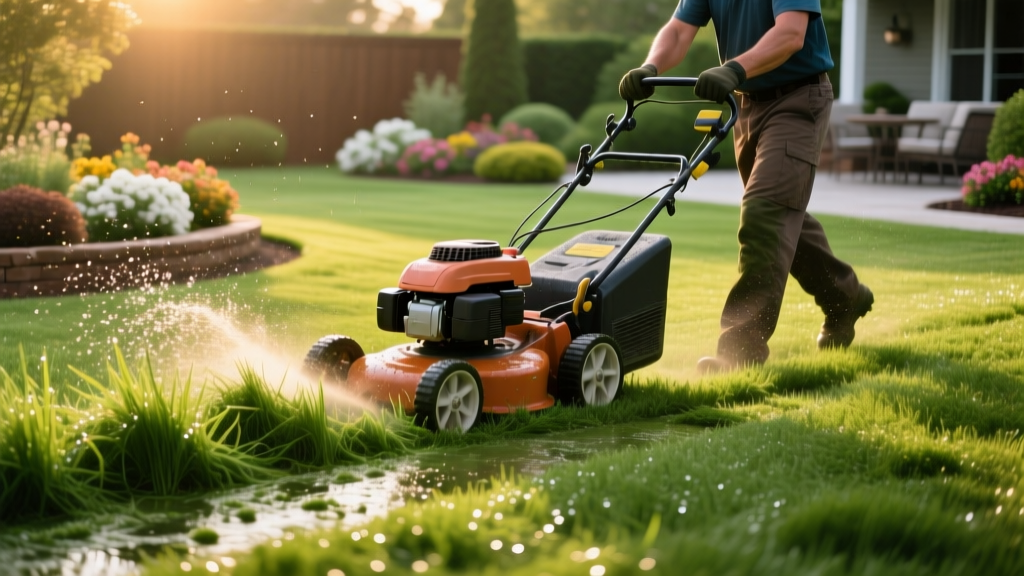
Can You Mow the Grass When It's Wet? Risks and Safe Techniques
The Short Answer: Why Moisture Compromises the Cut
The universal recommendation from turfgrass pathologists and landscape engineers is a definitive no: you should not mow wet grass. While a light morning dew might seem harmless, surface moisture fundamentally alters the physics of how a mower deck interacts with turf, while simultaneously creating ideal vectors for devastating fungal outbreaks. Understanding the exact mechanical and biological failures that occur when blades meet wet turf is critical for protecting both your lawn's long-term health and your equipment's lifespan.
⚠️ Safety Warning: Electric Mowers and Moisture
If you operate a corded electric mower, mowing on damp grass poses a severe electrocution hazard. Even for battery-powered or gas models, wet slopes drastically reduce tire traction, increasing the risk of the mower slipping and causing severe lower-extremity injuries. Never mow wet inclines exceeding a 15-degree grade.
The Physics of a Wet Cut: Lift, Shear, and Clump
Mower decks are engineered as aerodynamic vacuums. The spinning blade creates an updraft that pulls grass blades upright (turgor pressure) before the cutting edge shears them cleanly. When grass is wet, surface tension and the physical weight of water droplets cause the blades to bend and mat against the soil. The mower's updraft fails to lift the heavy, water-logged blades, resulting in a tearing action rather than a clean shear.
This tearing creates jagged, frayed leaf tips that turn brown within 48 hours, giving the entire lawn a dull, whitish-yellow cast. Furthermore, wet clippings lose their ability to disperse. Instead of being finely mulched or evenly distributed, they adhere to each other, forming dense, heavy clumps that block sunlight and trap humidity against the soil surface, suffocating the turf below.
Soil Compaction and the 'Footprint Test'
Beyond the grass blades, the soil structure is highly vulnerable when wet. Soil reaches 'field capacity' when all pore spaces are filled with water. Driving a heavy mower over saturated soil destroys soil macropores, leading to severe compaction that restricts root growth and oxygen exchange.
| Mower Type | Average Weight | Rutting Risk on Wet Soil | Compaction Depth |
|---|---|---|---|
| Push Reel / Electric | 30 - 60 lbs | Low | Surface (0-1 inch) |
| Standard Gas Walk-Behind | 80 - 120 lbs | Moderate | Shallow (1-3 inches) |
| Residential Zero-Turn | 700 - 900 lbs | High | Deep (3-6 inches) |
| Commercial Stand-On | 1,000 - 1,400 lbs | Severe | Severe (6+ inches) |
To determine if your soil is too wet to support mower traffic, perform the Footprint Test. Step firmly onto the lawn. If your footprint remains visible and the grass blades do not spring back within 10 seconds, the soil is at or near field capacity. Delay mowing until the soil drains sufficiently.
Disease Vectors: Spreading Fungi Across Your Lawn
Perhaps the most insidious consequence of mowing wet grass is the rapid transmission of turfgrass diseases. Fungal pathogens require moisture to germinate and infect plant tissue. When you mow wet grass, the mower blade acts as a biological syringe, slicing open the leaf tissue and releasing infected sap. The mower tires and deck then physically transport these spores across the entire property.
High-Risk Pathogens in Wet Conditions
- Brown Patch (Rhizoctonia solani): Highly destructive in warm-season grasses like Tall Fescue and Bermudagrass during humid summer months. Mowing wet turf spreads the mycelium rapidly, creating expanding circular brown rings.
- Pythium Blight (Pythium aphanidermatum): Known as 'cottony blight,' this pathogen thrives in wet, poorly drained areas and can destroy large sections of cool-season turf in under 24 hours when spread by mower traffic.
- Dollar Spot (Clarireedia jacksonii): Spread easily through the movement of wet clippings and guttation fluid (the plant's natural sap excreted at night), leading to silver-dollar-sized bleached lesions.
Expert Insight: According to NC State University's TurfFiles, the physical spread of Rhizoctonia solani is heavily exacerbated by mechanical traffic on wet foliage. Waiting for the dew to dry or irrigating only in the early morning hours drastically reduces the infection window.
Mechanical Toll on Your Mower Deck
Wet grass accelerates equipment degradation. The high moisture content in clippings creates a highly acidic, corrosive paste that adheres to the underside of the mower deck. Over time, this paste strips the protective powder coating from steel decks, leading to rapid oxidation and rust.
Furthermore, the aerodynamic failure caused by wet clumping puts immense strain on the mower's spindle bearings and drive belts. A deck packed with wet grass can increase the rotational drag on the blade by up to 40%, causing the engine to bog down, overheat, or trigger the safety shut-off on electric models. Mulching blades, which feature extra cutting edges and baffles designed to keep clippings suspended in the deck, fail catastrophically in wet conditions, immediately packing solid and requiring manual clearing.
The 'Must-Mow' Protocol: 5 Steps for Damp Conditions
If an incoming multi-day storm or a strict HOA mandate forces you to mow damp (not actively raining or flooded) grass, implement these specific mechanical adjustments to mitigate damage.
- Raise the Cutting Height: Increase your deck height by 0.5 to 1.0 inch above your standard setting. If you normally cut at 3.0 inches, raise it to 3.5 or 4.0 inches. This reduces the volume of wet tissue being processed and keeps the blade further from the damp soil surface.
- Switch to Side-Discharge: Remove the mulching plug and install the side-discharge chute. Attempting to mulch wet grass guarantees deck clogging. Discharging the clippings laterally bypasses the deck's vacuum chamber.
- Reduce Ground Speed by 30%: Slow your walking or driving pace. A slower ground speed gives the mower blade more time to process the heavier, water-logged clippings, reducing the size of the clumps expelled from the deck.
- Minimize Pass Overlap: Reduce your overlap from the standard 20% down to 10%. This prevents the mower's tires from repeatedly driving over the same saturated soil, minimizing deep rutting and compaction.
- Use High-Lift Blades (If Available): If you must use a bagging attachment, ensure you have high-lift blades installed. The aggressive fins on high-lift blades generate maximum airflow, which is necessary to pull heavy, wet clippings up into the bagger chute before they clog the deck.
Post-Mow Sanitation and Recovery
The work is not finished when the mower is parked. Immediate post-mow sanitation is mandatory after cutting wet turf to prevent disease transfer and equipment corrosion.
Use a plastic putty knife or a specialized polymer deck scraper to remove all impacted clippings from the underside of the deck. Never use a metal scraper or wire brush, as this will scratch the factory powder-coat or paint, exposing bare steel to moisture and accelerating rust. Once the deck is clear, use a leaf blower to dry the remaining moisture from the engine block and cooling fins.
To prevent future buildup, apply a ceramic-based or silicone deck spray (such as Fluid Film or CRC Dry Lube with PTFE) to the clean, dry underside of the deck. These hydrophobic coatings create a slick barrier that prevents wet clippings from adhering during your next mow. Finally, if you suspect your lawn was exposed to active fungal pathogens, apply a preventive systemic fungicide containing azoxystrobin or propiconazole within 24 hours to halt the spread of disease introduced by the mower blades.
For comprehensive guidelines on optimal mowing frequencies and heights for your specific grass type, refer to the Penn State Extension's mowing protocols, which emphasize the critical importance of dry foliage for maintaining turf density and health.

