
Lawn Care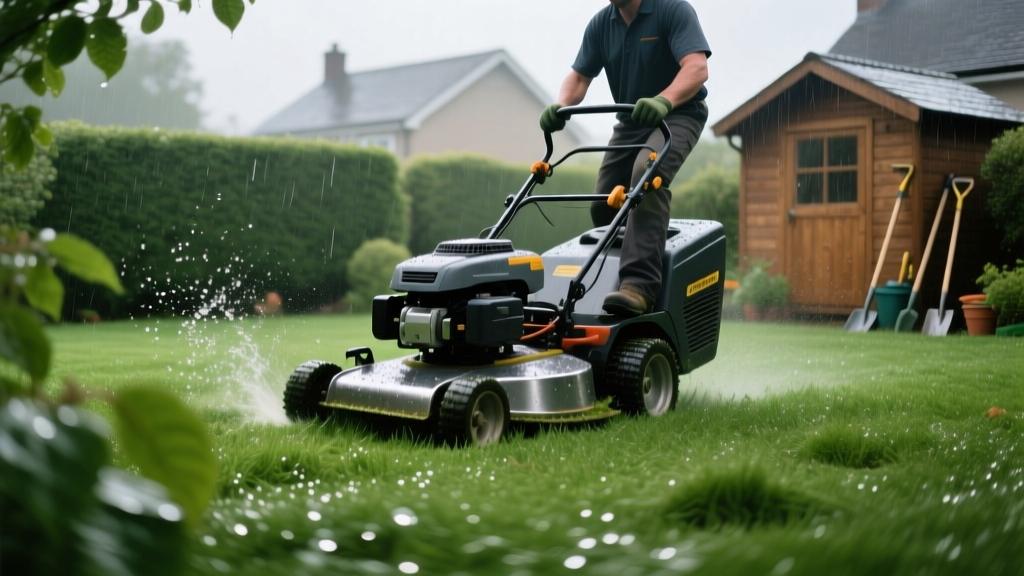
Can You Cut Grass in the Rain? Risks, Rules, and Mower Safety
The Short Answer: Physics vs. Patience
The short answer to whether you can cut grass in the rain is a definitive no for corded electric and gas mowers, and a highly discouraged maybe for battery-powered models. While a light, passing drizzle might not immediately destroy your turf, active rainfall and saturated soil trigger a cascade of mechanical, pathological, and safety failures. Understanding why requires looking past the inconvenience of getting wet and examining the physics of rotary cutting, soil compaction metrics, and turfgrass pathology.
Standard rotary mower blades spin at 2,800 to 3,600 RPM, generating blade tip speeds of roughly 18,000 to 20,000 feet per minute (FPM). This velocity creates a vacuum under the mower deck, lifting the grass blade upright before the blade shears it cleanly. When grass is wet, water adds significant mass to the leaf tissue. This extra weight defeats the deck's lift vacuum, causing the blade to tear and shred the grass rather than slice it. According to Penn State Extension, this shredding leaves ragged tips that turn brown within 48 hours and drastically increase moisture loss from the plant.
⚠️ Critical Safety Warning: Electrocution & Slippage
Using a corded electric mower on wet grass poses a severe, potentially lethal electrocution hazard. Even with a GFCI outlet, cutting through a damp extension cord or exposing compromised wiring to standing water can result in fatal shocks. Furthermore, wet grass reduces the traction coefficient of mower tires by up to 40%, creating severe slip-and-fall risks, particularly on slopes greater than a 15-degree incline.
Mower Mechanics: Vulnerability Matrix
Different mower architectures handle moisture differently. While no mower benefits from wet conditions, the failure modes vary drastically by power source and deck design.
| Mower Type | Primary Rain Risk | Secondary Damage | Verdict |
|---|---|---|---|
| Corded Electric (e.g., Greenworks 20-Inch) | Lethal electrocution hazard; short-circuiting. | Motor burnout from wet debris ingress. | NEVER |
| Battery-Powered (e.g., EGO LM2102SP) | Severe deck clogging; battery terminal corrosion. | Overheating the brushless motor due to blade drag. | AVOID |
| Gas-Powered (e.g., Toro Recycler 22) | Engine stalling; water contamination in carburetor. | Accelerated deck rust; spindle bearing failure. | AVOID |
| Manual Reel (e.g., Fiskars StaySharp) | Blade binding; extreme physical exertion. | Reel-to-bedknife misalignment from debris. | SAFE (but poor cut) |
Turf Pathology: The Fomite Effect
Mowing wet grass transforms your lawnmower into a biological vector. In plant pathology, a 'fomite' is any inanimate object that carries and spreads infectious agents. When you mow a damp lawn, the mower deck picks up fungal spores from infected areas and distributes them evenly across the freshly created micro-tears of the healthy grass.
According to the NC State TurfFiles database, several devastating turf diseases rely on surface moisture and physical wounds to infect the plant:
- Brown Patch (Rhizoctonia solani): Thrives in humid, wet conditions. Mowing spreads the mycelium directly into the shredded leaf tips, causing rapid circular die-offs.
- Dollar Spot (Clarireedia jacksonii): Spread rapidly by mower wheels and dew-covered clippings. Wet mowing exacerbates the spread rate by up to 300% compared to dry mowing.
- Pythium Blight: Often leaves a visible 'grease' on the mower deck after cutting infected, wet turf, which is then smeared onto healthy grass.
The 'Is It Too Wet?' Field Testing Framework
Rainfall totals do not tell the whole story; soil saturation and leaf surface moisture are the true metrics. Before pulling the starter cord or inserting the battery, perform these three field tests to determine if your lawn is ready to be cut.
- The Footprint Test (Soil Compaction Check): Walk across the lawn in flat-soled shoes. If the grass blades immediately spring back up and no soil indentations remain, the soil structure can support the weight of a 60-to-90-pound mower. If your footprints remain visible for more than three seconds, the soil is saturated. Mowing now will cause severe subsoil compaction and rutting, destroying the root zone architecture.
- The Tissue Test (Surface Moisture Check): Wipe a dry white paper towel across the top canopy of the grass. If the towel shows damp spots, the leaf tissue is too wet. The mower deck will not generate enough lift, guaranteeing a ragged cut and immediate deck clogging.
- The Clumping Forecast (Mulching Viability): If you plan to mulch your clippings, the grass must be bone-dry. Wet clippings will mat together into anaerobic, acidic piles that smother the turf beneath them, blocking sunlight and inviting rot.
Damage Control: Post-Rain Mowing Recovery
If you were forced to mow damp grass due to an impending storm or an overgrown lawn, immediate remediation is required to save both the equipment and the turf.
Equipment Decontamination Protocol
Allow the mower to cool completely. Disconnect the spark plug wire (gas) or remove the battery (cordless). Tilt the mower on its side—always keeping the carburetor and air filter facing UP on gas models to prevent oil flooding. Use a wooden paint stirrer or a plastic putty knife to scrape the compacted, acidic grass clippings from the deck interior. Acidic wet grass accelerates steel deck corrosion rapidly. Spray the underside with a light coat of silicone lubricant or a specialized mower deck spray (like Fluid Film) to prevent future adhesion.
Chemical Interventions for the Turf
Because the grass blades were likely torn rather than cut, the lawn is highly susceptible to fungal invasion. Apply a systemic preventative fungicide within 24 hours of the wet mowing event.
Recommended Active Ingredients: Look for products containing Azoxystrobin (e.g., Scotts DiseaseEx) or Propiconazole (e.g., BioAdvanced Fungus Control). These systemic chemicals are absorbed through the torn leaf tissue and translocated downward, protecting the plant from the inside out during the critical 48-hour healing window.
'The single most damaging thing a homeowner can do to a turfgrass canopy is to mow it while wet with a dull blade. You are essentially creating millions of open wounds on a plant that is currently sitting in a high-humidity incubator.' — Dr. Lee Miller, Turfgrass Pathology Specialist
Frequently Asked Questions
How long after it rains should I wait to mow?
Wait until the grass canopy passes the 'Tissue Test' mentioned above. In full sun with a light breeze, this typically takes 2 to 4 hours after the rain stops. In heavy shade or high humidity, it may take 12 to 24 hours for the leaf surface to dry sufficiently for a clean cut.
Will mowing wet grass ruin my mower's engine?
It rarely ruins the engine block itself, but it severely damages the ancillary systems. Wet grass clippings stick to the engine block and muffler, baking into a hardened crust that traps heat and causes the engine to run hotter than designed, potentially warping internal components or degrading the engine seals over time.
Is it okay to mow in the morning dew?
No. Morning dew presents the exact same physical and pathological challenges as rain. The grass blades are heavy with water, the soil is often soft, and fungal spores are highly active in the morning humidity. Always wait until the sun has burned off the dew, usually between 9:00 AM and 10:30 AM depending on your geographic location and season.

