
Lawn Care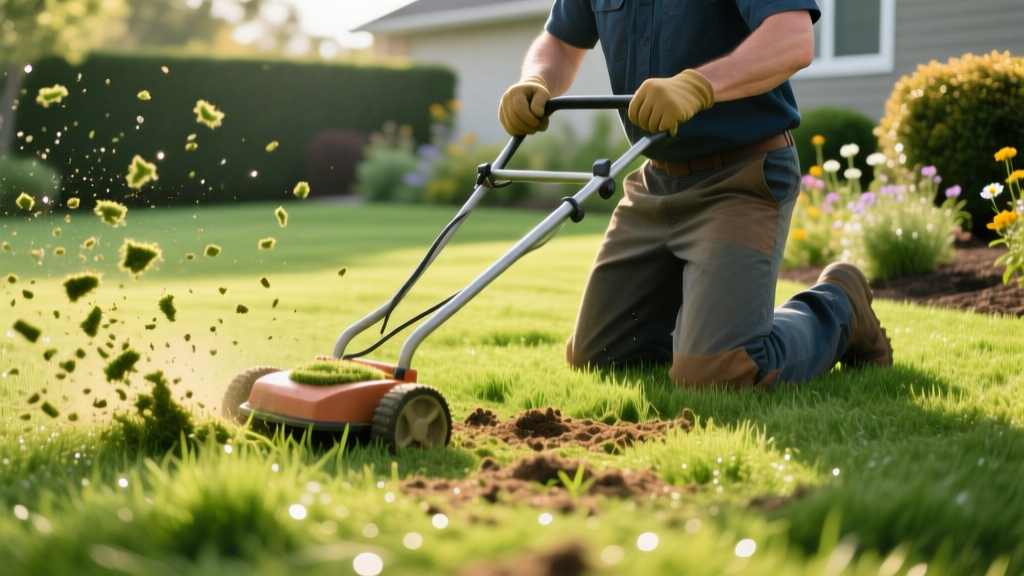
How to Mulch the Grass: Grasscycling & Soil Amendment Guide
Redefining What It Means to Mulch the Grass
When homeowners ask how to mulch the grass, they are typically referring to one of two distinct lawn care practices: grasscycling (returning finely chopped grass clippings to the turf) or top-dressing (applying a thin layer of fine organic compost or leaf mold over the existing lawn). Both methods serve as powerful soil amendments, but they require entirely different execution strategies, equipment setups, and seasonal timing.
Leaving clippings on the lawn is the most efficient way to recycle nutrients directly back into the root zone. Conversely, applying external organic mulch as a top-dressing amends the soil microbiome and improves water retention in degraded turf. This guide breaks down the exact science, equipment requirements, and mathematical coverage rates for both techniques to help you build a resilient, self-sustaining lawn.
Myth vs. Fact: The Thatch Misconception
Myth: Mulching grass clippings causes thatch buildup, suffocating the lawn and inviting disease.
Fact: Thatch is primarily composed of lignin-heavy plant parts like stolons, rhizomes, and deep roots that resist rapid decay. Grass clippings are 80% water and highly cellulosic. According to University of Minnesota Extension, clippings decompose within a few weeks when processed correctly, feeding soil microbes rather than accumulating as thatch. Thatch is actually caused by over-fertilization, overwatering, and compacted soils that inhibit microbial activity.
The Science of Grasscycling: Nutrient Return Rates
Grasscycling is essentially a free, slow-release fertilizer program. A typical 1,000-square-foot lawn generates up to 300 pounds of fresh grass clippings over a single growing season. Because fresh clippings contain roughly 4% Nitrogen, 2% Phosphorus, and 1% Potassium by dry weight, returning them to the soil offsets approximately 25% to 30% of your annual synthetic fertilizer requirements.
However, the clippings must be processed into micro-particles to decompose before they smother the turf canopy. If clippings exceed 1 inch in length, they mat together, blocking sunlight and creating a humid microenvironment that promotes fungal pathogens like dollar spot and brown patch.
Mower Deck Aerodynamics and Blade Selection
To successfully mulch the grass, your mower must generate a high-lift vacuum inside the deck. Standard straight blades slice the grass once and eject it. True mulching blades feature extended lifting wings and extra cutting surfaces along the blade's trailing edge. These wings keep the clippings suspended in the deck's air vortex, forcing them through the blade's cutting path two or three times before dropping them to the soil.
- Standard Mulching Blades: Ideal for dry, fine-bladed grasses like Bermuda and Zoysia. Look for high-carbon steel blades with at least 10-12 teeth on the trailing edge.
- Gator Blades (Toothed):strong> Excellent for tough, wet, or overgrown cool-season grasses like Kentucky Bluegrass and Tall Fescue. The aggressive teeth shred cellulose walls, accelerating microbial breakdown.
- Deck Baffles: Modern mowers like the Toro Recycler series utilize patented Vortex baffling under the deck to create localized cyclonic airflows, ensuring clippings are chopped to under 1/4 inch before falling.
Decision Matrix: When to Mulch vs. When to Bag
While mulching is the default best practice, there are specific environmental and pathological conditions where bagging is mandatory to protect turf health.
| Condition | Action | Technical Rationale |
|---|---|---|
| Routine Weekly Mowing | Mulch | Clippings are short (<1/3 of blade height); rapid decomposition returns N-P-K to soil. |
| Active Fungal Outbreak | Bag | Leaving infected clippings spreads spores (e.g., Sclerotinia homoeocarpa) across the lawn. |
| Weed Seed Flush | Bag | Mowing mature crabgrass or Poa annua with seed heads will replant weeds via the mulch deck. |
| Heavy Spring Growth | Double Cut | Mow once at normal height, then lower deck 1/2 inch and mow perpendicularly to chop excess biomass. |
Top-Dressing: Applying External Mulch to the Lawn
Beyond grasscycling, you can physically mulch the grass canopy by applying a top-dressing of finely screened organic compost or leaf mold. This practice amends heavy clay soils, buffers pH fluctuations, and introduces vital mycorrhizal fungi to the root zone. Unlike garden beds where mulch is applied 2-3 inches thick, lawn top-dressing requires surgical precision to avoid smothering the turf crowns.
Step-by-Step Top-Dressing Application
- Core Aerate First: Always pair top-dressing with core aeration. Pulling 3-inch plugs creates physical channels for the compost to reach the subsoil, bypassing the thatch layer.
- Select the Right Material: Use thermophilic compost that has reached 131°F-160°F during processing to ensure weed seeds and pathogens are destroyed. The particle size must be screened through a 3/8-inch mesh.
- Calculate Volume: Apply exactly 1/4 inch to 1/2 inch of compost. Applying more than 1/2 inch will bury the grass crowns, causing hypoxia and turf death.
- Distribution Method: Drop small piles of compost across the lawn. Use a flexible metal landscaping rake or a specialized compost spreader (like the Landzie 24-inch mesh spreader) to drag the material into the aeration holes and turf canopy.
- Watering In: Apply 1/2 inch of irrigation immediately after spreading to wash the compost off the grass blades and settle it into the soil profile.
2026 Material Cost & Coverage Calculator
Understanding bulk volume is critical for budgeting a top-dressing project. One cubic yard of material equals 27 cubic feet.
- At 1/4 inch depth: 1 cubic yard covers approximately 1,296 square feet.
- At 1/2 inch depth: 1 cubic yard covers approximately 648 square feet.
- Average Bulk Pricing: Screened organic compost typically ranges from $35 to $55 per cubic yard depending on regional transport costs and organic certification (OMRI listed).
- Delivery Fees: Expect a flat $75-$120 dump truck delivery fee for orders under 5 cubic yards.
Troubleshooting Common Mulching Failures
Even with the right equipment, environmental variables can cause mulching protocols to fail. Here is how to diagnose and correct the most common issues.
Clumping and Windrowing
Symptom: Wet, matted rows of clippings left on the lawn surface.
Cause: Mowing wet grass, or cutting more than 1/3 of the grass blade height at one time. The deck's air vortex becomes overloaded, causing clippings to stick to the damp underside of the mower deck.
Fix: Never mow when dew is present. If you miss a mowing cycle and the grass is overgrown, raise the deck to its highest setting for the first pass to remove the top 1/3, then lower it to the target height for a second pass.
Yellowing Turf Canopy
Symptom: The grass tips turn yellow or brown a few days after mulching.
Cause: Dull mower blades are tearing the grass rather than slicing it. The shredded tips lose moisture rapidly and die back. Furthermore, heavy mulch layers can temporarily tie up soil nitrogen as microbes consume carbon to break down the clippings.
Fix: Sharpen or replace mower blades every 25 hours of operation. If nitrogen tie-up is suspected, apply a light dose of fast-acting liquid nitrogen (such as 20-0-0 UAN solution) at 0.5 lbs per 1,000 sq ft to feed the microbes.
Frequently Asked Questions
Can I mulch the grass if I have a robotic mower?
Yes. In fact, robotic mowers like the Husqvarna Automower or Worx Landroid are designed exclusively for grasscycling. Because they cut daily, they only remove 1-2 millimeters of grass tissue at a time. These micro-clippings fall directly to the soil surface and decompose almost instantly, acting as a continuous, ultra-fine mulch that dramatically improves soil moisture retention.
Should I add a mulch plug to my mower deck?
If your mower is a standard side-discharge model, you must install a mulch plug (or chute blocker) to close the side exhaust. This traps the clippings inside the deck for secondary cutting. However, if you have a dedicated mulching mower with a specialized deck design (like the Honda HRX series with its Versamow sliding door), a plug is unnecessary; you simply slide the internal baffle to the 'Mulch' position.
Does mulching the grass spread lawn diseases?
Under normal conditions, no. The UV radiation from sunlight and the competitive microbes in the soil quickly neutralize most common pathogens in clippings. However, as noted by Penn State Extension, if your lawn is actively suffering from a severe fungal disease like Summer Patch or Pythium Blight, you should temporarily bag the clippings to reduce the overall spore load and prevent mechanical transmission via the mower wheels and deck.

