
Lawn Care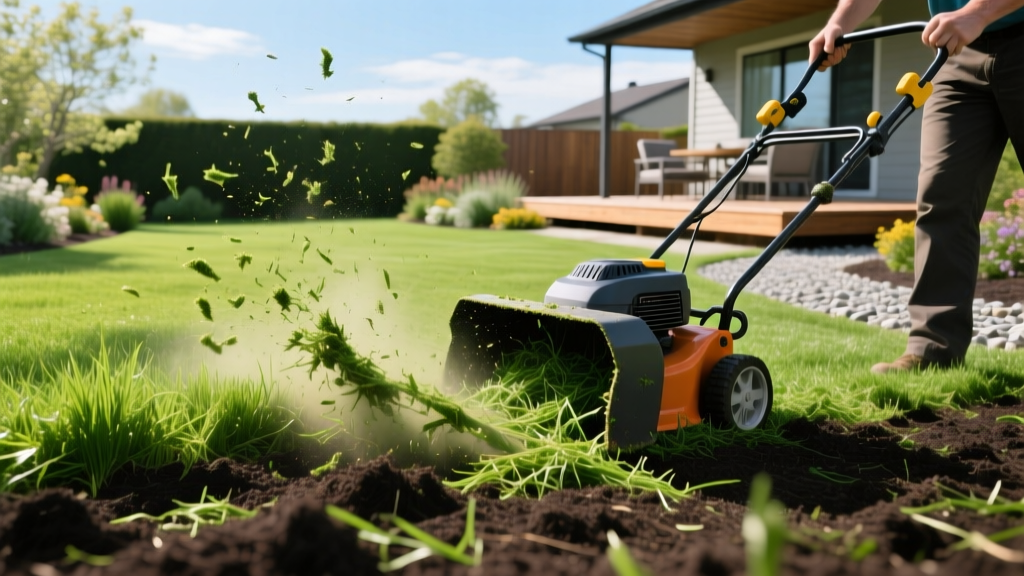
Mulching Grass Clippings: The Ultimate Soil Amendment Guide
The Nutritional Math: What Grass Clippings Actually Add to Soil
Leaving clippings on the lawn—often called grasscycling—is not merely a time-saving shortcut; it is a highly calculated soil amendment strategy. When you commit to mulching grass back into the turf canopy, you are recycling a massive volume of organic matter and essential macronutrients directly into the soil profile. According to research from Penn State Extension, a typical 1,000-square-foot lawn generates between 300 and 400 pounds of clippings annually.
Fresh grass clippings are roughly 80% water, but the remaining 20% dry matter is incredibly nutrient-dense. By mulching grass consistently, you can offset up to 25% of your annual synthetic fertilizer requirements, saving roughly $15 to $25 per 5,000 square feet in commercial fertilizer costs each season.
| Nutrient | Percentage (N-P-K) | Annual Return per 1,000 sq ft | Equivalent Synthetic Product |
|---|---|---|---|
| Nitrogen (N) | 4.0% | 1.0 - 1.5 lbs | ~3 lbs of 32-0-4 Urea |
| Phosphorus (P) | 1.0% | 0.2 - 0.4 lbs | ~1 lb of 0-20-0 Superphosphate |
| Potassium (K) | 2.0% | 0.5 - 0.8 lbs | ~1.5 lbs of 0-0-60 Muriate of Potash |
Expert Insight: Nitrogen from mulched clippings is released slowly as soil microbes break down the cellulose. Unlike synthetic urea, which can burn turf if over-applied, the nitrogen in grass clippings is naturally chelated and released in sync with the soil's biological activity and temperature curves.
Mower Deck Aerodynamics: Engineering the Perfect Mulch
The most common failure mode when mulching grass is clumping, which suffocates the turf beneath and invites fungal pathogens like brown patch. This is rarely a moisture issue; it is almost always an aerodynamic failure caused by using the wrong mower blade. Standard high-lift blades are designed to create a vacuum that stands the grass up for a clean cut and immediately ejects it out the side discharge. They lack the recutting geometry required for grasscycling.
To properly mulch grass, you need a dedicated mulching blade (often referred to by the aftermarket trademark 'Gator blade'). These blades feature a distinct design profile:
- Extended Cutting Surface: Additional teeth or bends along the trailing edge create a secondary cutting plane.
- Reduced Lift Angle: The primary lift is flattened slightly to keep clippings suspended in the deck vortex longer, rather than ejecting them immediately.
- Deck Baffles: Modern mulching mowers (like the EGO Power+ 21-inch or Toro Recycler series) utilize stamped steel baffles under the deck to trap clippings in a cyclonic chamber until they are reduced to pieces smaller than 1/4 inch.
Cost to Upgrade: If your current mower lacks a mulching plug or specialized deck, upgrading to a set of Oregon G5 Gator mulching blades costs between $25 and $45 for a standard 21-inch deck. This single hardware change reduces clipping size by up to 60%, virtually eliminating surface clumping.
Troubleshooting the 'Wet Clump' Failure Mode
Even with premium mulching blades, environmental variables can disrupt the deck vortex. Use this decision tree to manage edge cases when mulching grass in suboptimal conditions:
Scenario A: Morning Dew or Light Rain
Symptom: Clippings stick to the underside of the mower deck, eventually dropping in heavy, wet mats.
Fix: Do not mulch. Switch to side-discharge or bagging. Mowing wet grass tears the leaf blade, creating ragged edges that lose moisture and turn brown. Wait until the turf is completely dry to the touch.
Symptom: Clippings stick to the underside of the mower deck, eventually dropping in heavy, wet mats.
Fix: Do not mulch. Switch to side-discharge or bagging. Mowing wet grass tears the leaf blade, creating ragged edges that lose moisture and turn brown. Wait until the turf is completely dry to the touch.
Scenario B: Overgrown Turf (Violating the 1/3 Rule)
Symptom: You missed a mowing window, and the grass is 4.5 inches tall, but your target height is 2.5 inches.
Fix: Never cut more than 1/3 of the grass blade in a single pass. Set the deck to 3.5 inches for the first pass to remove the top 1/3. Then, lower the deck to 2.5 inches and make a second pass a few days later. The 'double-cut' method ensures the volume of clippings never overwhelms the deck's mulching capacity.
Symptom: You missed a mowing window, and the grass is 4.5 inches tall, but your target height is 2.5 inches.
Fix: Never cut more than 1/3 of the grass blade in a single pass. Set the deck to 3.5 inches for the first pass to remove the top 1/3. Then, lower the deck to 2.5 inches and make a second pass a few days later. The 'double-cut' method ensures the volume of clippings never overwhelms the deck's mulching capacity.
Garden Bed Application: C:N Ratios and Herbicide Carryover
While mulching grass back into the lawn is universally beneficial, using bagged grass clippings as mulch in vegetable gardens or ornamental beds requires strict precautions. Fresh grass clippings have a Carbon-to-Nitrogen (C:N) ratio of roughly 15:1 to 20:1. When applied in thick layers (over 2 inches), they mat together, forming an anaerobic, slimy barrier that repels water and generates intense heat as they rapidly decompose, which can scorch plant stems.
Furthermore, herbicide carryover is a severe threat to garden health. Broadleaf herbicides containing aminopyralid (e.g., Milestone) or clopyralid (e.g., Confront) do not break down quickly in the turf environment. If you apply these chemicals to your lawn and subsequently use the clippings in a vegetable garden, the residual herbicide will severely distort, stunt, or kill sensitive crops like tomatoes, peppers, and legumes. According to NC State Extension, if your lawn has been treated with persistent broadleaf herbicides, you must compost the clippings at high temperatures (140°F+) for a minimum of one year before using them around sensitive garden plants, or avoid using them in garden beds entirely.
Step-by-Step: Transitioning from Bagging to Mulching
If you are transitioning your lawn care program from bagging to mulching grass, follow this three-week protocol to ensure the soil microbiome and turf canopy adapt without triggering thatch buildup.
- Week 1: Hardware Audit and Blade Sharpening. Remove the side-discharge chute and install the mulching plug. Inspect your blade. A dull blade shreds grass tips, causing them to turn white and resist microbial breakdown. Sharpen the blade to a 30-degree bevel or install a new aftermarket mulching blade.
- Week 2: Calibrate the 1/3 Rule. Measure your turf. For Tall Fescue, maintain a 3.0-inch height; mow when it reaches 4.5 inches. For Bermudagrass, maintain 1.5 inches; mow when it hits 2.25 inches. Adjust your mowing frequency to hit these exact thresholds, which may mean mowing twice a week during peak spring growth.
- Week 3: Core Aeration Integration. To prevent any un-decomposed organic matter from accumulating at the soil line, schedule liquid or mechanical core aeration. This introduces oxygen to the thatch layer, accelerating the decomposition of mulched clippings by soil actinomycetes and fungi.
Frequently Asked Questions
Does mulching grass cause thatch buildup?
No. This is a persistent myth in lawn care. Thatch is primarily composed of lignin-rich, slow-to-decompose tissues like rhizomes, stolons, and deep root crowns. Grass clippings are mostly water and simple cellulose, which decompose within 7 to 14 days when exposed to soil microbes. Thatch buildup is actually caused by over-applying synthetic nitrogen, which accelerates root growth faster than soil biology can break it down, or by heavy pesticide use that kills off the earthworms and fungi responsible for decomposition.
Should I mulch grass during the fall leaf drop?
Yes, but with limitations. You can mulch light layers of autumn leaves directly into the lawn canopy alongside the grass clippings. Research shows that mulching up to 6 inches of dry leaves into the turf provides excellent winter insulation and adds vital carbon to the soil. However, if the leaf layer is so thick that you cannot see the grass blades beneath it before mowing, you must bag or rake the excess to prevent smothering the turf and blocking winter sunlight.

