
Lawn Care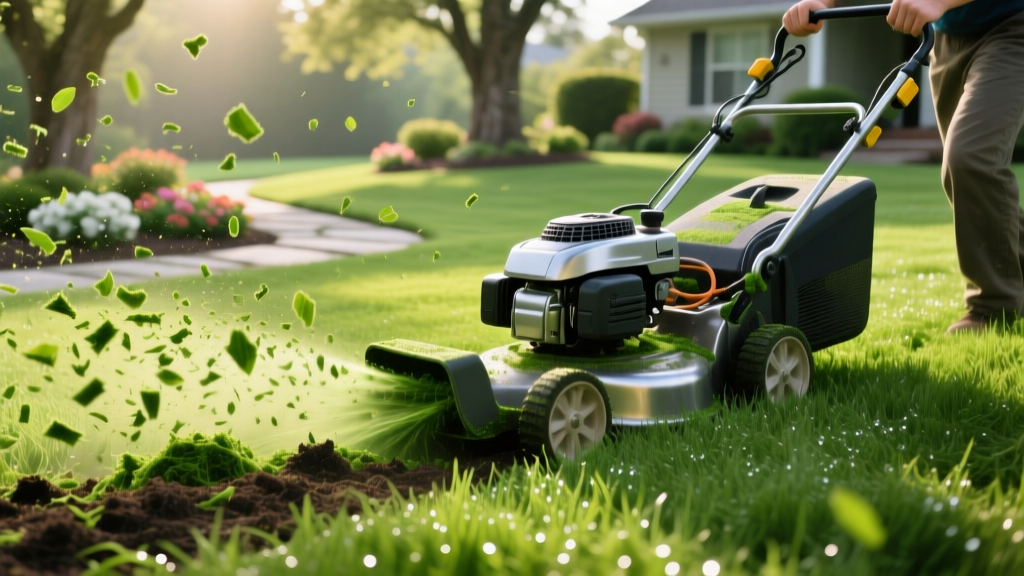
Mulching With Mower: A Grasscycling Soil Amendment Guide
The Science of Grasscycling as a Soil Amendment
Leaving grass clippings on the lawn—commonly known as grasscycling—is not merely a time-saving shortcut; it is a highly effective, continuous soil amendment strategy. When you are mulching with mower equipment designed for fine chopping, you are actively feeding the soil microbiome. Grass clippings possess a carbon-to-nitrogen (C:N) ratio of approximately 12:1 to 15:1. For context, wood mulch has a C:N ratio of 400:1, which ties up soil nitrogen during decomposition. The low C:N ratio of grass clippings means they break down rapidly, releasing nutrients directly back into the root zone without causing nitrogen immobilization.
Nutrient Yield Data: The 4-1-2 Profile
Grass clippings contain roughly 4% Nitrogen, 1% Phosphorus, and 2% Potassium by dry weight. A typical 1,000 square foot lawn generates about 300 pounds of clippings annually. By mulching these clippings, you return approximately 12 pounds of actual nitrogen, 3 pounds of phosphorus, and 6 pounds of potassium to the soil. This fulfills nearly 25% of a standard lawn's annual nitrogen requirement, allowing you to reduce synthetic fertilizer applications and lower your annual lawn care budget by $40 to $60 per 5,000 square feet.
A persistent myth in lawn care is that mulched clippings cause thatch. According to University of Minnesota Extension, thatch is primarily composed of lignin-rich roots, stolons, and rhizomes that decompose slowly. Grass leaves are mostly water (75% to 80%) and highly digestible cellular material that soil microbes and earthworms consume within one to two weeks. Thatch buildup is actually a symptom of compacted soil, over-application of synthetic nitrogen, or heavy pesticide use that harms the decomposing microbe population.
Mower Blade Selection for Optimal Mulching
Standard mower blades are engineered for discharge and bagging. They create a strong upward airflow to lift grass before a single, clean cut. However, effective mulching requires clippings to remain suspended under the deck long enough to be cut two or three times into pieces smaller than 1/4 inch. To achieve this, you must upgrade your hardware.
| Blade Type | Design Characteristics | Best Use Case | Avg. Cost (Pair) |
|---|---|---|---|
| Standard / Straight | Flat profile, single cutting edge at each end. | Side-discharge, bagging, leaf clearing. | $20 - $30 |
| High-Lift | Pronounced upward curve at the trailing edge. | Bagging in dense, wet grass; heavy suction. | $25 - $40 |
| Dedicated Mulching | Curved body, multiple cutting edges, baffles. | Dry grass, frequent mowing, grasscycling. | $30 - $50 |
| Gator / Hybrid (e.g., Oregon G5) | High-lift wings with serrated, angled teeth. | All-season mulching, leaf shredding, tall grass. | $45 - $70 |
For homeowners serious about soil amendment via grasscycling, hybrid blades like the Oregon Gator G5 or MaxPower Mulching Blades offer the highest information gain. The serrated teeth on these blades create micro-vortices under the deck, repeatedly chopping clippings and fall leaves into a fine, powdery mulch that drops directly to the soil line, bypassing the turf canopy entirely.
The 1/3 Rule and Mowing Frequency Framework
The success of mulching with mower equipment hinges entirely on clipping volume. If you cut too much grass at once, the clippings will mat together, block sunlight, and smother the turf beneath. Follow this operational framework to maintain optimal soil amendment rates:
- Calculate the Target Height: Identify your grass type. Cool-season grasses (Kentucky Bluegrass, Tall Fescue) should be maintained at 2.5 to 3.5 inches. Warm-season grasses (Bermuda, Zoysia) thrive at 1 to 2 inches.
- Apply the 1/3 Rule: Never remove more than one-third of the total leaf blade in a single pass. If your target height is 3 inches, you must mow when the grass reaches 4.5 inches.
- Adjust for Spring Flush: During peak spring growth, cool-season grasses can grow 0.5 inches per day. You may need to mow every 3 to 4 days to maintain the 1/3 rule and prevent clipping clumps.
- Dry Canopy Requirement: Only mulch when the grass is completely dry. Moisture causes clippings to adhere to the underside of the mower deck, destroying the aerodynamic suspension required for multi-cutting.
Troubleshooting Clumping and Edge Cases
Even with premium mulching blades and a strict mowing schedule, environmental variables can disrupt the grasscycling process. Here is how to handle common failure modes:
The Overgrowth Scenario
If you return from vacation or endure a week of heavy rain and the grass is twice its target height, do not attempt to mulch it down in one pass. The sheer volume of biomass will overwhelm the mower deck, resulting in thick, wet windrows that will kill the grass underneath and invite fungal pathogens like brown patch.
Pro-Tip: The Double-Cut Method
Set your mower deck to its highest setting and mow the entire lawn to reduce the bulk. Then, lower the deck to your normal target height and mow again in a perpendicular direction. This cross-hatching technique shreds the initial clippings and distributes them evenly into the soil canopy.
Deck Buildup and Aerodynamic Failure
If you notice clumps forming despite dry grass and proper height, inspect the underside of your mower deck. Sap, moisture, and fine plant matter can bake onto the steel, altering the deck's interior geometry and killing the vortex airflow. Scrape the deck clean with a putty knife and apply a light coating of silicone spray or graphite lubricant to prevent future adherence.
Supplementing Mulched Clippings with Organic Amendments
While mulching with mower technology provides excellent nitrogen and organic matter, grass clippings are not a complete soil amendment profile. They are notably deficient in calcium, iron, and complex microbial inoculants. To build truly resilient soil, pair grasscycling with targeted supplementary amendments based on annual soil tests.
- Calcium Deficiency: If your soil test reveals low base saturation of calcium (below 60%), apply pelletized gypsum (calcium sulfate) at a rate of 50 lbs per 1,000 sq ft in the fall. Gypsum will not alter soil pH but will improve soil structure and flocculation.
- Microbial Inoculation: Clippings feed existing microbes, but they do not introduce new strains. Apply a liquid kelp or humic acid soil conditioner (such as Simple Lawn Solutions Liquid Humic Fulvic) every 6 weeks during the growing season to diversify the microbial food web.
- Compost Top-Dressing: Once a year, ideally during fall aeration, apply a 1/4-inch layer of screened, mature compost. The mulched clippings will help bind the compost to the soil surface, preventing wind and water erosion while accelerating integration into the root zone.
According to Penn State Extension, combining grasscycling with periodic compost top-dressing can increase soil water retention by up to 20%, significantly reducing irrigation requirements during summer droughts. By viewing your mower not just as a cutting tool, but as a precision compost spreader, you transform routine lawn maintenance into an active soil-building regimen.
Frequently Asked Questions
Does mulching with a mower spread lawn diseases?
If your lawn is actively infected with a fungal disease like dollar spot or snow mold, mulching can spread the spores across the yard. During active outbreaks, it is best to bag the clippings and dispose of them until the disease is controlled with targeted fungicides or cultural practices.
Can I mulch fall leaves with my mower?
Yes, provided you use a high-lift or Gator-style mulching blade. Shredded leaves act as an exceptional carbon-rich soil amendment. Ensure the leaf layer is no thicker than 6 inches before mowing, and make multiple passes until the leaf fragments are the size of dimes, allowing them to filter down to the soil without smothering the grass blades.

