
Lawn Care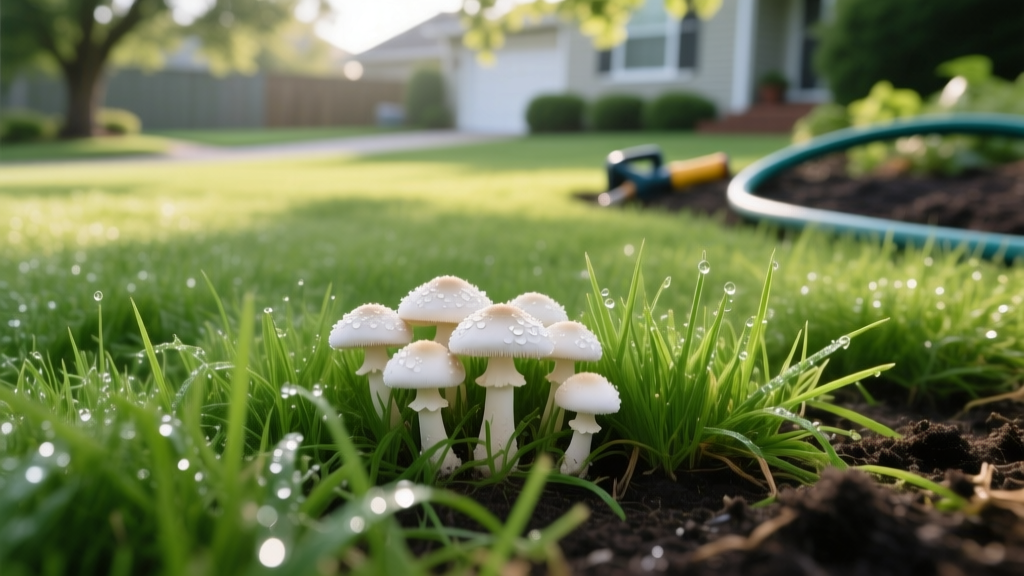
Mushroom Growing on Grass During Lawn Establishment: Causes & Cures
The Fungal Flush: Why You See a Mushroom Growing on Grass After Seeding
When establishing a new lawn from seed or sod, the appearance of a mushroom growing on grass is one of the most common—and misunderstood—phenomena homeowners encounter. This sudden fungal fruiting is rarely a sign of disease. Instead, it is a direct biological response to the exact conditions required for grass seed germination: consistent surface moisture, moderate temperatures, and an abundance of organic matter.
During the 14-to-21-day germination window, the top half-inch of soil must remain perpetually moist. This sustained saturation, combined with carbon-rich amendments like peat moss, straw mulch, or composted topsoil, creates an ideal incubator for saprophytic fungi. These fungi are not attacking your new grass; they are decomposing the organic matter you introduced to the soil. However, an excessive flush of fruiting bodies can smother delicate seedlings, create hydrophobic pockets in the soil, and indicate an imbalance in your soil's Carbon-to-Nitrogen (C:N) ratio.
⚠️ Critical Distinction: Saprophytes vs. Pathogens
Before taking action, identify the fungus. Small, brown, or white umbrella-shaped mushrooms (like Conocybe or Panaeolus species) and puffballs are harmless saprophytes breaking down thatch and mulch. Conversely, thick, leathery rings of dark green grass bordered by dying turf and large, toxic Chlorophyllum molybrites indicate a Fairy Ring (Basidiomycete pathogen), which requires aggressive mechanical intervention. According to Penn State Extension, fairy rings actively starve grass roots of water and release toxic hydrogen cyanide gas into the soil profile.
Before taking action, identify the fungus. Small, brown, or white umbrella-shaped mushrooms (like Conocybe or Panaeolus species) and puffballs are harmless saprophytes breaking down thatch and mulch. Conversely, thick, leathery rings of dark green grass bordered by dying turf and large, toxic Chlorophyllum molybrites indicate a Fairy Ring (Basidiomycete pathogen), which requires aggressive mechanical intervention. According to Penn State Extension, fairy rings actively starve grass roots of water and release toxic hydrogen cyanide gas into the soil profile.
Pre-Planting Soil Prep to Minimize Nuisance Fruiting
The most effective way to manage a mushroom growing on grass is to alter the soil environment before the seed ever touches the dirt. Fungi thrive in high-carbon, low-nitrogen environments. When you incorporate raw or poorly composted organic matter into your seedbed, soil bacteria consume all available nitrogen to break down the carbon, leaving your new grass nitrogen-starved while fungi flourish.
Managing the Carbon-to-Nitrogen (C:N) Ratio
To establish a lawn without triggering a massive fungal flush, you must balance your soil amendments. The ideal C:N ratio for a seedbed is between 15:1 and 20:1. Below is a breakdown of common establishment amendments and their fungal risk profiles.
| Amendment | Approx. C:N Ratio | Fungal Flush Risk | Establishment Strategy |
|---|---|---|---|
| Sphagnum Peat Moss | 58:1 | High | Pre-mix with synthetic starter fertilizer (high N) 48 hours before spreading. |
| Wheat Straw Mulch | 80:1 | Severe | Avoid for seeding; use only for dormant sod erosion control. |
| Composted Leaf Mold | 30:1 | Moderate | Ensure full composting (130°F+ for 3 days) to kill fungal spores. |
| Worm Castings | 12:1 | Low | Excellent top-dressing; introduces beneficial bacteria that outcompete fungi. |
By utilizing fully composted materials and worm castings, you introduce beneficial bacteria (Bacillus and Pseudomonas species) that dominate the soil food web, naturally suppressing the mycelial networks responsible for surface fruiting.
Managing the Fungal Flush During the 21-Day Germination Window
If you have already seeded and notice a mushroom growing on grass daily, your watering schedule is likely sustaining the fungal mycelium. While grass seed requires constant moisture, fungi require saturation. You can decouple these two needs using pulse watering.
Step-by-Step Triage for Active Mushroom Outbreaks on New Seed
- Switch to Pulse Watering: Instead of watering once for 15 minutes, water 3 to 4 times a day for just 3 to 5 minutes. This keeps the top 1/4 inch moist for the seed but allows the underlying soil profile to dry slightly between cycles, depriving the deeper mycelium of the standing water it needs to produce fruiting bodies.
- Physical Removal (The Snap Method): Do not pull mushrooms by the stem, as this leaves the mycelial node intact to produce more. Snap the cap off at the base or use a soft-bristled push broom to gently knock them over. Removing the cap prevents spore dispersal, though it does not kill the underground network.
- Micro-Aeration: Use a spiked lawn roller or pitchfork to poke 2-inch holes in areas with heavy fruiting. This breaks up the hydrophobic mycelial mat, allowing water to reach the grass roots instead of pooling on the surface where fungi thrive.
💡 Data Highlight: The Moisture Threshold
Research from the University of Minnesota Extension indicates that most turfgrass saprophytes require soil moisture levels exceeding 40% volumetric water content (VWC) to initiate fruiting. By utilizing a cheap soil moisture meter and keeping the top inch between 20-30% VWC during the later stages of germination (days 14-21), you can effectively halt mushroom production without inducing drought stress in Kentucky Bluegrass or Tall Fescue seedlings.
Chemical vs. Biological Controls: What Actually Works
Homeowners often reach for chemical fungicides when they see a mushroom growing on grass, but this is largely a waste of money. Over-the-counter turf fungicides containing azoxystrobin or propiconazole are designed to target Ascomycete pathogens like Brown Patch or Dollar Spot. They are highly ineffective against the Basidiomycete fungi that produce lawn mushrooms, as these organisms possess different cellular wall structures and enzymatic defenses.
Instead, modern lawn establishment relies on biological competition. Applying a liquid biological amendment containing Bacillus amyloliquefaciens (such as Bio-Turf or similar commercial strains) at a rate of 2 oz per 1,000 sq ft during the seeding phase introduces billions of beneficial bacteria. These bacteria consume the simple sugars exuded by grass roots and rapidly colonize the organic matter, effectively starving the saprophytic fungi and preventing fruiting body formation.
"Attempting to sterilize a seedbed of fungi is counterproductive. A healthy lawn requires a robust mycorrhizal network to access phosphorus. The goal during establishment is not eradication, but managing the carbon inputs so the fungi remain underground, supporting the grass roots, rather than fruiting on the surface."
Frequently Asked Questions
Will the mushrooms kill my new grass seed?
No. Saprophytic mushrooms do not parasitize living plant tissue. They feed exclusively on dead organic matter (thatch, wood chips, straw). However, if a dense cluster of mushrooms physically blocks sunlight from reaching a newly sprouted seedling, that specific seedling may damp off or fail to photosynthesize. Knocking them over with a broom resolves this localized issue.
Should I apply a nitrogen-heavy fertilizer to kill the mushrooms?
Applying a fast-release nitrogen source (like urea, 46-0-0) at a rate of 0.5 lbs per 1,000 sq ft will accelerate the decomposition of the organic matter the fungi are feeding on. While this eventually starves the fungi, applying heavy synthetic nitrogen during the first 14 days of seed germination can burn delicate sprouts. Wait until the grass has been mowed twice before applying high-nitrogen synthetic fertilizers.
Are the mushrooms growing on my new lawn toxic to pets?
Many common lawn mushrooms, including Chlorophyllum molybrites (the false parasol) and various Inocybe species, are highly toxic to dogs and cats. Because identifying wild fungi requires expert mycological knowledge, you must assume all fruiting bodies are toxic. Keep pets off newly established lawns until the fungal flush subsides, or physically remove the caps daily during the establishment phase.

