
Lawn Care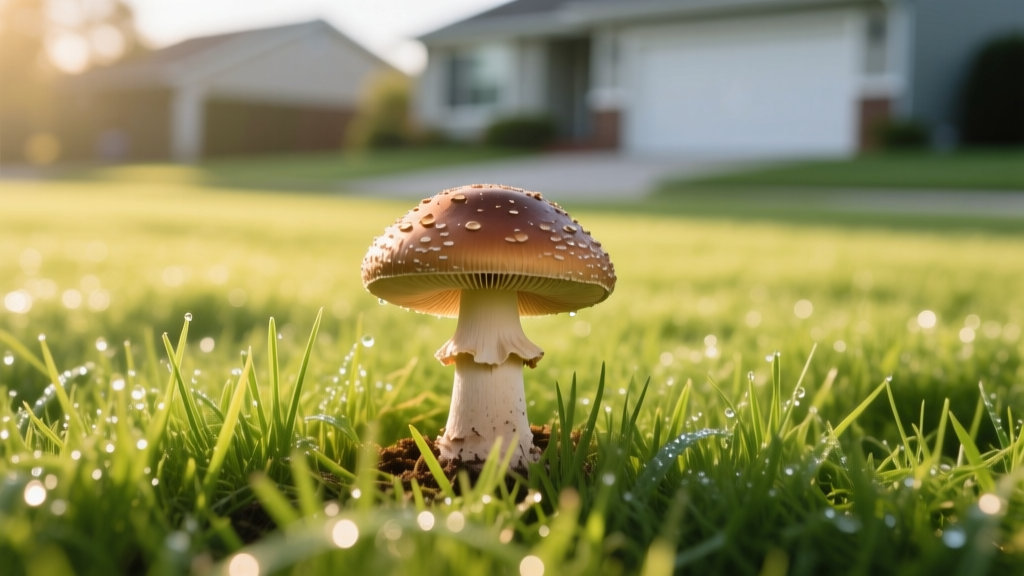
Mushroom in the Grass: Step-by-Step Removal and Prevention
The Biology: Why a Mushroom in the Grass Appears
Finding a mushroom in the grass is rarely a sign of a diseased lawn; rather, it is a visible indicator of active soil biology. Mushrooms are the fruiting bodies of subterranean fungal networks called mycelium. These networks act as nature’s recycling engines, breaking down buried organic matter such as old tree roots, construction debris, and excessive thatch. When soil moisture is high and temperatures range between 60°F and 80°F, the mycelium pushes fruiting bodies to the surface to release spores.
According to Penn State Extension, the vast majority of lawn mushrooms are saprophytic, meaning they feed exclusively on dead organic matter and pose zero threat to living turfgrass. However, their presence signals underlying maintenance issues—specifically, excessive moisture, poor drainage, or a thatch layer exceeding 0.5 inches. To reclaim your turf, you must alter the environmental conditions that allow the mycelium to fruit.
Diagnostic Matrix: Identify Your Lawn Fungus
Before initiating maintenance procedures, correctly identifying the fungal growth pattern dictates your treatment strategy. Not all mushrooms require eradication.
| Fungal Type | Visual Indicators | Root Cause | Action Required |
|---|---|---|---|
| Saprophytic (Scattered) | Random, solitary mushrooms; often white, brown, or tan caps. | Buried wood, old roots, or thick thatch layers. | Manual removal, aeration, and nitrogen loading. |
| Fairy Ring (Type II) | Dark green, fast-growing grass rings; hydrophobic (water-repellent) soil inside the ring. | Dense, deep mycelial mats blocking water infiltration. | Aggressive core aeration, soil wetting agents, and spiking. |
| Mycorrhizal (Tree-Associated) | Clustered near the base of living trees or shrubs; often colorful or distinct shapes. | Symbiotic relationship with living tree roots. | Do not remove; indicates a healthy tree-root ecosystem. |
Step-by-Step Maintenance Protocol for Mushroom Eradication
Eliminating a mushroom in the grass requires a multi-phase approach targeting the environment, not just the fruiting body. Follow this sequential maintenance program to starve the mycelium and restore turf dominance.
Phase 1: Manual Removal and Spore Containment
The immediate goal is to prevent spore dispersal, which can colonize new areas of the lawn.
- Timing: Inspect the lawn at dawn when dew is heavy. Moisture keeps the mushroom caps intact, reducing the risk of releasing spores during handling.
- Extraction: Wear gardening gloves and twist the mushroom at the base of the stipe (stem) to remove the entire structure. Do not simply kick or mow over them, as this scatters spores across the turf canopy.
- Disposal: Place all extracted mushrooms in a sealed plastic bag and dispose of them in municipal trash. Never add lawn mushrooms to a home compost pile, as standard compost temperatures (130°F–150°F) are often insufficient to kill hardy fungal spores.
Phase 2: Irrigation and Moisture Calibration
Fungi require consistent surface moisture to fruit. Overwatering or poor drainage is the primary catalyst for fungal outbreaks.
- Audit Your System: Place flat-bottomed tuna cans across your irrigation zones. Run the system for 15 minutes and measure the output. Calibrate your controller to deliver exactly 1 to 1.5 inches of water per week, including rainfall.
- Shift to AM Watering: Program your sprinkler controller to run between 4:00 AM and 6:00 AM. This allows the grass canopy to dry rapidly once the sun rises, depriving surface mycelium of the prolonged dampness required for mushroom formation.
- Deep and Infrequent Cycles: Switch from daily 10-minute watering to twice-weekly deep soakings. This encourages deep turf root growth while allowing the top 1 inch of soil to dry out between cycles, creating a hostile environment for surface fungi.
Phase 3: Thatch Management and Core Aeration
A thatch layer thicker than 0.5 inches acts as a sponge, trapping moisture and providing a buffet for saprophytic fungi. Furthermore, compacted soil prevents drainage, keeping the root zone perpetually wet.
- Measure Thatch: Use a soil probe or a sharp spade to cut a 3-inch wedge into the turf. Measure the spongy, brown layer between the green grass and the mineral soil. If it exceeds 0.5 inches, dethatching is mandatory.
- Core Aeration: Rent a walk-behind core aerator (such as a Ryan Ren-O-Thin or Classen CA-18). Ensure the machine extracts 2-to-3-inch soil plugs, spaced 2 to 4 inches apart. Leave the plugs on the lawn to break down naturally; the soil microbes in the plugs will help decompose the thatch layer.
- Topdressing: After aeration, apply a thin layer (1/8 inch) of coarse builder’s sand or a sand-topsoil mix. This improves drainage in the aeration holes and accelerates thatch decomposition.
Phase 4: Nitrogen Loading to Accelerate Decomposition
The mycelium feeding the mushrooms is consuming carbon-rich buried wood or thatch. By introducing high levels of nitrogen, you stimulate soil bacteria to rapidly consume the carbon food source, effectively starving the fungal network.
Pro Tip: The Nitrogen Spike
Apply a fast-release nitrogen fertilizer, such as Urea (46-0-0), at a rate of 1 lb of actual nitrogen per 1,000 square feet. Water it in immediately. This spikes bacterial activity, accelerating the decay of buried wood and eliminating the mushroom's food supply within 4 to 6 weeks.
Apply a fast-release nitrogen fertilizer, such as Urea (46-0-0), at a rate of 1 lb of actual nitrogen per 1,000 square feet. Water it in immediately. This spikes bacterial activity, accelerating the decay of buried wood and eliminating the mushroom's food supply within 4 to 6 weeks.
Treating Advanced Fairy Ring Outbreaks
If your diagnostic matrix identified a Fairy Ring (characterized by dark green rings and hydrophobic, dry soil inside the ring), standard aeration is insufficient. The University of California Integrated Pest Management program notes that fairy ring mycelial mats become highly hydrophobic, repelling water and causing localized drought stress in the turf.
The Surfactant and Spiking Method
- Soil Penetration: Use a spading fork or a solid-tine aerator to punch holes 6 to 8 inches deep directly through the hydrophobic ring and the soil immediately inside it.
- Apply Wetting Agents: Apply a professional-grade soil wetting agent (surfactant) such as Aqua-Aid 204 or Cascade Plus at a rate of 2 to 4 fluid ounces per 1,000 square feet. These agents break the surface tension of the water, allowing it to penetrate the waxy mycelial mat.
- Heavy Syringing: Immediately follow the surfactant application with 0.5 inches of water to flush the wetting agent deep into the fungal mat. Repeat this process every 14 days until the soil within the ring accepts water normally.
⚠️ Safety Warning: Toxicity and Pets
While most saprophytic lawn mushrooms are harmless to touch, species such as Chlorophyllum molybdenum (the false parasol) and various Amanita species are highly toxic if ingested. If you have dogs that forage or toddlers playing on the turf, perform daily morning inspections and remove all fruiting bodies immediately. Never rely on chemical fungicides for mushroom control, as they are largely ineffective against deep mycelial networks and introduce unnecessary toxins into the home landscape.
While most saprophytic lawn mushrooms are harmless to touch, species such as Chlorophyllum molybdenum (the false parasol) and various Amanita species are highly toxic if ingested. If you have dogs that forage or toddlers playing on the turf, perform daily morning inspections and remove all fruiting bodies immediately. Never rely on chemical fungicides for mushroom control, as they are largely ineffective against deep mycelial networks and introduce unnecessary toxins into the home landscape.
Long-Term Soil Health and Prevention
Once the immediate mushroom outbreak is managed, transition to a long-term soil health program to prevent recurrence. Transitioning from synthetic, salt-based fertilizers to organic amendments like composted poultry manure or bio-stimulants (e.g., humic and fulvic acids) promotes a diverse soil microbiome. A diverse microbiome naturally outcompetes aggressive fungal networks, ensuring that the next time you inspect your turf, you will find only healthy grass, rather than a mushroom in the grass.

