
Lawn Care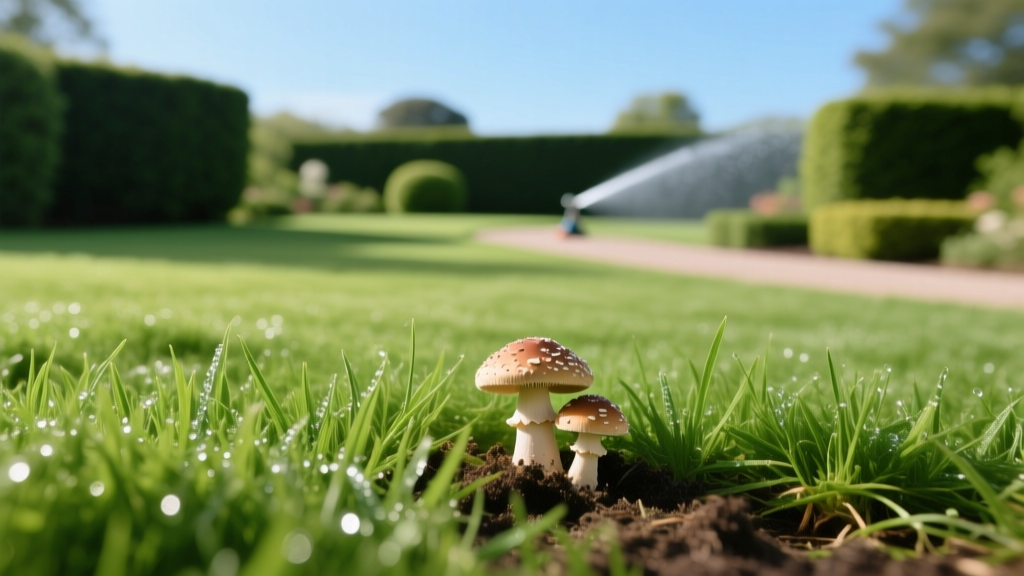
Mushrooms Growing on Lawn: Fixes for New Sod and Seed
Spending thousands of dollars on new sod or hydroseeding only to see a sudden explosion of mushrooms can trigger immediate panic among homeowners. However, mushrooms growing on lawn areas during the planting and establishment phase are rarely a sign of a lethal turf disease. Instead, they are a biological indicator of the specific environmental conditions required to keep new grass alive: frequent shallow watering, disturbed soil profiles, and exposed organic matter.
This guide breaks down the exact reasons saprophytic fungi fruit during the first 30 to 60 days of lawn establishment, the soil preparation mistakes that guarantee fungal blooms, and the precise watering transition protocols required to starve them out without killing your new grassroots.
The Biology of Post-Planting Fungal Blooms
To understand why mushrooms appear immediately after planting, you must understand the difference between pathogenic fungi (which attack living grass) and saprophytic fungi (which consume dead organic matter). The vast majority of mushrooms popping up in newly seeded or sodded lawns are saprophytes.
When a landscaping crew tills, grades, and prepares your soil for planting, they inevitably bury surface debris. According to the University of Minnesota Extension, these fungi feed on buried lignin and cellulose—such as wood chips, old root systems, pine straw, and construction debris left behind by home builders. The heavy, frequent watering required to keep new grass seed moist or to help sod roots knit into the soil creates a 100% humidity microclimate at the soil surface. This moisture, combined with soil temperatures between 65°F and 75°F, triggers the subterranean mycelium network to produce above-ground fruiting bodies (mushrooms) to release spores.
Soil Prep Mistakes That Guarantee Mushroom Blooms
If your newly established lawn is overrun with fungi, the root cause likely occurred weeks before the grass was planted. Avoid these common site-preparation errors in future planting phases or when repairing failed establishment zones:
- Buried Construction Debris: Builders often scrape away valuable topsoil and leave behind subsoil mixed with wood scraps and form stakes. When you lay sod over this, the fungi have an endless food source.
- Un-composted Organic Amendments: Tilling raw wood mulch or un-composted pine bark into the seedbed to 'improve soil structure' spikes the Carbon-to-Nitrogen (C:N) ratio above 30:1. Fungi dominate high-carbon environments, while grass struggles without supplemental nitrogen.
- Improper Grading and Low Spots: If the soil was not laser-graded before seeding, water will pool in depressions. These consistently saturated zones will fruit mushrooms continuously while the rest of the lawn dries out.
Identifying Common Establishment Fungi
Not all mushrooms pose the same aesthetic or structural threat to your new turf. Use this matrix to identify what is growing in your new lawn.
| Fungi Type | Visual Characteristics | Primary Trigger in New Lawns | Threat to New Grass |
|---|---|---|---|
| Ink Caps (Coprinus) | Tall, pale, bell-shaped caps that dissolve into black ink-like liquid. | Buried wood chips or decaying tree roots from site clearing. | None. Purely aesthetic; outcompetes seedlings only if physically smothering them. |
| Puffballs | Round, white, stemless spheres ranging from golf ball to grapefruit size. | High organic matter content and heavy surface moisture. | Low. Can block sunlight to underlying seedlings if densely clustered. |
| Fairy Ring (Chlorophyllum) | Large white mushrooms forming distinct circles or arcs, often with dark green grass inside the ring. | Decaying thatch or buried stumps; common in sod harvested from older fields. | Moderate. The mycelium mat can become hydrophobic, repelling water and causing localized drought stress in new sod. |
| Slime Mold | Yellow, gray, or brown powdery crusts resembling dog vomit on grass blades. | Excessive overhead watering and high humidity during seed germination. | None. It coats blades but does not infect plant tissue. |
The 6-Week Watering Transition Protocol (The Ultimate Fix)
The single most effective way to eliminate mushrooms growing on lawn areas during establishment is to alter the moisture profile. Fungi require constant surface moisture to fruit. Your goal is to transition from frequent, shallow watering to infrequent, deep watering as soon as the grassroots allow it.
Follow this exact watering transition schedule to dry out the top inch of soil (killing the mushrooms) while keeping the deeper root zone hydrated:
Weeks 1 & 2: The Germination / Knitting Phase
- Frequency: 3 to 4 times daily.
- Duration: 5 to 10 minutes per zone.
- Goal: Keep the top 1 inch of soil constantly damp. Note: Mushrooms will likely begin fruiting heavily here. Do not panic; the grass seed requires this moisture.
Weeks 3 & 4: The Root Establishment Phase
- Frequency: 1 time daily (early morning only).
- Duration: 15 to 20 minutes per zone (approx. 0.25 inches of water).
- Goal: Allow the very top surface to dry out slightly between waterings. This breaks the fungal fruiting cycle. The grass roots are now deep enough to pull from subsurface moisture.
Weeks 5 & 6: The Deep Soak Transition
- Frequency: 2 to 3 times per week.
- Duration: 30 to 45 minutes per zone (approx. 0.5 to 0.75 inches of water).
- Goal: Promote deep drought-tolerant roots. The topsoil will dry completely, rendering the environment hostile to saprophytic mushrooms.
Why Fungicides Fail on Saprophytic Mushrooms
⚠️ Industry Warning: Stop Wasting Money on Fungicides
Homeowners frequently rush to garden centers to purchase $40 to $60 bags of systemic fungicides like Scotts DiseaseEx (Azoxystrobin) or BioAdvanced (Propiconazole). These products will not kill saprophytic mushrooms. Systemic fungicides are designed to be absorbed by living plant tissue to protect against pathogens like Brown Patch or Dollar Spot. Saprophytic fungi feed on dead organic matter in the soil, completely bypassing the grass plant. Applying chemical fungicides to new sod for mushroom control is entirely ineffective and introduces unnecessary chemicals to your establishing root zone.
Mechanical Removal and Soil Aeration
While adjusting your watering schedule is the long-term cure, you may need immediate aesthetic relief, especially if puffballs or ink caps are physically smothering delicate new grass seedlings.
- Physical Extraction: Wear gardening gloves and pull the mushrooms out by the base of the stem. Do this early in the morning before the caps open and release spores. Dispose of them in a sealed yard waste bag; do not compost them.
- Nitrogen Supplementation: Because saprophytic fungi consume nitrogen as they break down carbon-rich buried wood, your new grass may be suffering from localized nitrogen deficiency (visible as yellowing halos around the mushrooms). Apply a fast-acting, water-soluble nitrogen source to these specific spots to feed the grass and outcompete the fungi.
- Early Aeration (Sod Only): If you laid solid sod (not seed) and mushrooms are persisting into month three, the soil beneath the sod may be severely compacted, trapping water. As noted by Penn State Extension, improving soil drainage is key to fungal management. Use a manual core aerator to punch holes through the sod and into the subsoil, allowing trapped moisture to escape and oxygen to reach the roots.
Summary: Patience is Part of the Process
Seeing mushrooms growing on lawn areas immediately after planting is a temporary nuisance, not a permanent landscape failure. By understanding that these fungi are simply cleaning up buried organic debris left over from site preparation, you can avoid the trap of useless chemical treatments. Stick strictly to the 6-week watering transition protocol, manually remove large fruiting bodies that threaten to smother seedlings, and trust that as your turf canopy thickens and the soil surface dries, the mushroom blooms will naturally vanish.

