Lawn Care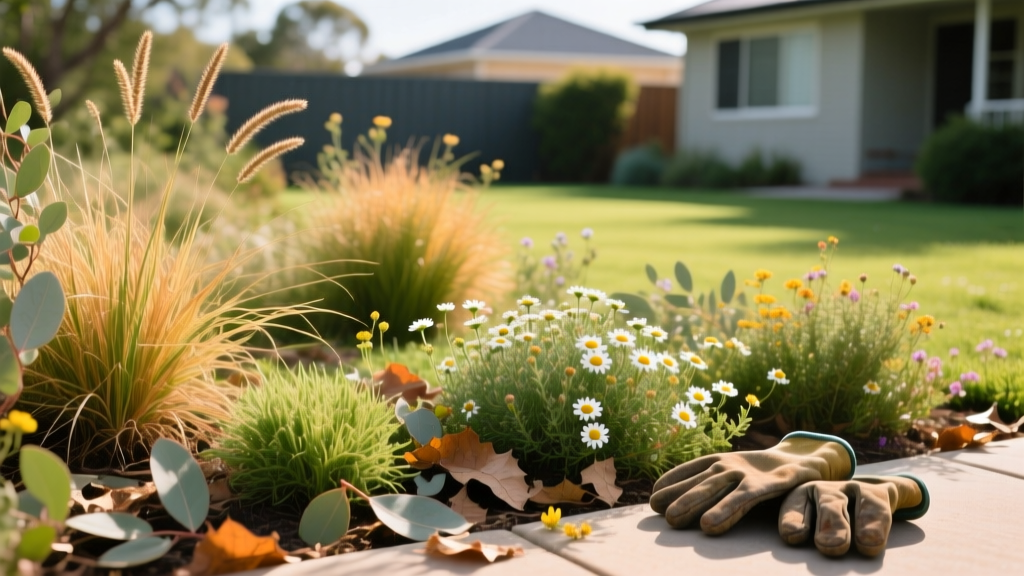
Seasonal Guide to Growing a Native Australian Lawn Alternative
The Shift Toward Endemic Turf: Why Timing is Everything
Transitioning to a native Australian lawn alternative is no longer just an ecological statement; it is a highly practical response to tightening municipal water restrictions and rising fertilizer costs. Unlike traditional imported turfgrasses such as Couch (Cynodon dactylon) or Kikuyu (Pennisetum clandestinum), endemic species like Weeping Grass (Microlaena stipoides) and Wallaby Grass (Austrodanthonia spp.) evolved to thrive in Australia's ancient, nutrient-poor soils. However, the single most common point of failure for homeowners attempting this transition is applying traditional turfgrass planting calendars to native species.
Native grasses operate on different biological triggers. Their germination and establishment phases are deeply tied to specific soil temperature thresholds and seasonal moisture patterns. According to the NSW Environment and Heritage guidelines, attempting to sow native grasses during the peak heat of summer or the deep freeze of winter will result in near-total seed loss. This guide provides a precise, region-specific seasonal calendar and agronomic framework for successfully establishing and maintaining a native lawn in 2026.
Regional Planting Calendar: When to Sow and Install
The optimal planting window for a native Australian lawn alternative depends entirely on your specific climate zone. Native seeds require consistent soil moisture for 14 to 21 days post-germination. Therefore, sowing must align with your region's natural rainfall onset or your capacity to irrigate without triggering heat stress.
| Climate Zone | Primary Regions | Optimal Seed Sowing Window | Optimal Plug/Turf Install | Key Trigger |
|---|---|---|---|---|
| Temperate | Sydney, Melbourne, Hobart, Canberra | Early Autumn (Mar-Apr) or Mid-Spring (Sep-Oct) | Autumn & Spring | Soil temp 15°C - 22°C |
| Subtropical | Brisbane, Northern NSW, Sunshine Coast | Late Summer/Early Autumn (Feb-Mar) | Year-round (avoid Jan heat) | Soil temp 20°C - 26°C |
| Mediterranean | Perth, Adelaide | Mid-Autumn (Apr-May) | Autumn & Early Winter | Onset of winter rains |
| Tropical | Cairns, Darwin, Townsville | Early Dry Season (May-Jun) | Early Dry Season | Reduced humidity/fungal risk |
Expert Insight: In temperate zones like Melbourne and Canberra, early autumn is vastly superior to spring for sowing native seeds. Autumn sowing allows the root system to establish deeply in warm soil while the air temperature cools, utilizing natural winter and spring rains. Spring-sown native grasses often face sudden summer heatwaves before their taproots can access deep soil moisture, leading to rapid desiccation.
Species Selection: Performance Specs and Site Requirements
Selecting the correct native Australian lawn alternative requires matching the species to your site's microclimate, specifically regarding shade tolerance, soil pH, and traffic load. The ABC Gardening Australia archives frequently highlight that misidentifying site conditions is the second leading cause of native lawn failure.
Microlaena stipoides (Weeping Grass)
- Best For: Shaded areas, under-tree canopies, and low-traffic ornamental lawns.
- Soil pH: Adaptable, but thrives between 5.5 and 7.0. Tolerates heavy clay and shallow soils.
- Mowing Height: 40mm to 60mm. Cutting lower than 30mm will scalp the crown and kill the plant.
- Water Requirement: Requires approx. 600mm annual rainfall (or supplementary irrigation) to maintain deep green color; will go dormant and brown under severe drought but recovers rapidly.
Austrodanthonia racemosa (Wallaby Grass)
- Best For: Full sun exposure, frost-prone regions, and moderate-traffic family yards.
- Soil pH: Prefers acidic soils (pH 4.5 to 6.5). Struggles in highly alkaline, lime-rich soils.
- Mowing Height: 30mm to 40mm. Produces a denser, more traditional "turf" appearance than Weeping Grass.
- Water Requirement: Highly drought-tolerant once established; deep root system accesses subsoil moisture.
Dichondra repens (Kidney Weed / Native Groundcover)
- Best For: Zero-mowing zones, steep banks, and shade-to-part-shade areas where grass refuses to grow.
- Soil pH: 5.5 to 7.5. Requires well-draining soil; hates waterlogged clay.
- Mowing Height: None required. Gains a carpet-like habit at 20mm to 30mm naturally.
- Traffic Tolerance: Very low. Will bruise and die out under heavy foot traffic or dog paws.
The Establishment Phase: Overcoming the 90-Day Vulnerability Window
Unlike vigorous Couch or Buffalo turf that can knit together in 21 days, a native Australian lawn alternative is notoriously slow to establish. The first 90 days represent a critical vulnerability window where weed competition will aggressively choke out native seedlings.
Warning: The Pre-Emergent Herbicide Trap
Many homeowners apply pre-emergent herbicides (like prodiamine or pendimethalin) to their soil before sowing to stop weeds. Do not do this. Pre-emergents will also prevent your native grass seeds from germinating. Furthermore, broad-spectrum post-emergent herbicides will kill native grasses just as easily as they kill weeds. During the 90-day establishment phase, weed control must be entirely manual (hand-pulling) or mechanical (using a whipper-snipper set high to decapitate fast-growing weeds before they shade out the slow-growing native seedlings).
Many homeowners apply pre-emergent herbicides (like prodiamine or pendimethalin) to their soil before sowing to stop weeds. Do not do this. Pre-emergents will also prevent your native grass seeds from germinating. Furthermore, broad-spectrum post-emergent herbicides will kill native grasses just as easily as they kill weeds. During the 90-day establishment phase, weed control must be entirely manual (hand-pulling) or mechanical (using a whipper-snipper set high to decapitate fast-growing weeds before they shade out the slow-growing native seedlings).
Step-by-Step Soil Preparation Protocol
- Eradication (8 weeks prior): Apply a glyphosate-based herbicide to existing turf. Wait 14 days, scalp-mow the dead grass, and rake away the thatch.
- Amendment (4 weeks prior): Native grasses despise high-phosphorus soils. Do not use standard "lawn starter" fertilizers or chicken manure. Instead, incorporate 50mm of coarse, washed river sand into heavy clay soils to improve drainage, and apply a low-phosphorus, native-specific organic soil conditioner (e.g., blood and bone with no added superphosphate).
- Sowing (Day 0): Sow seed at a rate of 10g to 15g per square meter. Mix the seed with a 1:3 ratio of fine, dry sand to ensure even distribution. Rake lightly so the seed is covered by no more than 3mm to 5mm of soil. Native grass seeds require light to germinate; burying them too deep will cause failure.
- Moisture Management (Days 1-21): Water the area lightly 2 to 3 times daily for 5 minutes each session. The goal is to keep the top 10mm of soil constantly moist without causing runoff or pooling.
Seasonal Maintenance Matrix for Established Native Lawns
Once your native Australian lawn alternative has survived its first year, the maintenance calendar shifts from intensive establishment care to low-input seasonal management. Native lawns do not require the aggressive feeding schedules of traditional turf.
| Season | Mowing Strategy | Nutrition & Soil Health | Water & Pest Management |
|---|---|---|---|
| Spring | Begin mowing as growth resumes. Keep blades high (50mm) to shade out spring weed germination. | Apply a light dusting of iron sulfate if chlorosis (yellowing) appears. Avoid high-nitrogen synthetic fertilizers. | Rely on spring rains. Monitor for Black Beetle larvae; treat with eco-friendly nematodes if grubs are present. |
| Summer | Raise mower deck to maximum height (60mm+). Taller blades protect the crown from UV scorch and retain soil moisture. | No fertilization required. Excess summer nitrogen promotes soft, disease-prone growth. | Water deeply but infrequently (e.g., 20mm once a week) to encourage deep rooting. Allow mild dormancy during extreme heatwaves. |
| Autumn | Lower mower deck slightly (40mm) to allow sunlight to reach the crown as the sun angle drops. | Apply a slow-release, low-phosphorus native lawn tonic (e.g., seaweed extract and humic acid) to boost root reserves for winter. | Reduce irrigation. Core aerate compacted areas and top-dress with a native-compatible sandy loam. |
| Winter | Cease mowing. Native grasses enter semi-dormancy and growth slows to a halt. | No inputs required. | Avoid walking on the lawn when frost-heavy or waterlogged to prevent crown damage and soil compaction. |
Sourcing and Cost Breakdown: 2026 Market Rates
Budgeting for a native lawn requires understanding the trade-offs between seed, plugs (tube stock), and pre-grown turf rolls. While native turf rolls are becoming more available from specialist growers in Queensland and NSW, they remain a premium product compared to seed.
- Native Seed Mix (e.g., Barenbrug Native Lawns or Native Seeds Pty Ltd): Costs approximately $180 to $260 per kilogram. At a sowing rate of 12g per square meter, the raw material cost is $2.16 to $3.12 per sqm. This is the most economical method but requires the highest labor input for weed management during the 90-day establishment window.
- Tube Stock / Plugs: Purchasing 50mm native grass plugs from specialized native nurseries costs roughly $3.50 to $5.50 per plug. Planted at a density of 9 plugs per square meter (300mm spacing), the cost ranges from $31.50 to $49.50 per sqm. This method drastically reduces weed competition and establishment time.
- Pre-Grown Native Turf Rolls: Sourcing mature rolls of Microlaena or Austrodanthonia is highly specialized. Expect to pay $22.00 to $35.00 per sqm, plus significant freight costs, as few farms grow native grasses at commercial turf scales. Availability is often limited to local pick-up or regional delivery.
Final Considerations for the Homeowner
A native Australian lawn alternative will never look like a manicured golf course green. It possesses a wilder, more textured aesthetic, complete with delicate seed heads that provide vital habitat for native insects and small birds. By aligning your planting schedule with your regional climate calendar and respecting the unique soil biology of endemic grasses, you can cultivate a resilient, drought-adapted landscape that thrives with a fraction of the inputs required by traditional turf.