
Lawn Care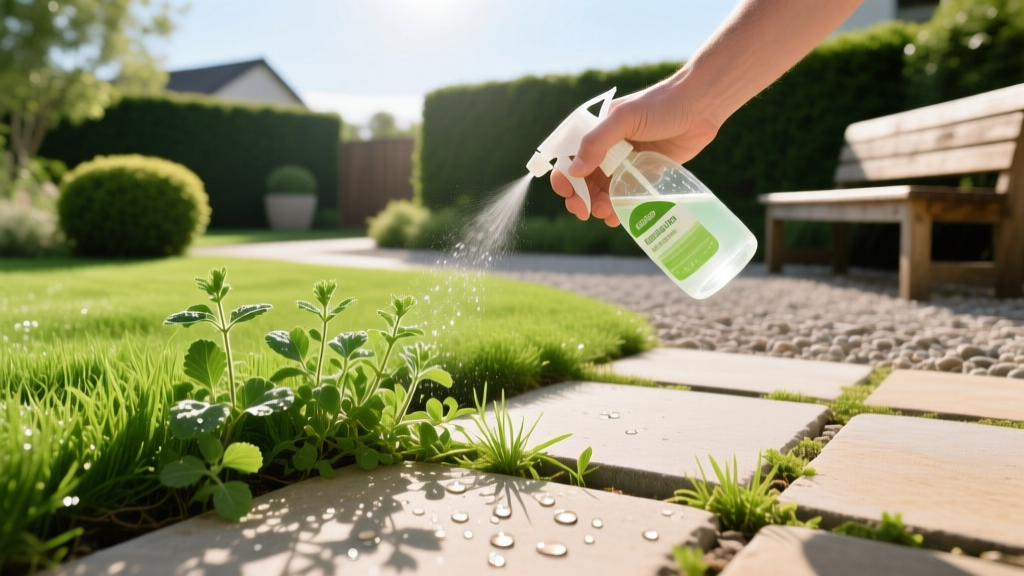
Proven Natural Weed and Grass Killer Recipe for Hardscapes
The Science of Organic Desiccation: Why Most DIY Recipes Fail
When homeowners search for a natural weed and grass killer recipe, they are typically met with suggestions to mix standard kitchen vinegar, dish soap, and table salt. From a botanical and chemical perspective, this standard internet recipe is fundamentally flawed for mature vegetation. Standard culinary vinegar contains 5% acetic acid, yielding a pH of roughly 2.4. While this will singe the cotyledon leaves of newly germinated seedlings, it lacks the acidic concentration required to strip the waxy cuticle of mature grasses like Bermuda, Zoysia, or established Crabgrass.
To achieve total, non-selective vegetation control in driveways, walkways, and unplanted garden beds, you must utilize horticultural-grade acetic acid (20% to 30% concentration) paired with a botanical solvent. According to research highlighted by the University of Minnesota Extension, organic contact herbicides rely on rapid cell membrane destruction rather than systemic root poisoning. The goal is immediate desiccation, which requires lowering the surface tension of the leaf and dissolving its protective lipid barriers.
The Soil-Safe Natural Weed and Grass Killer Recipe
This formulation is engineered for non-selective clearing of hardscape cracks, patio perimeters, and new garden bed preparation. It breaks down rapidly in the soil environment without leaving toxic heavy metal or sodium residues.
Ingredients and 2026 Sourcing Costs
- 1 Gallon 20% Horticultural Vinegar (Acetic Acid): ~$34.00. (Do not use 5% or 10% cleaning vinegar; 20% is the minimum threshold for mature grass cuticle burn).
- 2 fl oz d-Limonene (Cold-Pressed Orange Oil): ~$3.50 (based on $18 per 16oz bottle). d-Limonene acts as a powerful botanical solvent that dissolves the waxy leaf cuticle, allowing the acetic acid to penetrate the plant tissue instantly.
- 1 tbsp Liquid Castile Soap (Unscented): ~$0.25. This serves as a non-ionic surfactant, breaking the surface tension of the water-based vinegar so it spreads evenly across hydrophobic weed leaves rather than beading up and rolling off.
⚠️ The Sodium Chloride (Salt) Warning
Never add table salt (NaCl) or Epsom salt to your natural weed and grass killer recipe. While salt effectively kills plants through osmotic shock, it causes severe soil salinization. Sodium destroys soil crumb structure, leading to permanent compaction and rendering the earth entirely hostile to future planting. If you are clearing a space for a future flower bed or vegetable garden, salt will stunt your next crops for years. The EPA Safe Pest Control guidelines consistently warn against altering soil chemistry with household salts for weed management.
Step-by-Step Application Protocol
Because this recipe relies on contact desiccation rather than systemic translocation, application technique dictates success. Follow these parameters to ensure complete burn-down of both broadleaf weeds and grassy weeds.
- PPE Preparation: 20% acetic acid is a severe eye and respiratory irritant. Standard safety glasses are insufficient. You must wear ANSI Z87.1-rated splash goggles, nitrile gloves, and long sleeves.
- Mixing Order: Pour the 1 gallon of 20% vinegar into a dedicated, chemical-resistant pump sprayer. Add the 2 oz of d-Limonene, followed by the Castile soap. Agitate gently to prevent excessive foaming.
- Thermal Timing: Apply only between 10:00 AM and 2:00 PM when ambient temperatures exceed 80°F (26°C) and the sun is directly hitting the target area. UV radiation and high heat accelerate the acid-induced cellular collapse. Spraying on a cool, cloudy morning will reduce efficacy by up to 60%.
- Nozzle Selection: Adjust your sprayer to a flat-fan pattern, not a cone or mist. A flat-fan delivers larger droplets that coat the leaf surface without drifting onto desirable adjacent turfgrass.
- Saturation Technique: Spray until the foliage is thoroughly wet and dripping. You do not need to drench the soil; the objective is complete foliar coverage.
Cost and Efficacy Matrix: Organic vs. Synthetic
Understanding the economic and ecological trade-offs of your herbicide choice is critical for long-term landscape management. Below is a comparative analysis of our DIY recipe against commercial organic options and synthetic systemic alternatives.
| Herbicide Type | Active Ingredient | Cost per RTU Gallon | Soil Residual Effect | Efficacy on Mature Grass |
|---|---|---|---|---|
| DIY Soil-Safe Recipe | 20% Acetic Acid + d-Limonene | $37.75 | None (Breaks down in 48 hrs) | High (with heat/sun) |
| Commercial Organic (e.g., BurnOut) | Citric Acid + Clove Oil | $45.00 - $55.00 | None | Moderate to High |
| Kitchen Vinegar + Salt | 5% Acetic Acid + NaCl | $6.00 | Severe (Soil sterilization) | Low (Fails on mature grass) |
| Synthetic Systemic (e.g., Glyphosate) | Glyphosate (41%) | $22.00 (diluted) | Minimal (Binds to soil rapidly) | Very High (Root kill) |
Edge Cases: Selective Lawn Weed Control
A critical distinction in turf management is the difference between non-selective and selective herbicides. The natural weed and grass killer recipe detailed above is strictly non-selective. It will obliterate dandelions, but it will also burn your Kentucky Bluegrass and Fescue to the ground on contact.
"If your objective is to eliminate broadleaf weeds while preserving your existing turfgrass, organic acids are the wrong tool. You must pivot to chelated iron formulations."
The Iron-Based Alternative for Turfgrass
For selective weed control within an active lawn, utilize FeHEDTA (Chelated Iron). Commercially available under brand names like Fiesta or Natria Lawn Weed Control, FeHEDTA exploits a biological vulnerability: broadleaf weeds absorb massive quantities of iron, leading to fatal cellular necrosis, while monocot grasses naturally regulate iron uptake and remain unharmed. A 2.5-gallon concentrate of FeHEDTA typically costs around $65 in 2026 and provides up to 5,000 square feet of selective coverage per application. Apply FeHEDTA when temperatures are below 85°F to prevent temporary turf discoloration.
Post-Treatment Soil Recovery and Replanting
One of the primary advantages of the 20% vinegar and d-Limonene recipe over synthetic alternatives or salt-based mixtures is the rapid soil recovery timeline. Acetic acid is rapidly metabolized by soil microbes, typically neutralizing within 48 to 72 hours. If you are using this recipe to clear a neglected area for a new vegetable garden or ornamental bed, you can safely till the soil and plant new seeds or transplants just three days after application. To accelerate microbial recovery and buffer any temporary pH drops in the topsoil, incorporate a 1-inch layer of finished compost or apply a light dusting of pelletized garden lime (calcium carbonate) over the treated area before planting.

