
Lawn Care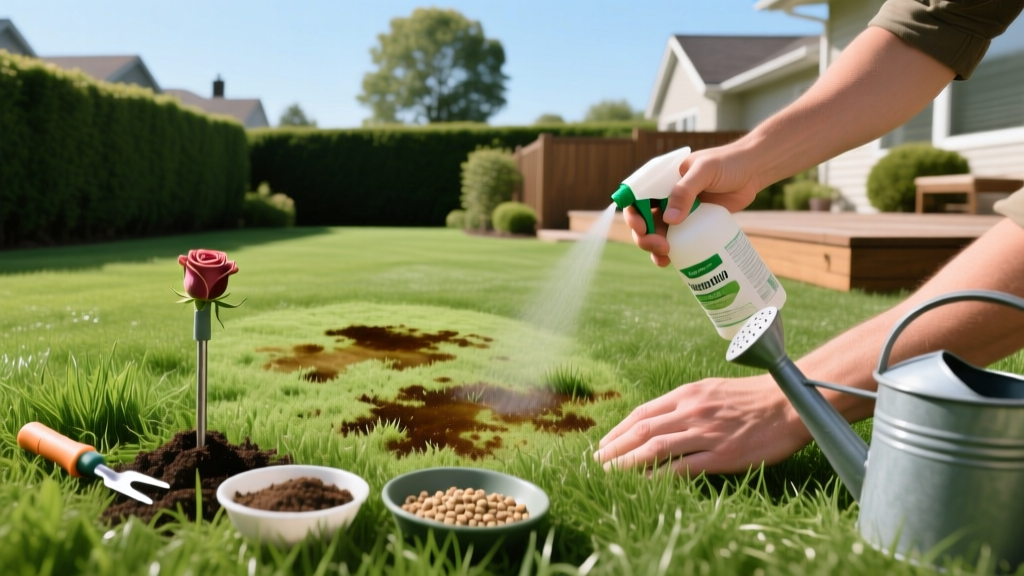
Neutralizing Dog Pee on Grass: A Step-by-Step Lawn Repair Guide
The Science of the Burn: Why Dog Urine Destroys Turf
Before executing any repair protocol, it is critical to understand the biological mechanism behind dog urine spots. A pervasive myth in lawn care is that dog urine is too acidic and alters the soil pH. In reality, the pH of dog urine typically ranges from 6.0 to 8.0, which is well within the tolerable range for most turfgrasses. The actual culprit is nitrogen overload and osmotic salt stress.
Dog urine contains high concentrations of urea (a nitrogen compound) and salts like sodium and potassium. A single urination event can deposit up to 15 grams of nitrogen in a concentrated 6-inch circle. To put this in perspective, this is the equivalent of applying 10 times the recommended rate of synthetic lawn fertilizer to a single spot. The result is a severe "fertilizer burn," where the grass blades desiccate and die, often surrounded by a dark green "halo" where the diluted nitrogen at the edges acts as a beneficial fertilizer.
⚠ Myth-Busting: Dietary Supplements
Do not feed your dog baking soda, tomato juice, or commercial "lawn-saving" pills to alter their urine pH. According to the American Veterinary Medical Association (AVMA), altering a dog's systemic pH can lead to severe urinary tract infections, bladder stones, and sodium toxicity. Furthermore, adding baking soda (sodium bicarbonate) to the soil actually introduces more salt, worsening the osmotic burn on the grass roots.
Phase 1: Immediate Neutralization (0 to 12 Hours)
The most effective way to save the grass is to dilute the urea before it hydrolyzes into ammonia and burns the leaf tissue. You have a narrow window of 8 to 12 hours after the urination event to act.
- Locate the Spot: Identify fresh spots early in the morning. Female dogs and neutered males squat, depositing the entire volume in one dense location, making spots easier to find but more severe. Intact males spray, causing less severe but more widespread damage.
- Flush with Water: Apply exactly 1.5 to 2 gallons of water directly to the spot. Do not use a high-pressure nozzle, which will wash away topsoil and seed. Use a gentle watering can or a hose with a bubbler attachment to push the urea and salts deep into the soil profile, past the root zone (6-8 inches deep).
- Apply an Enzymatic Neutralizer: For high-traffic areas where water dilution isn't enough, apply a yard-safe enzymatic spray containing Bacillus subtilis or urease-producing bacteria. Products like Simple Solution Yard Odor Eliminator or NaturVet Yard Odor Eliminator (typically $20-$25 for a 32oz hose-end sprayer) biologically break down the urea molecules before they can oxidize the grass blades.
Phase 2: Soil Remediation and Salt Leaching (Days 1 to 7)
If the spot has already turned yellow or brown, the grass blades are dead, but the soil remains toxic to new seed due to sodium salt buildup. You must remediate the soil chemistry before attempting to reseed.
The Gypsum Protocol
Pelletized Gypsum (Calcium Sulfate Dihydrate) is the gold standard for remediating urine-burned soil. The calcium in gypsum displaces the sodium salts bound to the soil particles, forming sodium sulfate, which is highly water-soluble and easily leaches out of the root zone during your next watering cycle.
- Product Recommendation: Espoma Organic Gypsum or Pennington Fast Acting Gypsum.
- Application Rate: Apply 40 to 50 lbs per 1,000 square feet of affected area (roughly 1/2 cup per individual dead spot).
- Cost: $15 to $22 per 40lb bag at most home improvement centers.
- Execution: Broadcast the gypsum over the dead spot, scratch it into the top 1/4 inch of soil with a hand rake, and water heavily for 15 minutes to initiate the ion-exchange process.
Soil Amendment Comparison Matrix
| Amendment | Primary Function | Effect on Urine Damage | Verdict |
|---|---|---|---|
| Gypsum | Displaces sodium, improves drainage | Leaches toxic salts out of the root zone | Highly Recommended |
| Biochar | Increases soil cation exchange capacity | Absorbs excess nitrogen and retains moisture | Recommended |
| Garden Lime | Raises soil pH (reduces acidity) | Useless; urine is not acidic. Adds more calcium carbonate. | Avoid |
| Baking Soda | Alkaline salt | Increases soil salinity, worsening osmotic burn | Never Use |
Phase 3: Turf Restoration (Days 7 to 21)
Once the soil salts have been leached (wait 7 days after gypsum application), you must replace the dead turf. The North Carolina State University Turfgrass Program notes that turf species vary wildly in their natural tolerance to nitrogen spikes. Kentucky Bluegrass and Bermudagrass are highly susceptible, while Tall Fescue and Perennial Ryegrass possess deep root systems and cellular structures that resist urea burn.
Repair Decision Framework
Choose your repair method based on the size of the dead spot and the current season.
- Overseeding (Best for spots 2-6 inches): Rake away dead thatch. Apply a 50/50 mix of topsoil and compost. Sow Jonathan Green Black Beauty Ultra (for cool-season lawns) or Pennington Zenith Bermudagrass (for warm-season). Keep moist 3x daily for 14 days.
- Sod Plugging (Best for spots >8 inches): Use a 3-inch bulb planter to remove the dead soil core. Insert a matching grass plug grown in a neutral potting mix. This bypasses the vulnerable germination phase and establishes roots in 21 days.
- Sod Patching (Best for severe female-dog damage): If a female dog has created a massive 12-inch dead zone, cut out the damaged soil in a square, amend the base with gypsum and biochar, and lay a matching piece of fresh sod.
Phase 4: Long-Term Lawn and Pet Management
Neutralizing dog pee on grass is an ongoing maintenance procedure, not a one-time fix. Implement these structural changes to your lawn care routine to build resilience.
1. Increase Mowing Height
Raise your mower deck to 3.5 or 4 inches. Taller grass has a deeper, more extensive root system capable of diluting nitrogen spikes and accessing water below the salt-concentrated topsoil layer. It also shades the soil, reducing the rapid evaporation that concentrates urine salts on the surface.
2. Hydration Stations
The concentration of urea in urine is directly tied to the dog's hydration levels. Place multiple water bowls around the yard and consider adding low-sodium bone broth to their water to encourage higher intake. Highly diluted urine will simply act as a mild, beneficial nitrogen fertilizer rather than a chemical burn agent.
3. Designated Hardscape Zones
For multi-dog households, the most effective neutralization strategy is physical diversion. Train dogs to use a designated "pee post" area covered in 2 inches of washed river rock or cedar mulch. River rock drains instantly, prevents mud, and can be flushed with a hose and enzymatic cleaner once a week to maintain yard hygiene without risking turf damage.
"The secret to managing dog urine damage isn't finding a magic chemical to reverse the burn; it's managing the soil's cation exchange capacity with gypsum and selecting fescue-dominant seed blends that can metabolize high nitrogen loads without cellular collapse."
Frequently Asked Questions
Will winter snow cover protect the grass from dog urine?
No. In fact, winter spots are often worse. When dogs urinate on snow or frozen ground, the urea and salts become trapped in the ice. When the spring thaw occurs, the concentrated salts melt directly into the dormant, vulnerable root zone, causing severe "spring dead spot" symptoms that mimic fungal diseases.
Can I use household vinegar to neutralize the spot?
Vinegar (acetic acid) is a non-selective herbicide. While it might theoretically alter alkalinity, spraying vinegar on your lawn will burn the grass blades and kill beneficial soil microbes. Stick to water dilution and enzymatic urea-breakers.

