
Lawn Care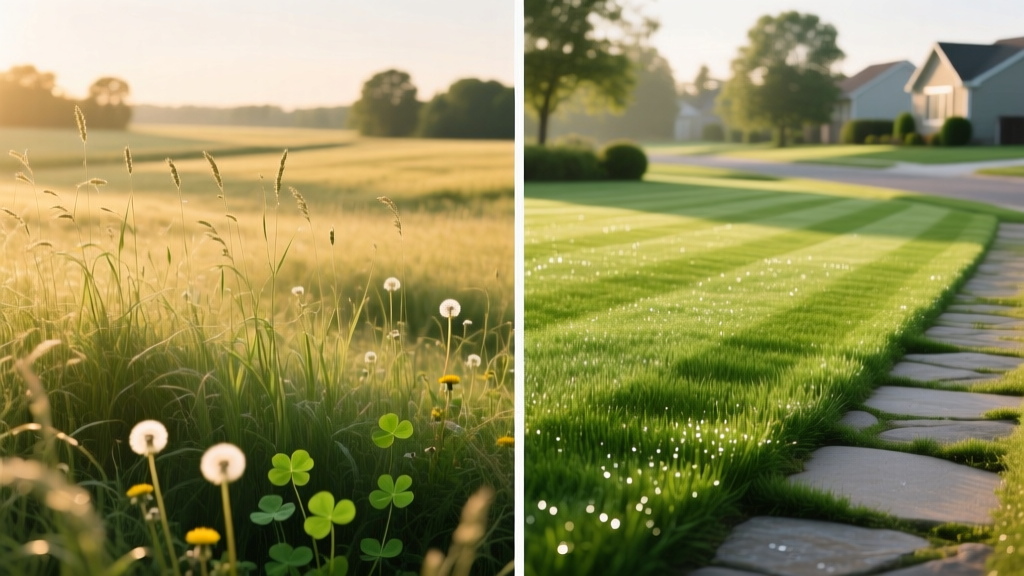
How Many Inches Tall Is Normal Grass in a Field vs. Turf Lawns?
The Baseline: How Many Inches Tall Is Normal Grass in a Field?
When homeowners, land managers, or agricultural operators ask, "how many inches tall is normal grass in a field," the answer depends entirely on the management objective. Unmanaged, native field grasses (like Tall Fescue, Orchardgrass, or Timothy) will naturally reach 12 to 24 inches before seeding and lodging. However, a managed agricultural or pasture field is typically maintained at 4 to 8 inches to optimize forage yield, root carbohydrate storage, and livestock grazing efficiency.
In contrast, residential and commercial turfgrass is genetically selected and mechanically forced to thrive at much lower heights. Kentucky Bluegrass and Bermudagrass lawns are typically maintained between 1.5 and 3.5 inches. Understanding this height disparity is critical when calculating chemical dosage, spray coverage, and mowing economics, as treating an 8-inch field requires vastly different inputs than a 3-inch lawn.
Grass Height Matrix: Field vs. Turf Specifications
The structural differences between field forages and turfgrasses dictate their optimal cutting heights. According to data from the NC State University Turfgrass Program, cutting turfgrass too high results in thatch buildup and disease, while cutting field grass too low destroys the plant's crown and invites weed invasion.
| Grass Species | Primary Use | Optimal Height (Inches) | Mowing Frequency | Root Depth Ratio |
|---|---|---|---|---|
| Tall Fescue | Pasture / Field | 4.0" - 8.0" | Every 10-14 days | 1:1.5 (Shoot:Root) |
| Tall Fescue | Residential Turf | 2.5" - 3.5" | Every 5-7 days | 1:1 (Shoot:Root) |
| Orchardgrass | Hay / Field | 6.0" - 10.0" | Rotational Grazing | 1:2 (Shoot:Root) |
| Bermudagrass | Sports Turf | 0.5" - 1.5" | Every 2-3 days | 1:0.8 (Shoot:Root) |
| Kentucky Bluegrass | Residential Turf | 2.5" - 3.5" | Every 5-7 days | 1:1.2 (Shoot:Root) |
Chemical Dosage and Coverage Adjustments for Tall Field Grass
The most significant cost and operational difference between managing a 6-inch field and a 3-inch lawn is chemical application. When applying liquid herbicides (like 2,4-D or Triclopyr) or liquid fertilizers, grass height directly impacts canopy interception.
⚠️ The Interception Loss Factor
In an 8-inch field, up to 40% of a standard liquid spray application is intercepted by the upper leaf canopy and never reaches the lower stems, stolons, or soil surface. To achieve the same biological kill or nutrient delivery as a short turf lawn, you must increase the water carrier volume, not necessarily the active ingredient dosage.
Calibrating Spray Volumes: Turf vs. Field
If your standard herbicide label calls for 1.5 oz of active ingredient per 1,000 square feet, the dosage remains constant. However, the carrier volume must scale with grass height to ensure adequate coverage.
- Standard Turf (2-3 inches): Apply using 1.0 to 1.5 gallons of water per 1,000 sq. ft. (43-65 GPA).
- Managed Field (4-6 inches): Increase carrier volume to 2.0 to 2.5 gallons per 1,000 sq. ft. (87-108 GPA).
- Overgrown Field (8+ inches): Increase carrier volume to 3.0+ gallons per 1,000 sq. ft. (130+ GPA) and use a flat-fan nozzle tilted at a 45-degree angle to penetrate the canopy.
Cost Impact: Doubling your water volume means you will spend twice as much time spraying, consume twice as much fuel for your spray rig, and increase pump wear. For a 10-acre field, upgrading from a 50 GPA to a 100 GPA application adds approximately $140-$180 in labor and equipment depreciation costs per application.
Mowing Economics: Brush Hogging vs. Finish Mowing
Maintaining grass at field heights versus turf heights requires entirely different equipment classes, which drastically alters the cost per acre. The USDA NRCS pasture management guidelines emphasize that allowing field grass to exceed 10 inches before cutting results in excessive woody stem material that is difficult to break down and can damage standard rotary mowers.
Cost Breakdown: 5-Acre Property Maintenance (2026 Rates)
| Metric | Field Maintenance (6-8" Height) | Turf Maintenance (3" Height) |
|---|---|---|
| Equipment Required | Tractor + Rotary Cutter (Brush Hog) | Commercial Zero-Turn Mower |
| Cutting Frequency | Every 14-21 days (10 cuts/year) | Every 5-7 days (26 cuts/year) |
| Fuel Consumption | ~1.8 gallons/hour (Diesel) | ~1.2 gallons/hour (Gasoline) |
| Blade Maintenance | Sharpen/Balance every 40 hours ($45) | Sharpen/Balance every 25 hours ($30) |
| Estimated Annual Cost (5 Acres) | $2,800 - $3,500 | $4,200 - $5,500 |
While field grass requires less frequent mowing, the heavy torque required to shear through thick, 8-inch fibrous stems puts immense strain on tractor PTO shafts and gearbox bearings. Conversely, turf mowing requires higher frequency but utilizes lightweight, high-speed blades that slice cleanly with minimal resistance.
Transitioning an Overgrown Field to Managed Turf
Many homeowners purchase rural properties with 2 to 5 acres of overgrown field grass (12+ inches) and attempt to transition it into a managed residential lawn. This process requires a specific sequence of chemical and mechanical interventions. Attempting to simply lower the mowing height from 12 inches to 3 inches in a single pass will scalp the field, exposing bare soil and triggering a massive flush of crabgrass and broadleaf weeds.
Step-by-Step Renovation Protocol
- Initial Knockdown (Week 1): Use a heavy-duty brush hog to cut the field down to 6 inches. Remove heavy windrows of clippings to prevent smothering the remaining grass.
- Chemical Burndown (Week 3): Apply a non-selective herbicide (e.g., Glyphosate 41% at 2.5 oz per 1,000 sq. ft.) to kill undesirable, clumpy forage grasses. Cost: ~$18 per acre.
- Soil Preparation (Week 5): Once the field grass is brown, use a tractor-mounted power harrow or pull-behind aerator to break up the thatch layer. Field grass develops a thatch mat up to 3 inches thick that repels water.
- Seeding and Fertilization (Week 6): Overseed with a turf-type tall fescue blend at a heavy dosage of 8 to 10 lbs per 1,000 sq. ft. (double the standard lawn overseeding rate) to outcompete remaining field weed seeds. Apply a starter fertilizer (18-24-12) at 4 lbs per 1,000 sq. ft.
- Progressive Lowering (Months 2-4): Mow the new turf at 4 inches for the first month, then drop the deck by 0.5 inches every two weeks until you reach your target turf height of 3 inches.
Expert Insight: Never attempt to aerate a live, 8-inch field with a standard walk-behind core aerator. The dense, deep root mass of field grasses like Orchardgrass will snap the tines of residential aerators. You must use a tractor-mounted heavy-duty core aerator or wait until the existing field grass has been chemically terminated and the root mass begins to decay.
Ecological Trade-offs and HOA Considerations
Allowing grass to grow to normal field heights (6-10 inches) on the perimeters of a property offers distinct ecological benefits, including reduced water runoff, increased soil carbon sequestration, and habitat for ground-nesting pollinators. However, from a cost and liability perspective, tall field grass harbors tick populations and provides cover for rodents. If your property is governed by a Homeowners Association, maintaining grass above 4 inches will almost universally trigger violation fines ranging from $50 to $100 per day. For properties without HOA restrictions, maintaining a 20-foot "turf buffer" around the home's foundation at 3 inches, while letting the outer acreage grow to a 6-inch field height, provides the optimal balance of pest control, aesthetic appeal, and reduced annual mowing costs.

