
Lawn Care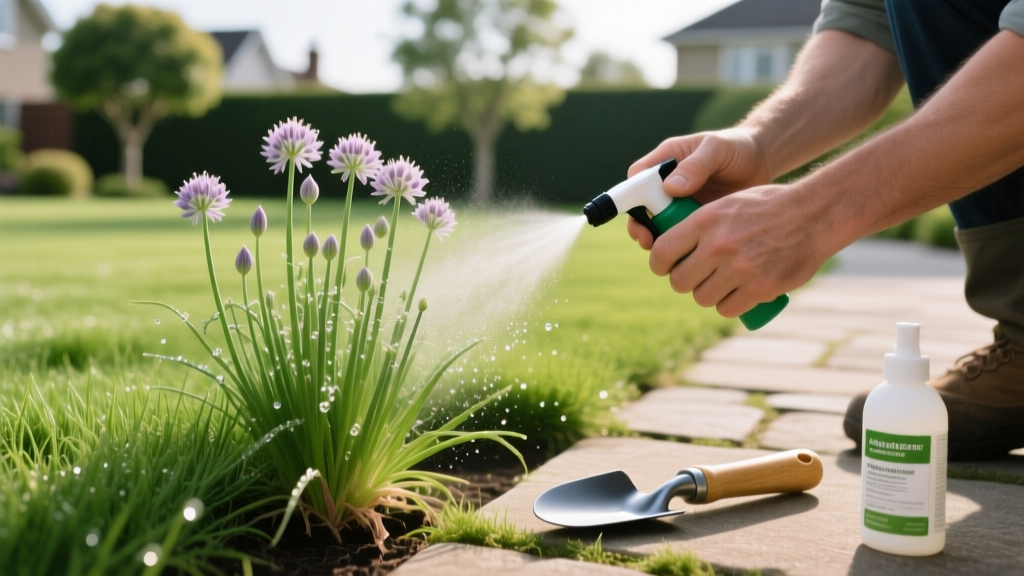
How to Kill Onion Weed: Spot-Treatment and Herbicide Guide
The Hidden Complexity of Onion Weed Eradication
Onion weed (Allium canadense) and its close relative wild garlic (Allium vineale) are notoriously difficult perennial weeds that plague both cool- and warm-season lawns. Unlike broadleaf weeds like dandelions, onion weed possesses two distinct biological defenses that render standard lawn care practices ineffective: a thick, waxy leaf cuticle that repels water-based herbicides, and a complex subterranean reproductive system consisting of mother bulbs, offset bulblets, and aerial bulblets. According to North Carolina State Extension, attempting to manage these weeds with standard broadcast spraying or manual pulling almost always results in aggressive regrowth within a single season.
To successfully eradicate onion weed, you must abandon generic weed-and-feed products and adopt a targeted spot-treatment protocol utilizing systemic herbicides paired with a high-quality surfactant. This guide details the exact chemical formulations, mixing ratios, and seasonal timing required to translocate active ingredients down into the bulb and destroy the plant at its core.
Identifying the Target: Onion Weed vs. Wild Garlic
While homeowners use the term 'onion weed' interchangeably for both species, distinguishing between them can slightly inform your approach, though the chemical treatment remains largely identical. Both emit a distinct, pungent odor when mowed or crushed.
| Feature | Wild Onion (Allium canadense) | Wild Garlic (Allium vineale) |
|---|---|---|
| Leaf Structure | Solid, flat, and narrow | Hollow, cylindrical, and round |
| Leaf Origin | Leaves emerge from the lower stem | Leaves emerge from the base of the plant |
| Bulblets | Rarely produces aerial bulblets | Frequently produces aerial bulblets at the stem top |
| Odor | Strong garlic/onion scent |
Why Manual Removal and Mowing Accelerate the Problem
A common failure mode in onion weed management is physical removal. When you pull an onion weed clump by the leaves, the taproot inevitably snaps just above the basal plate. The mother bulb and surrounding offset bulblets remain intact in the soil, rapidly generating new shoots. Furthermore, mowing over mature wild garlic plants in late spring shatters the aerial bulblets, scattering hundreds of viable seeds across your lawn. The Clemson University Home & Garden Information Center explicitly warns against mowing infested areas immediately before or after herbicide application, as reducing leaf surface area limits the plant's ability to absorb and translocate the chemical to the roots.
⚠️ Critical Warning: Never use a string trimmer or weed whacker on mature onion weed. This mechanically chops the aerial bulblets and scatters them, effectively planting dozens of new weeds across your turf.
The Surfactant Secret: Breaking the Waxy Cuticle
The primary reason over-the-counter ready-to-spray herbicides fail against onion weed is the plant's waxy cuticle. Water droplets simply bead up and roll off the narrow, cylindrical leaves. To force the herbicide into the plant tissue, you must add a Non-Ionic Surfactant (NIS) or Methylated Seed Oil (MSO) to your tank mix.
Surfactants reduce the surface tension of the spray solution, allowing it to flatten out and adhere to the waxy leaf surface. For spot-treating onion weed, a high-quality NIS like Hi-Yield Spreader Sticker or a professional-grade MSO is mandatory. The standard mixing rate is 0.5% v/v, which translates to approximately 1.5 tablespoons of surfactant per gallon of mixed herbicide.
Selecting the Right Systemic Herbicide for Your Grass Type
Onion weed requires systemic post-emergent herbicides that mimic plant growth hormones (auxins), causing the plant to rapidly grow itself to death and translocating the chemical down into the bulb. Your choice of active ingredient depends entirely on whether you have a cool-season or warm-season lawn, as using the wrong chemical will severely damage your turf.
Herbicide Selection Matrix
| Lawn Type | Recommended Active Ingredients | Top Product Examples (2026 Formulations) | Safety Notes |
|---|---|---|---|
| Cool-Season (Fescue, Kentucky Bluegrass, Ryegrass) | 2,4-D + Dicamba + MCPP + Carfentrazone | SpeedZone Broadleaf Herbicide, Trimec Classic | Safe for most cool-season turf when applied below 85°F. |
| Warm-Season (Bermuda, Zoysia, Centipede) | Thiencarbazone + Iodosulfuron + Dicamba | Celsius WG, Certainty Herbicide | Celsius WG is exceptionally safe for warm-season grasses even in higher temperatures. |
| St. Augustine / Centipede | Atrazine or Penoxsulam | Hi-Yield Atrazine, Spectracide Weed Stop for Southern Lawns | Avoid 2,4-D on St. Augustine; it causes severe yellowing and stunting. |
For professional-grade results on warm-season lawns, Celsius WG remains the gold standard. According to Penn State Extension, the combination of thiencarbazone-methyl and iodosulfuron provides superior control of tough Allium species compared to older 2,4-D formulations, particularly when dealing with herbicide-resistant biotypes.
Step-by-Step Spot-Treatment Protocol
Follow this exact procedure to maximize bulb kill and minimize turf stress. You will need a 1-gallon or 2-gallon handheld pump sprayer; do not use a hose-end sprayer, as you cannot control the concentration or surfactant mix accurately.
- Prepare the Turf: Mow your lawn at its standard height 48 hours before treatment. Do not mow for at least 48 hours after spraying to allow maximum leaf absorption.
- Mix the Solution: Fill your pump sprayer halfway with water. Add the precise amount of herbicide based on the product label's spot-treatment rate (e.g., for SpeedZone, this is typically 1.5 fl oz per gallon of water). Agitate the tank.
- Add the Surfactant: Pour in 1.5 tablespoons of Non-Ionic Surfactant per gallon of water. Fill the sprayer the rest of the way with water and shake gently to mix without creating excessive foam.
- Adjust the Nozzle: Set your sprayer nozzle to a coarse, low-pressure fan spray. You want to coat the leaves until they are wet, but avoid heavy dripping or runoff onto the surrounding soil.
- Target the Clumps: Spot-spray only the onion weed clumps. Walk at a steady pace, ensuring the waxy leaves are thoroughly coated with the surfactant-laced solution.
- Watering Restrictions: Do not irrigate the lawn or allow rainfall for at least 24 hours post-application. The herbicide needs this time to penetrate the cuticle and enter the phloem.
💡 Pro-Tip for Heavy Infestations: If the onion weed clumps are exceptionally dense and tall, use a scuffle hoe to lightly scratch or bruise the leaves immediately before spraying. This mechanical abrasion breaks the waxy cuticle, allowing the herbicide and surfactant to penetrate the plant tissue almost instantly.
Timing is Everything: The Fall Translocation Advantage
The single biggest mistake homeowners make is spraying onion weed in the middle of summer. During high heat, the plant slows its growth to conserve moisture, meaning the systemic herbicide sits in the leaves and degrades before it can reach the bulb.
The optimal window for onion weed eradication is late fall (October through November) and early spring (March). In the fall, as soil temperatures drop to the 50°F–60°F range, perennial weeds aggressively pull nutrients—and any systemic herbicides on their leaves—down into their bulbs to store for winter dormancy. This natural physiological process acts as a delivery mechanism, carrying the 2,4-D or dicamba directly into the root system, ensuring the bulb is completely destroyed before the following spring.
Pre-Emergent Limitations
Standard pre-emergent herbicides like prodiamine (Dimension) or pendimethalin are highly effective against crabgrass and annual grassy weeds, but they offer very poor control of perennial Allium species emerging from established bulbs. While pre-emergents can inhibit the germination of wild garlic aerial bulblets, they will not stop the mother bulbs from pushing through the soil. Relying on post-emergent spot treatments combined with a thick, healthy turf canopy remains the most scientifically sound strategy for long-term onion weed management.

