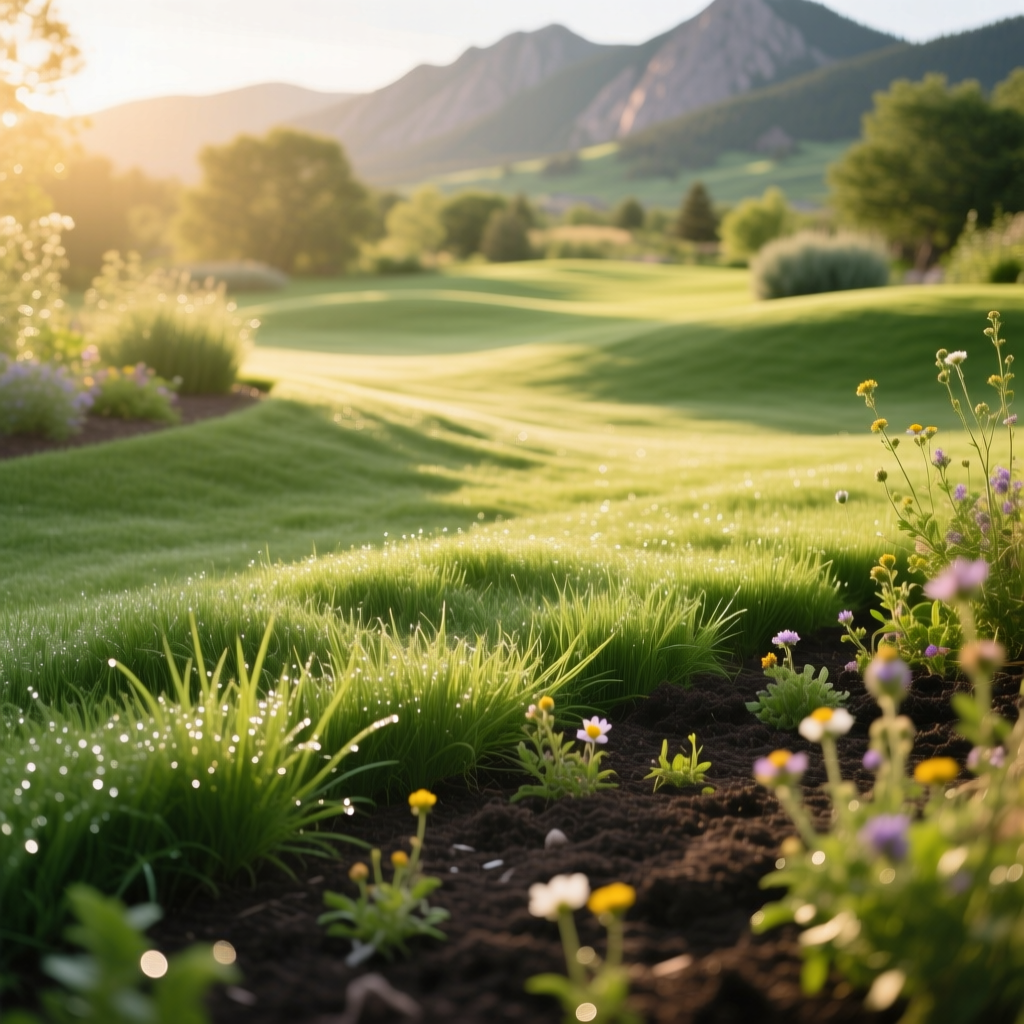
Boulder, Colorado, offers a stunning backdrop for outdoor living, but maintaining a lush, green lawn in this high-desert environment presents a unique set of challenges. Between the heavy clay soils of the Front Range, intense high-altitude UV exposure, and strict municipal water restrictions, traditional synthetic lawn care methods often fall short. Synthetic fertilizers can burn grass during hot summer spikes, and chemical herbicides can disrupt the fragile local ecosystem. This is where organic lawn care in Boulder becomes not just an environmentally friendly choice, but a practical necessity for long-term turf health.
Transitioning to an organic lawn care program means shifting your focus from feeding the grass directly to feeding the soil. By building a robust soil food web, you create a resilient lawn capable of withstanding Colorado’s dramatic temperature swings, dry chinook winds, and freezing winters. In this comprehensive guide, we will walk you through the exact steps, tools, and seasonal timing required to cultivate a thriving, chemical-free lawn in Boulder.
Understanding Boulder’s Unique Soil & Climate
Before applying any organic amendments, it is crucial to understand the environment you are working with. Boulder sits at an elevation of over 5,400 feet, resulting in a semi-arid climate with low humidity and intense solar radiation. However, the biggest hurdle for local gardeners is the soil. The Front Range is notorious for its heavy, alkaline clay soil.
Clay soil is incredibly rich in minerals and has a high cation exchange capacity (CEC), meaning it can hold onto nutrients exceptionally well. Unfortunately, clay particles are microscopic and pack tightly together, leading to severe compaction. This compaction restricts oxygen flow, limits water infiltration, and makes it incredibly difficult for grassroots to penetrate deeply. When you combine compacted clay with Boulder’s hot, dry summers, the result is often a shallow-rooted lawn that wilts rapidly under stress.
Furthermore, Boulder’s climate dictates the types of grass that will survive. Warm-season grasses like Bermuda or Zoysia will go dormant and brown for the majority of the year here. Instead, you must focus on cool-season grasses. Kentucky Bluegrass is a local favorite due to its cold tolerance and ability to spread via rhizomes, while Tall Fescue is highly recommended for its deep root system and superior drought resistance. Understanding your grass type and soil composition is the first step in any successful organic program. We highly recommend starting with a comprehensive soil test to determine your exact pH and organic matter levels before making amendments.
Building a Healthy Organic Foundation
The cornerstone of organic lawn care is soil biology. Synthetic fertilizers provide a quick hit of water-soluble salts that force top growth but do nothing to improve soil structure. Organic fertilizers, on the other hand, rely on soil microbes to break down complex organic molecules into plant-available nutrients. This process feeds the microbes, which in turn exude acids that slowly break up compacted clay, improving drainage and aeration over time.
Core Aeration and Top-Dressing
To combat Boulder’s clay compaction, mechanical intervention is required. Core aeration involves pulling small plugs of soil from the ground, creating channels for air, water, and organic matter to reach the root zone. In Boulder, the best time to aerate is in the early fall when cool-season grasses are actively growing and recovering from summer stress.
Immediately after aerating, apply a thin layer (about 1/4 to 1/2 inch) of high-quality, screened organic compost. This process, known as top-dressing, allows the compost to fall directly into the aeration holes, introducing beneficial microbes and organic matter deep into the soil profile. Over time, this will fundamentally alter the structure of your clay soil, turning it into a rich, crumbly loam.
Choosing the Right Organic Fertilizers
When selecting organic fertilizers, look for slow-release, plant-based, or animal-based meals. Excellent nitrogen sources for Boulder lawns include alfalfa meal, feather meal, and blood meal. Alfalfa meal is particularly beneficial because it contains triacontanol, a natural growth hormone that stimulates root development. For phosphorus and potassium, bone meal and kelp meal are outstanding choices. Kelp meal also provides a vast array of micronutrients and helps grass cope with environmental stressors like drought and extreme heat.
Recommended Tools & Products:
- Walk-Behind Core Aerator: Renting a heavy-duty, gas-powered core aerator is highly recommended for Boulder’s dense clay. Lightweight manual aerators will struggle to penetrate the ground.
- Organic Compost: Source locally from Boulder County suppliers to ensure the compost is adapted to regional conditions and free from persistent herbicides.
- Broadcast Spreader: A high-quality drop or broadcast spreader ensures an even application of granular organic fertilizers, preventing nutrient hotspots.
Smart Watering & Mowing for the High Desert
Water conservation is a critical aspect of landscaping in Colorado. Boulder frequently implements water restrictions during the peak summer months, making efficient irrigation a top priority. An organic lawn with deep roots and high soil organic matter will naturally require less water, but how you water is just as important as how much you apply.
The Cycle and Soak Method
Because clay soil absorbs water very slowly, running your sprinklers for 30 minutes straight will likely result in massive runoff, wasting precious water and carrying organic nutrients into the storm drains. To solve this, utilize the “cycle and soak” method. Program your irrigation system to water each zone for 10 minutes, wait for 30 to 45 minutes to allow the water to infiltrate the clay, and then water for another 10 minutes. This encourages water to sink deeply into the soil profile, training your grassroots to grow downward in search of moisture.
Mowing High and Mulching
In Boulder’s intense sun, scalping your lawn is a death sentence. Set your mower deck to a minimum of 3 to 3.5 inches, and ideally push it to 4 inches during the heat of July and August. Tall grass blades shade the soil surface, drastically reducing evaporation and keeping the soil temperatures cool, which protects the delicate microbial life you are trying to cultivate.
Always leave your grass clippings on the lawn. This practice, known as grasscycling or mulching, returns valuable nitrogen and organic matter back to the soil. Contrary to popular myth, clippings do not cause thatch buildup; thatch is primarily composed of living and dead roots and stems that fail to decompose due to a lack of soil microbes. By mulching, you are actively feeding the soil food web.
Recommended Tools:
- Smart Irrigation Controller: Upgrade to a Wi-Fi-enabled smart controller that adjusts watering schedules based on local Boulder weather data and soil moisture sensors.
- Mulching Mower Blades: Ensure your mower is equipped with sharp, high-lift mulching blades to chop clippings into fine pieces that decompose rapidly.
Natural Weed & Pest Control Strategies
A thick, organically maintained lawn is your best defense against weeds and pests. However, Boulder is home to stubborn invaders like field bindweed, dandelions, and Canada thistle. Managing these organically requires a strategic, multi-pronged approach rather than a blanket chemical spray.
Organic Pre-Emergent and Post-Emergent Control
To prevent weed seeds from germinating in the spring, apply Corn Gluten Meal (CGM). CGM is a natural byproduct of corn milling that inhibits root formation in newly sprouted seeds. Timing is everything: it must be applied when soil temperatures consistently reach 55°F, just before crabgrass and other annual weeds begin to sprout. Keep in mind that CGM is also a mild nitrogen fertilizer, so adjust your spring feeding schedule accordingly.
For existing broadleaf weeds, hand-pulling is highly effective for small infestations, especially when the soil is moist. For larger areas, look for organic-compliant, iron-based herbicides (FeHEDTA). These liquid iron solutions cause broadleaf weeds to absorb toxic levels of iron, leading to cellular necrosis, while cool-season grasses naturally regulate iron uptake and remain unharmed. For more comprehensive strategies, check out our complete guide to natural weed control.
Managing Grubs Naturally
White grubs, the larvae of June bugs and Japanese beetles, can decimate a lawn by feeding on grassroots. Instead of using synthetic pesticides that harm local pollinators and birds, utilize biological controls. Beneficial nematodes (specifically Heterorhabditis bacteriophora) are microscopic worms that you apply to the lawn via a hose-end sprayer. They actively seek out grub larvae, enter their bodies, and release bacteria that eliminate the pest within 48 hours. Apply nematodes in late summer when grubs are young and actively feeding near the soil surface.
Seasonal Organic Lawn Care Calendar
Timing your organic treatments to coincide with Boulder’s distinct seasons will maximize your results and minimize wasted effort.
Spring (April - May)
As the soil thaws and grass begins to green up, focus on gentle stimulation. Apply a light application of an organic nitrogen source like alfalfa meal once soil temperatures reach 50°F. Apply Corn Gluten Meal for pre-emergent weed control. Begin mowing once the grass reaches 4 inches, removing only the top third of the blade. Rake away any winter debris to prevent snow mold and allow the soil to warm.
Summer (June - August)
Summer in Boulder is about survival and stress management. Cool-season grasses naturally slow their growth during peak heat. Raise your mowing height to 4 inches. Rely heavily on the cycle and soak watering method to maintain deep soil moisture without violating water restrictions. Avoid heavy fertilization during July and August, as pushing top growth during high heat stresses the root system. If the lawn goes dormant and turns brown due to severe drought, it is a natural survival mechanism; it will green up once fall rains arrive.
Fall (September - October)
Fall is the most critical season for Boulder lawn care. The soil is still warm, but the air is cooling, prompting massive root growth. Early fall is the time to perform core aeration and compost top-dressing. This is also the ideal window for overseeding thin areas with a blend of Kentucky Bluegrass and Tall Fescue. Apply a heavy dose of organic fall fertilizer (rich in potassium and slow-release nitrogen) to help the grass store carbohydrates for the long winter. Continue watering deeply until the ground freezes to prevent winter desiccation.
Winter (November - March)
Keep the lawn clear of heavy leaf litter and debris. Avoid walking on the dormant grass when it is covered in frost, as the frozen blades will shatter and cause crown damage. If Boulder experiences a dry, snowless winter, run your irrigation system manually once a month on a warm day to prevent the roots from drying out completely.
Frequently Asked Questions
Can I grow an organic lawn in Boulder’s clay soil?
Yes, absolutely. While heavy clay is challenging, it is not a dead end. The secret to growing an organic lawn in Boulder’s clay is consistent aeration and the regular addition of organic matter through compost top-dressing and mulching. Over a period of two to three years, the microbial activity generated by organic fertilizers and compost will break up the clay particles, creating a porous, well-draining soil structure that supports deep, healthy grassroots.
What is the best organic grass seed for Boulder?
The best organic grass seed for Boulder will be a mix of cool-season grasses tailored to your specific yard conditions. A blend containing Kentucky Bluegrass for its spreading ability and cold tolerance, mixed with Tall Fescue for deep-rooted drought resistance, is ideal. If you have heavily shaded areas beneath mature trees, incorporate Fine Fescues into your mix. Always look for certified weed-free seed with a high germination rate and zero fillers.
How do I handle Boulder’s water restrictions organically?
Organic lawn care naturally prepares your lawn for water restrictions. By building soil organic matter through compost and mulching, your soil acts like a sponge, holding onto water for much longer. Furthermore, training your roots to grow deep via the cycle and soak watering method ensures your grass can access subsurface moisture that shallow, synthetically fed lawns cannot reach. When restrictions hit, an organically maintained lawn will simply go dormant and survive, bouncing back quickly once watering resumes.
Is organic lawn care more expensive than traditional methods?
The initial transition to organic lawn care can sometimes require a slightly higher upfront investment, particularly when purchasing bulk compost for top-dressing or investing in a smart irrigation controller. However, over time, organic care becomes highly cost-effective. You eliminate the need for expensive synthetic chemical treatments, and because your soil retains water and nutrients more efficiently, your water bills and fertilizer requirements will decrease. Ultimately, the long-term savings and the benefit to the local Boulder ecosystem make it a highly valuable investment.
Embracing organic lawn care in Boulder is a rewarding journey that transforms your yard into a resilient, eco-friendly oasis. By respecting the local climate, nurturing the soil biology, and utilizing smart cultural practices, you can achieve a stunning lawn that thrives in harmony with the beautiful Colorado Front Range.


