
Lawn Care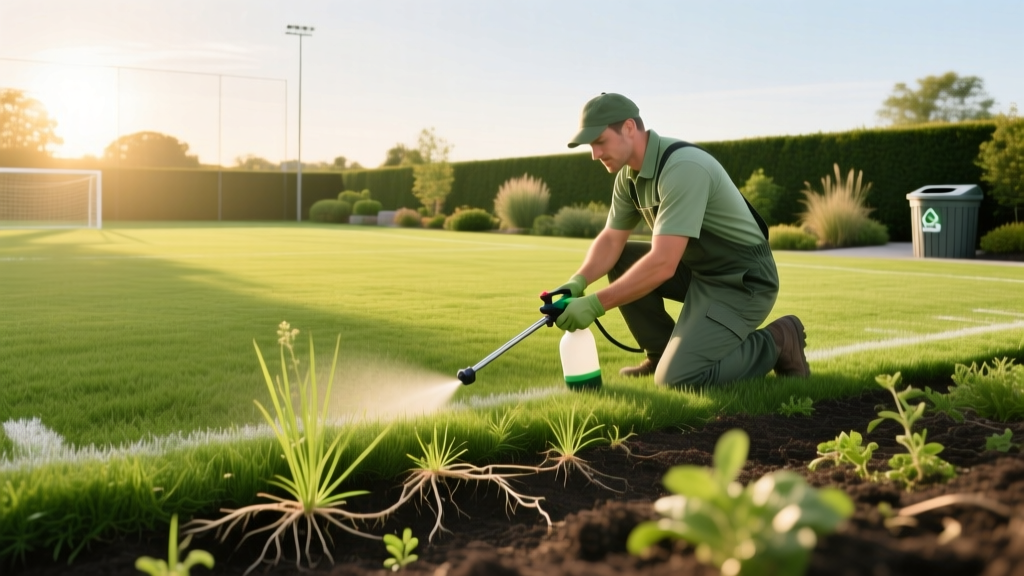
Organic Weed and Pest Control for Natural Grass Football Fields
The Shift to Organic Turf Management in Sports
Maintaining natural grass football fields under the heavy cleat traffic of athletes requires a robust, resilient turf canopy. Historically, sports turf managers relied heavily on synthetic nitrogen, chemical pre-emergents, and broad-spectrum insecticides to keep fields playable. However, the landscape of sports facility management is rapidly evolving. Driven by player health concerns, environmental runoff regulations, and long-term soil degradation, many high schools, colleges, and professional facilities are transitioning to Organic Turf Management (OTM).
OTM is not simply about omitting chemicals; it is a proactive system that builds soil biology to outcompete weeds, suppress diseases, and naturally resist pests. According to the Environmental Protection Agency, organic lawn and turf care focuses on fostering a healthy soil ecosystem that reduces the need for external inputs over time. For natural grass football fields, this means shifting the focus from feeding the plant directly to feeding the soil food web.
Building the Foundation: Soil Biology and Compost Topdressing
Synthetic fertilizers provide a quick flush of top growth but do little to build soil structure or microbial life. On a football field, poor soil structure leads to compaction, reduced drainage, and shallow root systems that tear out easily during tackles. The cornerstone of organic field management is regular compost topdressing and the application of compost teas.
Topdressing Specifications for High-Traffic Fields
Apply US Composting Council (USCC) Seal of Testing Assurance (STA) certified compost to your field. The ideal application rate is 1/4 inch to 1/2 inch of depth, which translates to approximately 0.5 to 1.0 cubic yards per 1,000 square feet. This should be done immediately after deep-tine aeration in the spring and fall to ensure the organic matter is incorporated directly into the root zone.
Compost Tea Inoculations
To rapidly introduce beneficial bacteria and mycorrhizal fungi, apply aerated compost tea at a rate of 50 gallons per acre every 14 to 21 days during the peak growing season. A high-quality brew should include vermicompost, soluble kelp for trace minerals, and humic acids. This microbial inoculation helps break down thatch naturally and suppresses soil-borne pathogens.
Organic Weed Control Strategies for High-Traffic Turf
Weeds like annual bluegrass (Poa annua), crabgrass, and broadleaf plantain thrive in compacted, biologically dead soils. In an organic system, the primary weed control strategy is 'crowding out' through aggressive overseeding with competitive turfgrasses like Perennial Ryegrass and Kentucky Bluegrass. However, targeted organic herbicides are necessary for managing breakouts.
The Crowding Out Principle: A dense turf canopy intercepts 95% of sunlight, preventing weed seeds from germinating. Overseed your football field with 5 to 8 lbs of Perennial Ryegrass per 1,000 sq ft during every aeration event to maintain maximum density.
Organic Herbicide Comparison Matrix
| Target Weed | Organic Product Type | Active Ingredient | Application Rate | Optimal Timing |
|---|---|---|---|---|
| Broadleaf Weeds (Dandelion, Plantain) | Selective Post-Emergent | Iron HEDTA (FeHEDTA) | 3 to 4 fl oz per 1,000 sq ft | Spring/Fall when temps are below 80°F |
| Crabgrass & Annual Grasses | Pre-Emergent | Corn Gluten Meal | 20 lbs per 1,000 sq ft | When soil temps reach 50-55°F (Forsythia bloom) |
| Poa annua & Spot Weeds | Non-Selective Spot Treat | Nonanoic Acid / Acetic Acid | Ready-to-use spot spray | Early morning on young, actively growing weeds |
Iron HEDTA (commercially available in products like Fiesta Turf Weed Killer) is a game-changer for organic sports turf. It causes iron toxicity in broadleaf weeds, leading to rapid desiccation, while the grass safely absorbs the iron, resulting in a darker green canopy. As noted by Penn State Extension, iron-based herbicides are highly effective when applied in cooler weather and require multiple applications spaced 21 days apart for complete control of mature weeds.
Managing Grubs and Insects Without Synthetics
White grubs (the larvae of Japanese beetles, June bugs, and European chafers) are the most destructive pests on natural grass football fields. They sever the roots just below the soil surface, allowing players to peel back the turf like a carpet during games. Without synthetic neonicotinoids, turf managers must rely on biological controls.
Beneficial Nematodes: The Biological Heavy Artillery
The entomopathogenic nematode Heterorhabditis bacteriophora (Hb) is the most effective organic control for white grubs. These microscopic worms actively seek out grubs, enter their bodies, and release bacteria that kill the host within 48 hours.
- Application Rate: 1 to 2 billion nematodes per acre.
- Soil Temperature Requirement: Soil must be consistently above 60°F at a 2-inch depth.
- Application Window: Late July to mid-August, targeting the early instar (young) grubs.
- Critical Moisture Step: Nematodes require a film of water to move through soil pores. You must irrigate the field with 1/4 inch of water immediately before application, and another 1/4 inch immediately after to wash them off the grass blades and into the soil.
Disease Suppression Using Biological Fungicides
Diseases like Brown Patch (Rhizoctonia solani) and Dollar Spot (Clarireedia jacksonii) can devastate a football field in the humid heat of late summer. In an organic program, preventative biological fungicides are used to colonize the leaf tissue and outcompete pathogenic fungi.
Products containing Bacillus amyloliquefaciens strain D747 (such as Double Nickel) or Bacillus subtilis (such as Serenade ASO) are industry standards for organic sports turf. Apply these at a rate of 2 to 4 oz per 1,000 sq ft every 7 to 14 days during periods of high humidity and night temperatures above 65°F. These bacteria produce lipopeptides that physically destroy the cell walls of fungal pathogens.
Cost Analysis: Organic vs. Conventional Turf Programs
A common misconception is that organic turf management is prohibitively expensive. While the initial transition years require higher input costs to rebuild soil biology, the long-term financial model often favors organic systems due to reduced water usage and the elimination of expensive synthetic chemicals.
| Cost Factor (Per Acre / Year) | Year 1 (Transition) | Year 3 (Established) | Year 5 (Mature OTM) |
|---|---|---|---|
| Conventional Synthetic Program | $2,200 | $2,400 | $2,600 (Chemical resistance increases) |
| Organic Turf Management Program | $3,800 | $2,500 | $1,900 (Biology sustains itself) |
| Irrigation Water Costs | $1,200 | $950 | $700 (Increased soil water retention) |
By Year 5, the organic program typically costs 25% to 30% less annually than the conventional program. The increase in soil organic matter from compost topdressing allows the soil to hold up to 20,000 additional gallons of water per acre for every 1% increase in organic matter, drastically reducing municipal water bills.
Frequently Asked Questions
Can organic fields withstand the heavy wear of Friday night football games?
Yes, but the grass species selection is critical. Organic fields rely on the physical strength of the plant cell walls, which are thicker when grown without excessive synthetic nitrogen. Blends of Kentucky Bluegrass (for rhizomatous spreading and tear-resistance) and Perennial Ryegrass (for rapid germination and wear tolerance) provide the best structural integrity for organic football fields.
How do I manage field marking paint on an organic field?
Traditional aerosol paints can smother grass and introduce heavy metals into the soil. Use biodegradable, organic-approved turf paints that are formulated with calcium carbonate and natural pigments. These break down naturally and do not harm the soil microbiome or the compost tea applications.
What is the best organic solution for field compaction?
While mechanical aeration (hollow-tine and solid-tine) is still required, organic fields manage deep compaction biologically using daikon radish cover crops during the off-season or by applying liquid soil penetrants containing saponins (like yucca extract) to reduce water surface tension and encourage deeper root penetration.

