
Lawn Care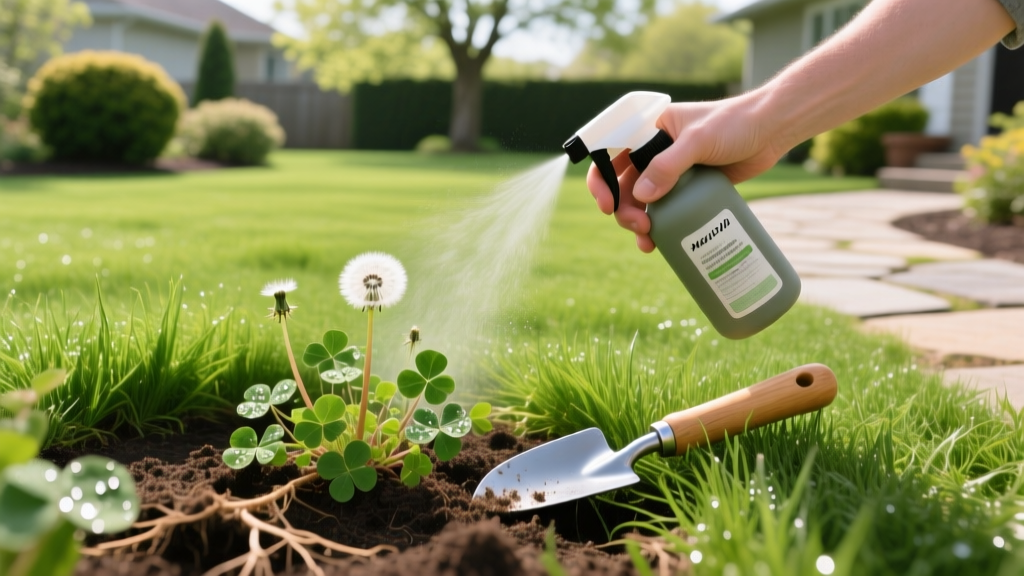
How to Get Rid of Weeds Without Killing Grass Naturally Using Organic Controls
The Biology of Natural Weed Control
Getting rid of weeds without killing grass naturally requires abandoning the scorched-earth approach of synthetic herbicides like 2,4-D or glyphosate. Organic lawn care relies on selective biochemical pathways, pre-emergent biological barriers, and cultural dominance. The fundamental challenge is that most natural post-emergent sprays are non-selective, meaning they will burn your turf just as easily as the weeds. To achieve a pristine, chemical-free lawn, you must deploy a multi-tiered strategy that targets weeds at the seed, seedling, and mature stages while fortifying the grass.
The Pre-Emergent Organic Standard: Corn Gluten Meal (CGM)
Corn Gluten Meal is the only widely available, effective organic pre-emergent herbicide. It works by inhibiting root formation in germinating seeds. The weed seed will sprout, but the radicle (initial root) fails to develop, killing the plant before it establishes. As a secondary benefit, CGM contains approximately 10% nitrogen by weight, providing a slow-release organic fertilizer boost to your existing turf.
CGM Application Framework:
- Rate: Apply exactly 20 lbs per 1,000 square feet. Under-applying will fail to create the necessary chemical barrier in the top inch of soil.
- Timing: Apply when soil temperatures consistently reach 50°F to 55°F at a 2-inch depth. This typically aligns with the blooming of forsythia bushes in early spring.
- Watering: Water lightly immediately after application to activate the proteins, then allow the soil surface to dry out. If heavy rain occurs within 48 hours, the barrier will wash away and require reapplication.
- Cost: Expect to pay $45 to $60 for a 25 lb bag, which covers roughly 1,250 square feet.
Failure Mode Warning: CGM does not kill existing weeds or dormant seeds. It only affects seeds that are actively germinating. Furthermore, do not use CGM if you plan to overseed your lawn, as it cannot distinguish between weed seeds and premium turfgrass seeds.
Selective Post-Emergent: Iron HEDTA (FeHEDTA)
When asking how to get rid of weeds without killing grass naturally, Iron HEDTA (chelated iron) is the holy grail for broadleaf weeds. Broadleaf weeds (dandelions, clover, plantain, thistle) absorb high levels of iron, which triggers fatal oxidative stress and rapid cellular necrosis. Cool- and warm-season grasses possess a natural biological tolerance to excess iron and simply store it, which actually results in a temporary, deep dark-green color enhancement of the turf.
Products like Fiesta Turf Weed Killer or Natria Lawn Weed Control utilize FeHEDTA as the active ingredient. For optimal results, mix at a rate of 3 to 5 fluid ounces per gallon of water per 1,000 square feet. Apply when temperatures are between 60°F and 80°F. Spraying FeHEDTA when temperatures exceed 85°F can cause phytotoxicity (leaf burn) to the grass blades.
Edge Case for Mature Weeds: While FeHEDTA will burn the top growth of a mature dandelion within 3 to 6 hours, the deep taproot may survive. You must schedule a second application 21 to 28 days after the first to eliminate the regrowth before the root recovers.
Non-Selective Organics: Acetic Acid and Pelargonic Acid
If you are dealing with grassy weeds (like crabgrass or poa annua) or weeds in hardscape cracks, you must use non-selective organic herbicides. These will damage your lawn if sprayed directly, so they require careful spot treatment or shielded application.
| Active Ingredient | Target Weeds | Selectivity | Cost per 1,000 sq ft |
|---|---|---|---|
| 20% Acetic Acid (Horticultural Vinegar) | Broadleaf & young grassy weeds | Non-selective (burns grass) | $8 - $12 |
| Pelargonic Acid (Nonanoic Acid) | Broadleaf weeds, moss, algae | Non-selective (contact burn) | $15 - $20 |
| Iron HEDTA (Chelated Iron) | Broadleaf weeds only | Selective (safe for grass) | $10 - $15 |
Critical Note on Vinegar: Do not use standard 5% household vinegar. It is too weak to kill established weeds and will only stunt them. You must use 20% to 30% horticultural acetic acid. Be aware that frequent use of high-concentration vinegar will temporarily lower your soil pH and harm beneficial soil microbes. Reserve this strictly for spot treatments or driveway edges.
Mechanical Extraction and Thermal Weeding
For isolated, deep-rooted perennials like wild violet or mature dandelions, manual extraction remains highly effective when done correctly. Use a stand-up weed puller with a 4-claw serrated grip (such as the Fiskars 39-inch model). The tool must penetrate at least 3 inches into moist soil to extract the entire taproot. If the root snaps off in the top inch of soil, the weed will regenerate within two weeks.
Thermal weeding using a 100,000 BTU propane torch is highly effective for weeds growing in paver joints, gravel, or dormant warm-season lawns (like Zoysia or Bermudagrass in late winter). The goal is not to incinerate the weed to ash, but to apply heat for 1 to 2 seconds until the leaves change to a dull, matte green. This boils the water inside the plant cells, causing them to rupture and the plant to desiccate within 24 hours.
Cultural Overrides: Outcompeting Weeds Naturally
Natural herbicides only manage symptoms; cultural practices cure the underlying disease. Weeds are pioneer species that thrive in compacted, nutrient-poor, or poorly managed soil. By altering the environment, you make the lawn inhospitable to weeds.
According to turfgrass researchers at the University of Minnesota, maintaining a mowing height of 3.5 to 4.0 inches reduces crabgrass infestation by up to 80% compared to lawns mowed at 2 inches. Taller grass creates a dense canopy that physically blocks the sunlight required for weed seed germination.
Implement these cultural overrides to naturally suppress weeds:
- Raise the Mower Deck: Never cut more than 1/3 of the grass blade. For cool-season grasses (Kentucky Bluegrass, Fescue), maintain a 3.5 to 4-inch height during summer stress months.
- Core Aeration: Relieve soil compaction annually. Compacted soil lacks oxygen, which stifles turfgrass roots but allows shallow-rooted weeds like prostrate knotweed and spurge to dominate.
- Correct Soil pH: Most turfgrasses thrive at a pH of 6.2 to 6.8. If your soil drops below 6.0, moss and acid-loving weeds will take over. Apply pelletized lime based on a professional soil test to correct this.
- Deep, Infrequent Watering: Water 1 to 1.5 inches per week in a single or double session. Shallow, daily watering encourages shallow-rooted weeds like yellow nutsedge while starving deep-rooted turfgrass.
Frequently Asked Questions
Does boiling water kill weeds without harming grass?
Boiling water is a non-selective thermal control. It will instantly cook the crown and roots of a weed, but it will also kill the surrounding grass and destroy beneficial soil biology in the immediate vicinity. It is best reserved for sidewalk cracks.
How long does Corn Gluten Meal remain active in the soil?
Under optimal conditions, the pre-emergent barrier created by CGM lasts 4 to 6 weeks. In high-rainfall environments or heavily irrigated lawns, microbial breakdown accelerates, and a second application may be required in late spring to prevent summer annual weeds.
Can I use Epsom salts to kill lawn weeds?
No. Epsom salt (magnesium sulfate) is a fertilizer, not an herbicide. Applying it to weeds will actually provide them with magnesium and sulfur, potentially making them grow more vigorously. The EPA recommends sticking to registered minimum-risk pesticides for predictable results.
For more detailed guidance on organic soil amendments and biological pest control, consult your local university cooperative extension office to tailor these natural protocols to your specific regional grass type and weed pressure.

