
Lawn Care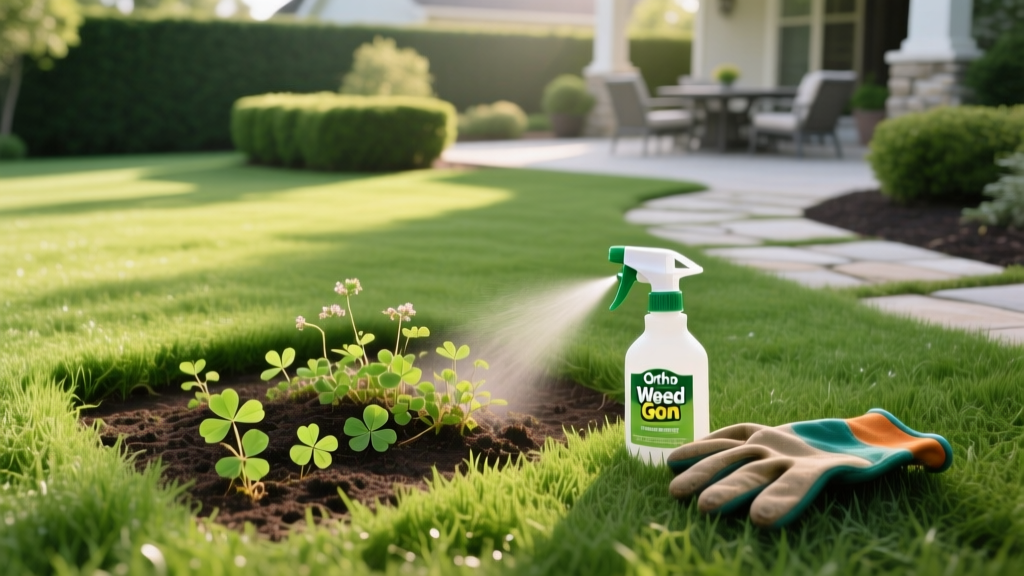
Spot-Treating With Ortho Weed B Gon Chickweed Clover & Oxalis Killer
Broadleaf weeds like chickweed, clover, and oxalis share a frustrating trait: they thrive in the exact same environmental conditions as your turfgrass, making selective eradication difficult without damaging the surrounding lawn. The Ortho Weed B Gon Chickweed, Clover & Oxalis Killer concentrate is formulated specifically to target these three persistent species using a multi-amine herbicide blend. Rather than broadcasting chemicals across your entire yard, spot-treating with this product saves money, reduces environmental impact, and minimizes turf stress. This guide details the exact mixing ratios, application windows, and failure modes you need to know to eliminate these weeds permanently.
Identifying the Target: Chickweed, Clover, and Oxalis
Before mixing any herbicide, accurate weed identification is mandatory. Misidentifying a grassy weed (like crabgrass) or a sedge (like nutsedge) will result in a failed application, as this specific Ortho formula is designed exclusively for broadleaf species. According to Penn State Extension's turfgrass management guidelines, understanding the life cycle of these weeds dictates your treatment timing.
| Weed Species | Key Identification Features | Life Cycle | Optimal Treatment Window |
|---|---|---|---|
| Common Chickweed | Low-growing, small white star-shaped flowers, single line of hair on stem, shallow fibrous roots. | Winter Annual | Early fall or early spring before flowering. |
| White Clover | Trifoliate leaves (three leaflets) with white chevrons, creeping stolons, white/pink globe flowers. | Perennial | Late spring to early summer when actively growing. |
| Oxalis (Woodsorrel) | Heart-shaped leaflets in groups of three, bright yellow five-petal flowers, explosive seed pods. | Perennial / Annual | Spring or early fall; avoid treating during summer drought stress. |
Active Ingredient Breakdown and Mechanism
The efficacy of Ortho Weed B Gon Chickweed, Clover & Oxalis Killer relies on a synergistic blend of synthetic auxins. The primary active ingredients typically include 2,4-D, Dicamba, and MCPP-p (Mecoprop). As detailed in the EPA's 2,4-D chemical profile, these compounds mimic natural plant growth hormones, causing the broadleaf weeds to grow uncontrollably until their vascular systems collapse.
- 2,4-D (Approx. 0.09% - 2.0% depending on concentrate SKU): Highly effective against mature chickweed and clover. It is rapidly absorbed through the foliage and translocated to the roots.
- Dicamba: Provides superior soil residual activity and excels at killing tough, deep-rooted perennials like established clover patches.
- MCPP-p: Specifically targets tough broadleaves that show resistance to 2,4-D alone, making it the critical component for eradicating oxalis and mouse-eared chickweed.
Note: Always check the exact active ingredient percentages on your specific bottle's label, as formulations can vary slightly between the ready-to-use and concentrate versions.
Step-by-Step Spot-Treatment Protocol
For the 16 fl oz concentrate bottle (typically retailing between $13.99 and $16.98), proper dilution is critical. Over-mixing will not kill weeds faster; it will only burn your turfgrass and leave harmful soil residue.
- Calculate the Area: Measure the square footage of the weed patches you intend to treat. The standard mixing rate is 1 fluid ounce of concentrate per 1 gallon of water, which covers approximately 400 square feet.
- Prepare the Sprayer: Use a dedicated 1-gallon or 2-gallon pump sprayer. Fill the tank halfway with clean water, add the measured Ortho concentrate, agitate gently, and then fill the remainder with water. This prevents excessive foaming.
- Calibrate the Nozzle: Adjust the sprayer wand to a coarse droplet, low-pressure fan spray. You want the droplets to be large enough to fall directly onto the weed leaves without drifting onto desirable turf or ornamental plants.
- Apply to Foliage: Spray the weeds until the leaves are uniformly wet, but not to the point of runoff. If liquid is dripping off the leaves into the soil, you are wasting product and increasing the risk of root uptake by nearby trees or shrubs.
- Observe the Rainfast Window: The product requires a minimum of 6 hours of dry weather to be fully absorbed into the weed's vascular system. Check your local radar before starting.
⚠️ Critical Temperature & Wind Constraints
Never apply this herbicide when ambient temperatures exceed 85°F (29°C). At high temperatures, 2,4-D and Dicamba undergo volatilization—they turn into a vapor that can drift off-target and severely damage neighboring gardens, trees, and sensitive turfgrasses. Additionally, do not spray if wind speeds exceed 5 mph to prevent physical droplet drift.
Common Application Failure Modes and Troubleshooting
Even with the correct product, homeowners frequently encounter issues where the weeds turn yellow but eventually recover. Here are the most common failure modes and how to avoid them:
- Mowing Too Soon: Mowing removes the leaf surface area needed to absorb the herbicide. Rule: Do not mow for 2 days before application (to ensure maximum weed leaf exposure) and wait at least 2 days after application before mowing again.
- Treating Drought-Stressed Weeds: When oxalis or clover is drought-stressed, it shuts down its vascular system to conserve water, meaning the herbicide will not translocate to the roots. Water your lawn deeply 24 hours before treatment to ensure the weeds are actively growing and transpiring.
- Ignoring the Second Application: Mature white clover and deep-rooted oxalis often require a second treatment. If you still see green tissue 21 to 28 days after the first application, apply a second spot-treatment at the same rate.
- Using Hard Water Without a Conditioner: High mineral content (calcium and magnesium) in hard water can bind to 2,4-D molecules, rendering them inactive. If your region has notoriously hard water, add a liquid ammonium sulfate (AMS) water conditioner to your sprayer before adding the herbicide.
Turfgrass Safety and Post-Application Recovery
While Ortho Weed B Gon Chickweed, Clover & Oxalis Killer is labeled as safe for most Northern grasses (Kentucky Bluegrass, Perennial Ryegrass, Fescues) and many Southern grasses (Bermudagrass, Zoysia), it carries strict warnings for specific turf types. Do not use this product on St. Augustinegrass, Centipedegrass, or Bahiagrass unless the specific label explicitly states a reduced application rate, as the 2,4-D content can cause severe stunting and chlorosis in these species.
After the weeds begin to curl and brown (usually within 7 to 14 days), focus on lawn recovery. The bare spots left behind by dead clover and chickweed patches are prime real estate for new weed seeds. Rake out the dead debris, loosen the top half-inch of soil, and overseed with a matching turfgrass cultivar. Apply a starter fertilizer to encourage rapid germination, ensuring your grass reclaims the space before the next flush of weed seeds germinates.
'The most effective weed control is a dense, healthy turf canopy. Herbicides are a corrective tool, but proper mowing heights, deep infrequent watering, and annual aeration are the ultimate preventative measures against broadleaf invasion.'
By adhering to these precise mixing ratios, environmental constraints, and application timelines, you can leverage the Ortho Weed B Gon Chickweed, Clover & Oxalis Killer to reclaim your lawn from stubborn broadleaf invaders safely and efficiently.

