
Lawn Care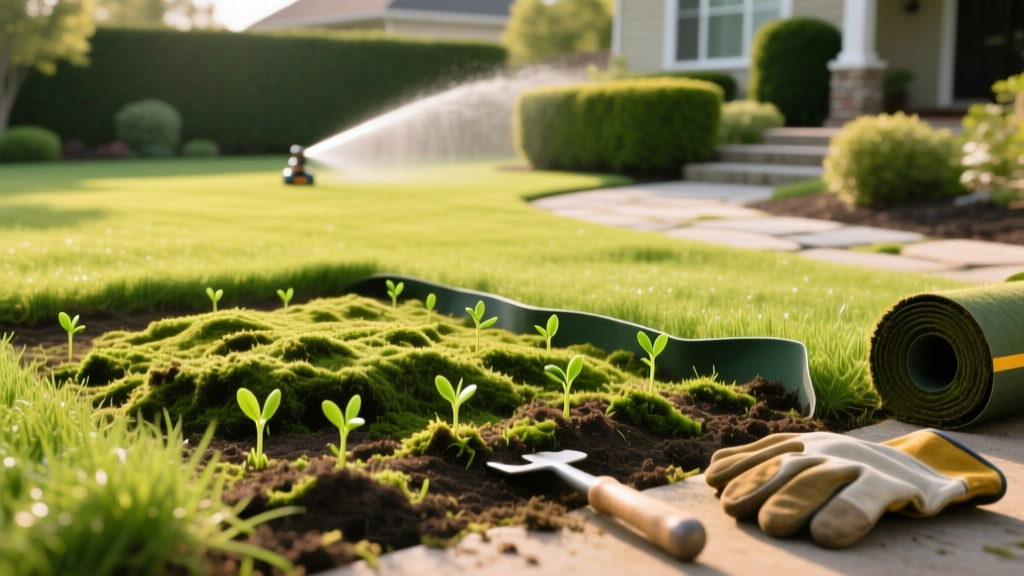
How to Use Peat Moss for Grass Seed and Lawn Renovation
The Mechanics of Peat Moss for Grass Seed Germination
Applying peat moss for grass seed is a time-tested renovation technique, primarily because of its unique hydrological properties. Sphagnum peat moss can hold up to 20 times its dry weight in water. When used as a topdressing over newly sown seed, it acts as a micro-climate blanket. It prevents the delicate radicle (the first root) and cotyledon (first leaf) from desiccating during the critical 7-to-21-day germination window.
Capillary Action & Moisture Retention: Unlike straw, which merely shades the soil, peat moss draws moisture upward from the soil profile via capillary action while simultaneously absorbing dew and light rainfall, keeping the seedbed consistently moist without waterlogging.
However, the use of peat moss requires precise application. A layer that is too thick will block sunlight and prevent the grass seedling from penetrating the surface. A layer that is too thin will dry out rapidly, becoming hydrophobic and actually repelling water away from the seed.
Decision Matrix: Should You Use Peat Moss on Your Lawn?
Peat moss is not a universal solution. Its highly acidic nature (pH 3.0 to 4.5) and low nutrient profile mean it must be paired with specific soil conditions and grass types. According to soil amendment guidelines from the University of Minnesota Extension, organic amendments should be selected based on existing soil chemistry.
| Your Soil / Lawn Condition | Grass Type | Peat Moss Verdict | Required Action |
|---|---|---|---|
| Alkaline Clay (pH 7.5+) | Kentucky Bluegrass / Fescue | Highly Recommended | Apply 1/4 inch topdressing; the natural acidity will help buffer the high pH over time. |
| Acidic Sandy Loam (pH < 6.0) | Centipede / Zoysia | Avoid | Use compost or coconut coir instead. Peat will drop pH further, locking out essential nutrients. |
| Heavy Compacted Clay | Perennial Ryegrass | Moderate | Core aerate first. Peat moss alone will not break up sub-surface compaction. |
| Existing Mature Turf | Any Cool-Season | Do Not Use | Peat moss will smother existing grass blades. Reserve strictly for bare dirt and seed contact. |
Step-by-Step Application Guide for Overseeding
For a successful lawn renovation in 2026, budget approximately $16 to $24 per 3.8-cubic-foot bale of Canadian Sphagnum Peat Moss. One bale, when properly broken apart, will cover roughly 1,000 to 1,500 square feet at the required 1/4-inch depth.
1. Soil Preparation and Seeding
Core aerate the lawn and dethatch if the thatch layer exceeds 0.5 inches. Broadcast your grass seed using a drop spreader at the manufacturer's recommended rate (typically 3 to 5 lbs per 1,000 sq ft for overseeding). Rake the seed lightly into the top 1/8 inch of the soil.
2. Pre-Moistening the Peat Moss
Never apply bone-dry peat moss directly from the bale. Dry peat is naturally hydrophobic. Place the peat moss in a wheelbarrow or large tarp, mist it thoroughly with a garden hose, and mix it with a pitchfork until it reaches the consistency of a wrung-out sponge. It should clump together when squeezed, but not drip water.
3. Topdressing the Seedbed
Shovel the pre-moistened peat moss onto the lawn in small piles. Using the back of a landscape rake or a specialized peat spreader roller, drag the material evenly across the seedbed. Your goal is a 1/4-inch layer. You should still be able to see roughly 10% to 20% of the grass seed beneath the peat to ensure adequate sunlight penetration.
4. Rolling and Initial Watering
Run a lightweight, water-filled lawn roller over the area. This presses the peat moss firmly against the seed and soil, eliminating air pockets and ensuring the capillary moisture bridge is established. Water immediately with a fine mist to settle the amendment.
Wind Blow-Away Warning: If high winds are forecasted within 24 hours of application, the lightweight peat moss can blow off the lawn before it anchors. To prevent this, apply a liquid organic tackifier (like hydromulch glue) or ensure the lawn roller step is completed immediately before winds pick up.
The pH Problem: Managing Soil Acidity
The most common failure mode when using peat moss for grass is ignoring its impact on soil pH. Sphagnum peat moss has a pH between 3.0 and 4.5. Most turfgrasses thrive in a pH range of 6.0 to 7.0. Applying a thick layer of peat moss to a localized seedbed can temporarily acidify the top inch of soil, causing phosphorus and molybdenum deficiencies in young seedlings.
To buffer this effect, integrate pelletized calcitic or dolomitic lime into your peat moss before spreading. Apply 5 to 10 lbs of lime per 1,000 square feet, mixing it directly into the pre-moistened peat in your wheelbarrow. As outlined by UMN Turfgrass Science, balancing the amendment's pH prior to application prevents the shock to emerging grass roots and ensures optimal nutrient uptake during the vegetative growth stage.
Peat Moss vs. Compost vs. Coconut Coir
While peat moss is excellent for moisture retention, modern lawn care increasingly evaluates alternatives due to the ecological impact of harvesting peat bogs and the long-distance supply chain. Here is how they compare for seed germination:
| Amendment | Moisture Retention | Nutrient Value (N-P-K) | pH Level | Best Use Case |
|---|---|---|---|---|
| Sphagnum Peat Moss | Exceptional (20x weight) | Negligible | 3.0 - 4.5 (Acidic) | Alkaline soils, maximum moisture control for tiny seeds (e.g., bentgrass, fine fescue). |
| Screened Compost | Moderate (5x weight) | High (Slow release) | 6.5 - 7.5 (Neutral) | General overseeding, improving soil biology, providing starter nutrients. |
| Coconut Coir | High (10x weight) | Negligible | 5.5 - 6.8 (Near Neutral) | Acidic soils, sustainable alternative to peat, excellent for warm-season grasses. |
Troubleshooting Common Peat Moss Failures
The Hydrophobic Crust
Symptom: Water beads up and rolls off the peat moss during watering, leaving the seed underneath completely dry. Cause: The peat moss was allowed to dry out completely between watering sessions. Once bone-dry, peat's cellular structure repels water. Fix: You must water lightly and frequently (3 to 4 times a day for 5 minutes) to keep the peat constantly damp. If a hydrophobic crust forms, lightly scarify the surface with a leaf rake and add a drop of non-ionic surfactant (like yucca extract) to your irrigation water to break the surface tension.
Seedling Smothering
Symptom: Grass seed germinates but turns yellow and dies before reaching the surface. Cause: The peat moss layer was applied thicker than 1/2 inch, or the material was applied dry and expanded when wet, creating an impenetrable mat. Fix: Always pre-moisten peat moss to its maximum expansion volume before measuring and applying. Stick strictly to the 1/4-inch depth rule.
Fungal Damping Off
Symptom: Seedlings emerge but collapse at the soil line, appearing water-soaked and rotting. Cause: Peat moss retains too much moisture in poorly draining, heavy clay soils, creating an anaerobic environment conducive to Pythium fungi. Fix: If you have heavy clay, reduce the peat moss application to 1/8 inch and mix it 50/50 with coarse, screened compost to improve aeration and introduce beneficial microbes that outcompete Pythium.

