
Lawn Care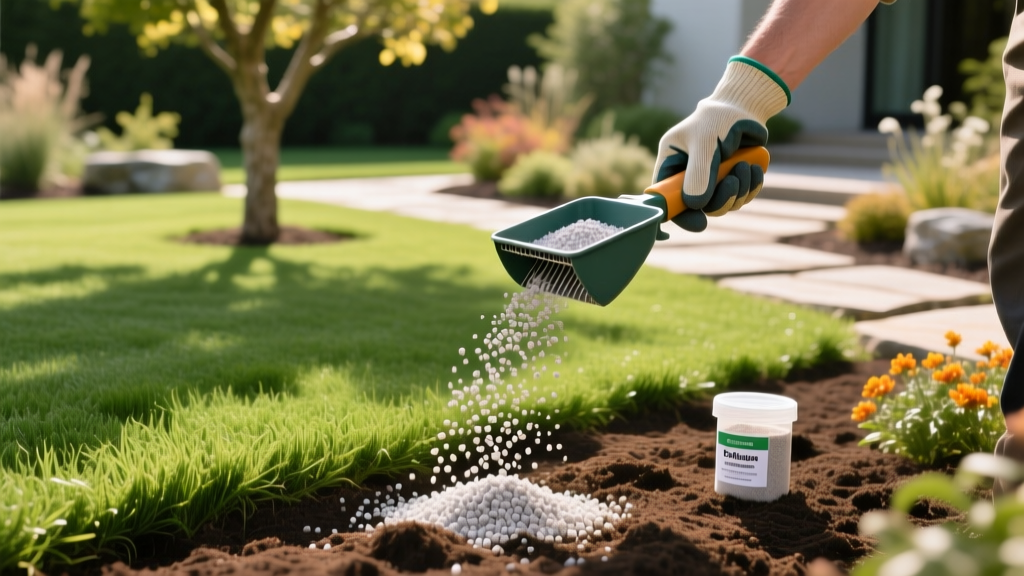
Pelletized Gypsum for Clay Lawns: Application Rates and Soil Benefits
The Chemical Mechanics: Why Pelletized Gypsum Works on Clay
Heavy clay soils frustrate homeowners by trapping water, suffocating roots, and creating concrete-like surface crusting during summer droughts. The core issue lies in the soil's cation exchange capacity (CEC) and particle structure. Clay particles are naturally negatively charged and tightly bound. When sodium accumulates on these exchange sites—common in regions with high-sodium irrigation water or coastal environments—the clay particles repel each other, dispersing into a dense, impermeable mass.
Pelletized gypsum is chemically known as calcium sulfate dihydrate (CaSO4·2H2O). When applied to the lawn and watered in, it dissolves to release calcium (Ca2+) and sulfate (SO4 2-) ions. The calcium ions, carrying a double positive charge, aggressively displace the single-charged sodium ions on the clay's exchange sites. This process, known as flocculation, causes the dispersed clay particles to clump together into larger aggregates. According to turfgrass research published by the USGA Green Section Record, this aggregation creates vital macropores in the soil profile, allowing oxygen to reach the root zone and excess water to drain away from the crown.
Pelletized vs. Powdered vs. Lime: A Practical Comparison
Choosing the wrong amendment can waste money or actively harm your turf. Below is a functional comparison of common soil amendments used for clay and compaction issues.
| Amendment Type | Primary Chemical | Impact on Soil pH | Best Use Case | Application Ease |
|---|---|---|---|---|
| Pelletized Gypsum | Calcium Sulfate | Neutral (No Change) | Heavy clay, sodic soils, compaction | High (Standard spreader) |
| Powdered Gypsum | Calcium Sulfate | Neutral (No Change) | Large-scale agricultural use | Low (High dust, clumps) |
| Pelletized Lime | Calcium Carbonate | Raises pH (Alkaline) | Acidic soils (pH below 6.0) | High (Standard spreader) |
| Elemental Sulfur | Sulfur | Lowers pH (Acidic) | Alkaline soils (pH above 7.5) | Moderate |
⚠️ Critical Warning: The Lime Confusion
Many homeowners mistakenly apply lime to fix compacted clay. Lime contains calcium, but it is in the form of calcium carbonate. If your soil pH is already neutral or alkaline (above 7.0), adding lime will lock up essential micronutrients like iron and manganese, causing severe chlorosis (yellowing) in your turf. Gypsum provides the exact same calcium benefits for flocculation without altering your soil pH.
Diagnosing Your Soil: When to Apply Pelletized Gypsum
Not every struggling lawn needs gypsum. Before purchasing, verify that your soil profile actually requires structural amendment. Order a comprehensive soil test from a university extension lab and look specifically for the Exchangeable Sodium Percentage (ESP) and base saturation levels.
- ESP Above 15% (Sodic Soil): Gypsum is mandatory. The high sodium levels are actively destroying soil structure. Flocculation via calcium sulfate is the only chemical remedy.
- Heavy Clay with Low Calcium Base Saturation: If your soil test shows calcium occupying less than 60% of the CEC, and you have physical drainage issues, gypsum will improve structure and supply the missing macronutrient.
- Acidic Soil (pH < 6.0) with Compaction: You need pelletized lime, not gypsum. Lime will supply calcium while simultaneously correcting the acidic pH.
- Sandy Soil: Gypsum is generally ineffective and unnecessary on sandy soils, as they already possess adequate macropores and drainage.
Exact Application Rates, Costs, and Spreader Settings
Applying too little gypsum will fail to trigger adequate flocculation, while over-applying is a waste of capital. The University of Minnesota Extension recommends aggressive initial dosing for heavy clay, followed by maintenance applications.
Dosage and Cost Breakdown
| Scenario | Application Rate (per 1,000 sq ft) | Estimated Cost (per 1,000 sq ft) | Frequency |
|---|---|---|---|
| Initial Clay Breakdown / Sodic Remediation | 40 to 50 lbs | $18.00 - $25.00 | Once (Spring or Fall) |
| Annual Maintenance (Heavy Clay) | 20 to 30 lbs | $9.00 - $15.00 | Once per year |
| Sports Turf / High Traffic Compaction | 40 lbs | $18.00 - $25.00 | Bi-annually (Spring/Fall) |
Note: Pricing reflects 2026 retail averages for premium turf-grade pelletized gypsum (e.g., Espoma Organic Gypsum or Andersons Pelletized Gypsum). A standard 40 lb bag typically covers 800 to 1,000 square feet at initial rates.
Spreader Calibration
Pelletized gypsum granules are typically 2-4mm in diameter, similar to standard granular fertilizers. For a standard rotary spreader (like a Scotts EdgeGuard or Lesco model), set the dial to a medium-high setting (usually between H and I, or 50-60% open) to achieve the 40 lbs/1,000 sq ft rate. Always perform a sweep test on your driveway to ensure the spread pattern is uniform before applying to the turf.
Step-by-Step Application Protocol
To maximize the soil-amending benefits, integrate gypsum into your lawn care program using this specific sequence:
- Core Aerate First: Pelletized gypsum works best when it can reach the subsoil. Run a core aerator over the lawn, pulling 3-inch plugs. This creates physical channels for the dissolved calcium to penetrate deep into the clay pan.
- Apply the Gypsum: Spread the calculated rate of pelletized gypsum evenly across the lawn. The pellets will lodge into the aeration holes and sit on the soil surface.
- Water Immediately: Apply exactly 0.5 inches of irrigation immediately after spreading. This dissolves the clay binder holding the pellet together and initiates the release of calcium and sulfate ions into the soil matrix.
- Leave the Plugs: Do not rake up the aeration cores. As they break down over the next two weeks, they will mix the surface-applied gypsum with the native subsoil.
- Overseed (Optional but Recommended): If applying in early fall, the improved soil structure and added calcium create an ideal seedbed for cool-season turfgrasses like Tall Fescue or Kentucky Bluegrass.
Monitoring Progress and Re-testing
Gypsum is not an overnight fix. While surface crusting may begin to soften within 4 to 6 weeks, deep structural flocculation in heavy clay profiles takes 6 to 12 months to fully manifest. According to agronomic data from Crop Nutrition, the sulfate ions will leach the displaced sodium out of the root zone over several heavy watering cycles.
Schedule a follow-up soil test 8 to 10 months after your initial application. Look for a reduction in your ESP and an increase in the soil's infiltration rate (how fast water absorbs when you run a sprinkler). If the ESP remains above 15%, a second heavy application of 40 lbs per 1,000 sq ft is warranted. Once the soil structure is stabilized and the sodium is flushed, transition to the lower 20 lb annual maintenance rate to keep the clay particles aggregated and your turf roots breathing.

