
Lawn Care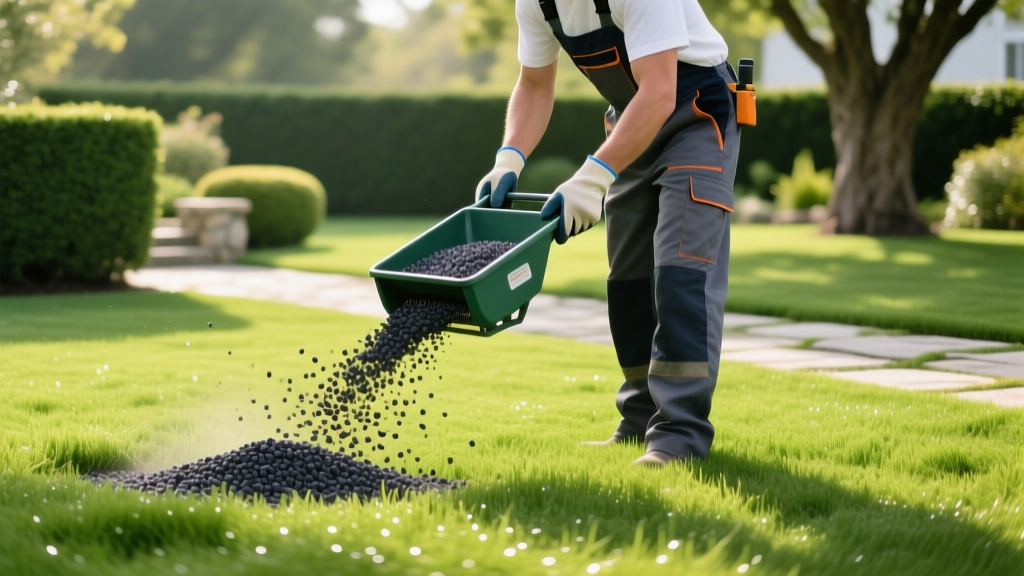
Applying Pelletized Limestone for Lawns: A Step-by-Step Soil Guide
The Science of Soil pH and Pelletized Limestone
When turfgrass struggles to absorb nitrogen, phosphorus, and potassium despite regular fertilization, the culprit is almost always acidic soil. Most common lawn grasses, including Kentucky bluegrass, tall fescue, and bermudagrass, require a soil pH between 6.0 and 7.0 to maximize nutrient uptake. When pH drops below 5.5, essential nutrients become chemically locked in the soil matrix. Applying pelletized limestone for lawns is the most efficient, dust-free method to neutralize soil acidity and restore optimal growing conditions.
Unlike traditional powdered agricultural lime, which creates hazardous dust clouds and clogs spreader hoppers, pelletized lime is manufactured by binding finely ground calcium carbonate (CaCO3) or dolomitic limestone into uniform, 2mm to 4mm granules using a water-soluble binder. This structural advantage allows for precise calibration on rotary spreaders and ensures even distribution across the turf canopy.
Expert Insight: Dolomitic pelletized lime contains both calcium and magnesium. If your soil test reveals a magnesium deficiency (common in sandy coastal soils), specifically source dolomitic pelletized lime rather than standard calcitic lime to correct both pH and base saturation simultaneously.
Phase 1: Soil Testing and Calculating Requirements
Blindly applying lime without a soil test is a critical maintenance error that can lead to iron chlorosis and localized turf death. You must determine your baseline pH and buffer pH (which measures the soil's resistance to pH change). Send samples to a reputable laboratory such as Logan Labs or your state's cooperative extension service. According to University of Minnesota Extension, testing should be conducted every two to three years, ideally in late summer before fall applications.
Lime Requirement Matrix by Soil Texture
The amount of pelletized limestone for lawns required to raise the pH by 0.5 units varies drastically based on soil cation exchange capacity (CEC) and texture. Clay soils buffer heavily and require significantly more lime than sandy soils.
| Soil Texture | Lbs per 1,000 sq ft (Raise pH 0.5) | Estimated Cost (2026 Pricing) |
|---|---|---|
| Sandy Loam | 15 - 25 lbs | $7 - $12 |
| Silt Loam (Average) | 25 - 40 lbs | $12 - $19 |
| Heavy Clay | 45 - 75 lbs | $21 - $35 |
Note: A standard 40 lb bag of premium pelletized lime (such as Jonathan Green MAG-I-CAL or Espoma Organic Garden Lime) typically retails for $18 to $24 in 2026 and covers roughly 1,000 to 1,600 square feet depending on the required application rate.
Phase 2: The Step-by-Step Application Procedure
Timing is critical. The optimal window for applying pelletized limestone for lawns is early to mid-fall (September through November). The winter freeze-thaw cycles and natural precipitation help break down the pellet binders, driving the calcium carbonate into the root zone by the time spring growth resumes.
- Mow and Clear the Canopy: Lower your mower deck to 2.5 inches and bag the clippings. Rake the lawn thoroughly to remove leaves, thatch buildup, and debris. Direct soil contact is mandatory for the pellets to break down effectively.
- Calibrate the Spreader: Pelletized lime flows much faster than granular fertilizer. For a standard Scotts EdgeGuard Mini rotary spreader, set the dial to 5.5. For a Lesco Professional spreader, use setting 14. Always verify the spreader pattern on a clean driveway before engaging on the turf.
- Execute the Perimeter Pass: Walk the outer boundary of your lawn with the spreader deflector engaged (if applicable) to prevent lime from wasting onto hardscapes or garden beds.
- Apply in a Criss-Cross Pattern: Divide your calculated total lime volume in half. Apply the first half walking in North-South lines, and the second half walking in East-West lines. This overlapping grid eliminates striping and ensures uniform pH correction across the yard.
Warning: Never apply pelletized lime to frozen ground or snow-covered turf. Surface runoff during spring thaws will wash the unactivated pellets into storm drains, wasting your investment and contributing to municipal water hardness.
Phase 3: Post-Application Integration and Watering
Once the pellets are distributed, they must be watered into the soil profile. Apply exactly 0.5 inches of irrigation immediately following the application. This moisture activates the water-soluble binder, causing the pellets to slake (break apart) into a fine powder that begins reacting with soil hydrogen ions.
Synergy with Core Aeration
For heavily compacted clay soils, the absolute best practice is to perform core aeration immediately before applying pelletized lime. The aeration tines pull 3-inch soil plugs, creating physical channels. When the lime pellets break down during watering, the suspended calcium carbonate washes directly into these aeration holes, bypassing the dense clay layer and neutralizing acidity deep in the root zone where it matters most. According to Penn State Extension, combining aeration with liming can reduce the time required to see a measurable pH shift from 12 months down to 6 months.
Troubleshooting Common Liming Failures
Symptom: Turf Turns Yellow After Liming
Cause: Over-application of lime has raised the soil pH above 7.2, causing iron and manganese to become insoluble and unavailable to the grass roots (iron chlorosis).
Fix: Apply a chelated iron foliar spray (such as Fe-EDDHA) at a rate of 2 oz per 1,000 sq ft to provide immediate greening. Follow up with elemental sulfur at 1 lb per 1,000 sq ft to gradually lower the pH back to the 6.5 target range.
Symptom: Pellets Remain Intact on the Surface for Months
Cause: Insufficient post-application watering or application during a prolonged drought period.
Fix: Manually water the lawn with 0.75 inches of water. If the soil is hydrophobic due to severe thatch, apply a liquid soil surfactant (like Simple Lawn Solutions Soil Loosener) to break the surface tension and force the dissolved lime into the soil profile.
Frequently Asked Questions
Can I apply pelletized lime and synthetic fertilizer on the same day?
Yes, but with a specific caveat. You can apply pelletized lime and standard nitrogen-potassium fertilizers simultaneously. However, never apply lime at the exact same time as a high-phosphorus fertilizer or starter fertilizer. The calcium in the lime will bind with the phosphorus, creating calcium phosphate, an insoluble compound that the grass cannot absorb. Separate lime and phosphorus applications by at least 14 days.
How long does pelletized limestone take to alter soil pH?
While the pellets break down physically within 2 to 4 weeks of adequate watering, the chemical reaction required to neutralize soil acidity is gradual. You will typically see a 0.2 to 0.3 pH increase within the first 90 days, with the full target pH adjustment realized between 6 and 12 months post-application. Retest your soil in the spring to verify the chemical shift.
Is pelletized lime safe for pets and children?
Pelletized calcium carbonate is non-toxic and generally recognized as safe (GRAS). However, the dust generated when pellets break down can be a mild respiratory irritant. Keep pets and children off the lawn during the actual spreading process and until the initial 0.5-inch watering has fully dried the grass blades, typically 4 to 6 hours.

