
Lawn Care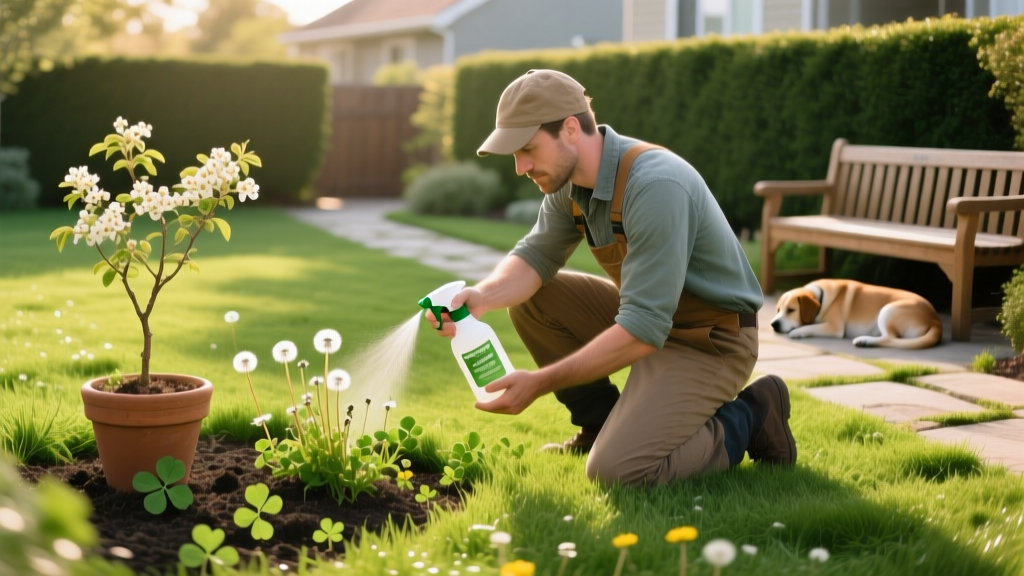
Weed and Grass Killer Safe for Pets: Species Spot-Treatment Guide
The Toxicity Gap in Traditional Lawn Care
Most conventional broadleaf herbicides rely on synthetic auxins like 2,4-D, dicamba, or MCPP. While highly effective at twisting and killing broadleaf weeds, these chemicals pose documented risks to pets. Dogs and cats absorb these compounds through their paw pads or by grooming their fur after walking on treated turf. According to the ASPCA Animal Poison Control Center, exposure to traditional lawn herbicides can trigger gastrointestinal distress, lethargy, and in severe cases, neurological symptoms. For homeowners who refuse to confine their pets to the garage during a 48-hour re-entry interval, finding a genuinely effective weed and grass killer safe for pets requires shifting away from synthetic auxins and toward targeted, bio-based active ingredients.
Active Ingredients: What Makes a Weed and Grass Killer Safe for Pets?
Not all "natural" weed killers are created equal. Some essential oil blends lack the acoustic punch needed to kill established taproots, while others are non-selective and will destroy your turf alongside the weeds. Below is a comparison matrix of the active ingredients that actually work for spot-treatments while maintaining a high safety profile for roaming pets.
| Active Ingredient | Selectivity | Target Weeds | Pet Re-Entry Time | Primary Mechanism |
|---|---|---|---|---|
| FeHEDTA (Chelated Iron) | Selective (Spares grass) | Broadleaf (Dandelion, Clover, Plantain) | 2-4 hours (Once dry) | Induces fatal iron toxicity in broadleaf vascular systems |
| Acetic Acid (20-30%) | Non-Selective (Kills grass) | Grassy & Broadleaf (Crabgrass, Poa annua) | 1-2 hours (Once dry) | Cell membrane destruction and rapid desiccation |
| D-Limonene (Citrus Oil) | Non-Selective | Seedlings and young annual weeds | 1-2 hours | Dissolves the waxy cuticle of the leaf surface |
| Corn Gluten Meal | Pre-emergent only | Prevents seed germination (No kill action) | Immediate (0 hours) | Inhibits root formation during seed germination |
Broadleaf Weed Spot-Treatment Protocol
For deep-rooted broadleaf weeds like dandelions (Taraxacum officinale) and white clover (Trifolium repens), chelated iron (FeHEDTA) is the undisputed champion of pet-safe spot treatments. Grasses naturally regulate iron uptake, but broadleaf weeds lack this mechanism. When sprayed, the weed absorbs a toxic overload of iron, causing cellular collapse and necrosis within 3 to 5 days.
Application Nuances and Failure Modes
- The Thermal Cutoff: Never apply FeHEDTA when ambient temperatures exceed 85°F. High heat accelerates grass metabolism, temporarily overriding its iron-regulation defense and causing severe phytotoxicity (blackening) of the surrounding turf.
- Volume Requirements: Broadleaf weeds require thorough foliar coverage. You must spray until the leaves are visibly wet and dripping. A light mist will only burn the top foliage, allowing the taproot to push out new growth in two weeks.
- Sequential Timing: A single application rarely kills a mature dandelion. Plan for a second spot-treatment exactly 21 days after the first application to eliminate the regrowth from the root crown.
Expert Insight: The "Dry to the Touch" Rule
Many EPA-registered minimum risk pesticides are categorized as safe because they do not leave systemic residues in the soil. However, "safe" does not mean "edible." If your dog ingests wet chelated iron or 20% vinegar before it dries, they will likely experience acute vomiting and oral irritation. The re-entry clock does not start when you finish spraying; it starts when the liquid has completely evaporated from the leaf surface. On humid mornings, this can take up to 4 hours.
Grassy Weed Spot-Treatment Protocol
Chelated iron is useless against grassy weeds like crabgrass (Digitaria) and annual bluegrass (Poa annua) because they share the same iron-regulation biology as your lawn. To spot-treat these invaders safely, you must use a non-selective desiccant like 20% horticultural vinegar, combined with a physical shield to protect your desirable turf.
The Cardboard Baffle Technique
Because 20% acetic acid will burn holes in your Kentucky Bluegrass or Bermuda just as easily as it burns crabgrass, you cannot broadcast spray it. Instead, use a 2-foot by 2-foot piece of corrugated cardboard with a 3-inch hole cut in the center. Place the cardboard flat over the weed, threading the crabgrass blades through the hole. Spray the vinegar directly through the aperture. This isolates the chemical contact strictly to the weed, preserving the surrounding lawn canopy and root zone.
2026 Product Recommendations for Spot Treatment
Bypass generic hardware store brands that dilute active ingredients to ineffective levels. These three formulations offer professional-grade efficacy while maintaining strict pet-safety profiles once dry.
- Natria Lawn Weed and Disease Control (Ready-to-Spray)
- Active Ingredient: FeHEDTA (Chelated Iron)
- Price: $18 - $22 for 32 oz (covers ~5,000 sq ft)
- Best For: Hose-end broadcast or targeted wand spraying on clover and dandelions in cool-season fescue lawns.
- Fiesta Turf Weeder (Concentrate)
- Active Ingredient: Iron HEDTA (Professional formulation)
- Price: $45 - $55 for 2.5 gallons
- Best For: Large properties requiring heavy spot-treatment. Must be mixed in a pump sprayer at a rate of 3 to 5 oz per gallon of water.
- Green Gobbler 20% Vinegar Weed Killer
- Active Ingredient: 20% Acetic Acid
- Price: $25 - $30 for 1 gallon
- Best For: Grassy weeds in driveways, sidewalk cracks, or isolated lawn patches using the cardboard baffle method.
The 4-Step Pet-Safe Application Framework
Follow this exact sequence to maximize weed mortality while guaranteeing your pets remain safe from chemical exposure.
Step 1: Mow and Hydrate (Day 1)
Mow the lawn to 2.5 inches. Water the lawn deeply. Weeds absorb liquid herbicides fastest when they are actively growing and not drought-stressed. Do not apply treatments to wilting weeds.
Step 2: Check the Thermal Window (Day 2 Morning)
Verify the forecast. Apply FeHEDTA only when temperatures are between 60°F and 80°F. Apply horticultural vinegar in the late morning when the dew has evaporated but the midday heat hasn't peaked.
Step 3: Isolate and Spray (Day 2 Mid-Day)
Confine pets indoors. Use a 1-gallon pump sprayer with a pin-stream nozzle for precise targeting. Apply the product until the weed leaves are uniformly coated but not pooling on the soil.
Step 4: The Evaporation Clock (Day 2 Afternoon)
Wait a minimum of 3 hours. Visually inspect the treated weeds. If the leaves are completely dry to the touch and no liquid transfers to your finger, open the door and allow pets back onto the lawn. If humidity is high, extend this window to 5 hours.
Frequently Asked Questions
Will pet urine neutralize pet-safe weed killers?
No. Dog urine is high in urea and nitrogen, which acts as a fertilizer. If a dog urinates on a spot treated with chelated iron after it has dried, it will not reverse the weed-killing process, though the nitrogen may temporarily green up the surrounding grass.
Is horticultural vinegar safe for soil biology?
When used strictly for spot-treatment, 20% acetic acid breaks down in the soil within 48 to 72 hours. It does not accumulate or alter the long-term pH of your lawn's root zone. However, avoid pooling it in the same bare-soil depression repeatedly, as this can temporarily suppress beneficial mycorrhizal fungi.

