
Lawn Care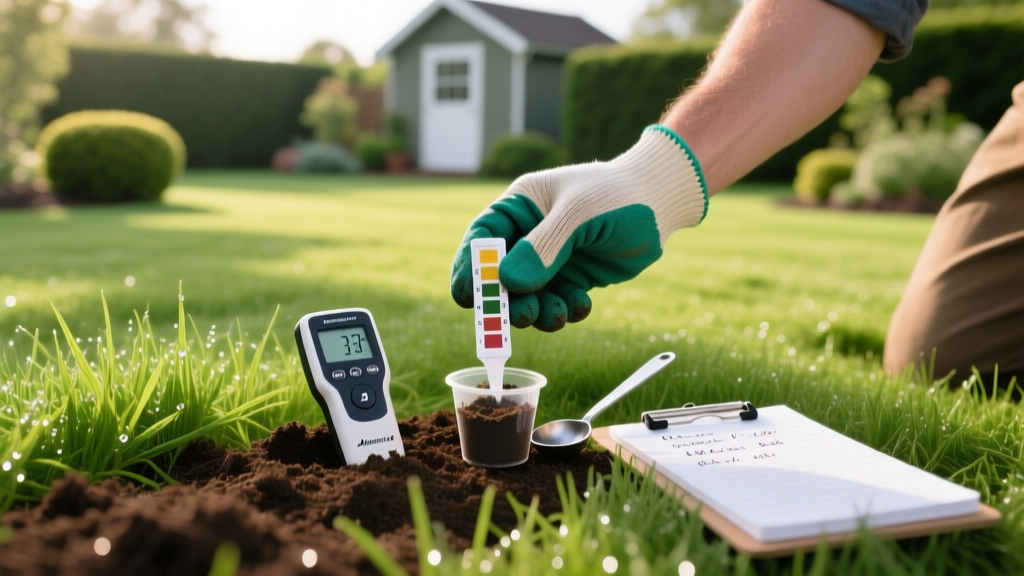
Mastering pH Measurement Soil Tests for Lawn Amendments
The Chemistry of Soil pH and Nutrient Lockout
Applying mulch and soil amendments without a baseline pH measurement soil test is the equivalent of guessing your lawn's nutritional needs blindfolded. Soil pH dictates the Cation Exchange Capacity (CEC) and directly controls nutrient availability. When turfgrass soil drops below a pH of 5.5, essential macronutrients like phosphorus and magnesium bind to aluminum and become chemically locked out, rendering your fertilizer applications useless. Conversely, when soil pH exceeds 7.5, micronutrients like iron and manganese precipitate out of the soil solution, triggering severe chlorosis (yellowing) in cool-season grasses like Kentucky Bluegrass and Tall Fescue.
To build a successful soil amendment and mulching strategy, you must first establish a precise pH baseline. This guide details the exact tools, protocols, and amendment calculations required to optimize your soil chemistry for long-term turf health.
Choosing Your pH Measurement Soil Tool
Not all testing methods yield the same accuracy. Cheap probe meters sold at big-box hardware stores often rely on uncalibrated galvanic cells that drift wildly based on soil moisture rather than actual hydrogen ion concentration. For actionable data, rely on one of the three proven methods below.
| Testing Method | Specific Model / Lab | Accuracy Margin | Approx. Cost (2026) | Best Application |
|---|---|---|---|---|
| Chemical Dye Kit | Luster Leaf Rapitest 1601 | ± 0.5 pH | $15.99 | Quick seasonal checks, general trend monitoring |
| Digital ATC Probe | Milwaukee MW102 Portable | ± 0.1 pH | $59.00 | Frequent testing, precision amendment mapping |
| Professional Lab | UMass Soil Testing Lab | ± 0.01 pH | $25.00 | Baseline renovation, CEC & buffer index analysis |
While digital probes like the Milwaukee MW102 offer excellent precision for under $60, they require regular calibration with pH 4.0 and 7.0 buffer solutions. For the most critical data—specifically the buffer pH which tells you exactly how much lime your specific soil clay content can absorb—a university lab test is non-negotiable. As noted by the UMass Soil and Plant Nutrient Testing Laboratory, buffer pH is the only reliable metric for calculating heavy amendment loads in high-clay soils.
Step-by-Step Protocol for Accurate pH Measurement
The most common failure mode in DIY pH measurement soil testing is using tap water to create the soil slurry. Municipal tap water is heavily buffered with alkaline minerals to protect copper plumbing, which will artificially inflate your soil pH reading by 0.5 to 1.0 points. Follow this strict protocol for accurate results:
- Clear the Mulch Layer: Pull back any existing mulch, thatch, or organic debris. You must test the mineral soil profile where the roots actually live, not the decaying surface layer.
- Extract the Core: Use a soil probe or trowel to extract soil from a 3 to 4-inch depth. For an accurate lawn average, take 5 to 7 random cores across your yard and mix them in a clean plastic bucket.
- Create the Slurry: Mix 1 part air-dried soil with 2 parts distilled water in a clean glass jar. Never use tap water or bottled spring water.
- Agitate and Settle: Shake vigorously for 30 seconds, then let the slurry settle for 15 minutes. The soil particles will sink, leaving a cloudy supernatant liquid at the top.
- Measure: Insert your calibrated digital probe or chemical dye kit into the supernatant liquid. Do not force the probe into the dense sediment at the bottom, which can damage the glass bulb.
⚠️ Calibration Warning: Digital pH probes suffer from oxidation. If your Milwaukee or Apera probe reads erratically or takes longer than 60 seconds to stabilize, the glass bulb is likely dehydrated. Soak the probe tip in a 3M KCl (potassium chloride) storage solution for 4 hours before testing. Never store pH probes in distilled water, as this leaches ions out of the glass membrane and destroys the sensor.
Amendment Calculations: Matching Minerals and Mulch to Your pH
Once you have your baseline pH measurement soil data, you must select the correct amendment. The amount of material required depends heavily on your soil texture. Sandy soils require less amendment to shift pH, while heavy clay soils possess high 'buffering capacity' and resist change.
Furthermore, your choice of landscape mulch will impact surface pH over time. According to research from Penn State Extension, the decomposition of organic matter releases weak organic acids. While the effect is localized to the top 1 inch of soil, continuous use of acidic mulches can gradually lower surface pH.
Mulch pH Impact Profile
- Pine Bark / Pine Needles: Highly acidic initially (pH 3.5 - 4.5). Will drop surface soil pH by 0.1 to 0.2 points over a 3-year period. Best used around acid-loving shrubs, not turfgrass borders.
- Composted Hardwood: Near neutral (pH 6.5 - 7.0). Ideal for turfgrass beds as it buffers soil temperature without altering the underlying soil chemistry.
- Cypress Mulch: Slightly acidic to neutral. Breaks down very slowly, offering minimal pH impact but poor nutritional return to the soil food web.
Amendment Application Rates (Per 1,000 Sq. Ft. in Loam Soil)
| Current Soil pH | Target pH | Amendment Required | Application Rate (Loam) | Application Rate (Clay) |
|---|---|---|---|---|
| 5.0 | 6.5 | Calcitic Lime (CaCO3) | 90 lbs | 130 lbs |
| 5.5 | 6.5 | Calcitic Lime (CaCO3) | 45 lbs | 70 lbs |
| 5.0 | 6.5 | Dolomitic Lime (CaMg(CO3)2) | 85 lbs | 120 lbs |
| 7.5 | 6.5 | Elemental Sulfur (90%) | 1.5 lbs | 3.0 lbs |
| 8.0 | 6.5 | Elemental Sulfur (90%) | 3.0 lbs | 6.0 lbs |
Pro Tip: Never apply more than 50 lbs of lime per 1,000 sq. ft. in a single application. Excess lime will cause a rapid pH spike that locks out iron and zinc. Split heavy applications into spring and fall intervals.
Troubleshooting Common pH Measurement Soil Errors
Even with high-end equipment, environmental variables can skew your pH measurement soil results. Watch for these specific edge cases:
- Temperature Skew: Soil pH is temperature-dependent. A reading taken in 40°F spring soil will read artificially higher than the exact same soil tested at 75°F in summer. Always use a probe with Automatic Temperature Compensation (ATC) to normalize the reading to a standard 25°C (77°F) baseline.
- High Soluble Salts: If you recently applied a heavy dose of synthetic fertilizer (like ammonium sulfate), the spike in soil salts can depress the pH reading by up to 0.3 points. Wait at least 14 days after heavy fertilization before conducting a pH test.
- Organic Matter Interference: Soils with extremely high organic matter (like peat-heavy topsoil mixes) have low buffering capacity. A small amount of lime will cause a massive pH swing. If your soil is dark, spongy, and smells like a forest floor, reduce your lime application rates by 40% from the standard loam recommendations.
Frequently Asked Questions
How often should I perform a pH measurement soil test?
For established lawns, test every 2 to 3 years. If you are actively correcting a severe pH imbalance (below 5.0 or above 8.0), test annually in the late fall to track the amendment's progression. Soil chemistry shifts slowly; it takes 6 to 12 months for pelletized lime to fully react and alter the soil profile.
Can I use wood ash instead of agricultural lime to raise pH?
Wood ash is highly alkaline (pH 9.0 to 10.5) and contains calcium carbonate, but it acts much faster and more aggressively than agricultural lime. It also lacks the consistent particle sizing of pelletized lime, leading to uneven application. If you must use wood ash, apply it at a maximum rate of 15 lbs per 1,000 sq. ft., and never use ash from treated lumber, charcoal briquettes, or trash fires, which introduce heavy metals and toxic chemicals into the soil food web.
Does core aeration affect soil pH?
Core aeration does not directly change the chemical pH of the soil, but it physically alters the soil environment. By relieving compaction and increasing oxygen flow, aeration accelerates the microbial breakdown of organic matter and the chemical oxidation of applied amendments like elemental sulfur, effectively speeding up the pH-lowering process.

