
Lawn Care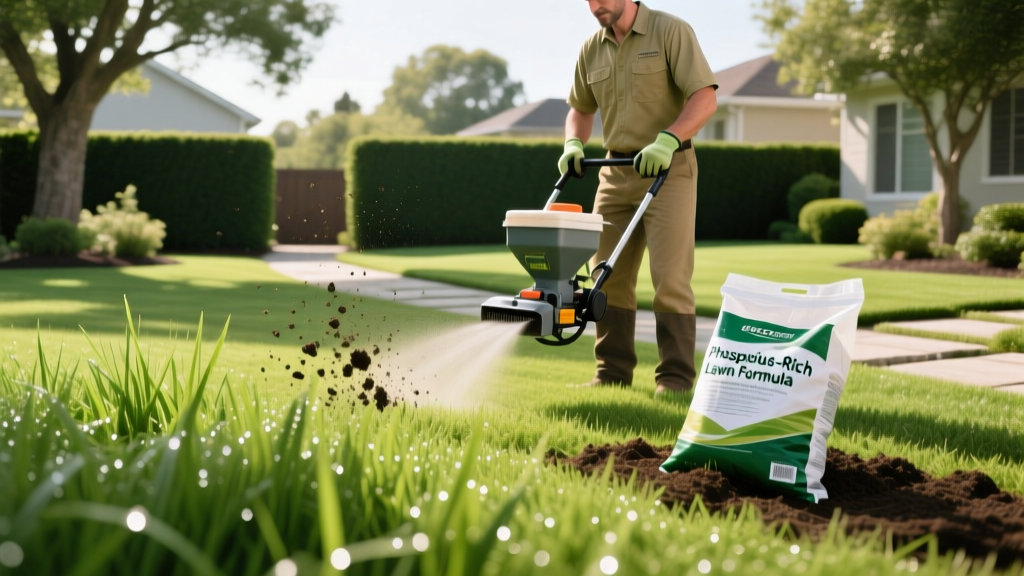
Phosphorous Fertilizer for Lawns: When, Why, and How to Apply
Phosphorus (P) is the middle number in the N-P-K fertilizer ratio, yet it is the most misunderstood and heavily regulated nutrient in turfgrass management. While nitrogen drives leafy growth and potassium aids in stress tolerance, phosphorus is the engine of energy transfer and root development. However, applying phosphorous fertilizer to an established lawn without a verified soil deficiency is not only a waste of money—it is illegal in many jurisdictions due to severe environmental runoff risks.
This guide provides a precise, science-backed framework for determining if your lawn needs phosphorus, navigating state-level fertilizer bans, interpreting lab soil tests, and selecting the correct formulation for your specific grass type and soil pH.
The Biological Role of Phosphorus in Turfgrass
Phosphorus is a structural component of adenosine triphosphate (ATP), the primary energy currency of plant cells. In turfgrass, P is critical during three specific life stages:
- Seed Germination and Seedling Establishment: P accelerates early root mass expansion, allowing new grass to anchor and access subsoil moisture before summer heat stress.
- Sod Knitting: When laying fresh sod, phosphorus stimulates the rapid growth of rhizomes and stolons needed to bind the sod to the underlying soil profile.
- Spring Green-Up and Tillering: Cool-season grasses (like Kentucky Bluegrass and Tall Fescue) rely on stored phosphorus to initiate spring tillering (lateral shoot growth) before soil temperatures are warm enough for rapid microbial mineralization.
Once a lawn is mature and fully established, the turf's phosphorus requirements drop precipitously. Mature grass clippings left on the lawn recycle nearly all the P the plant needs, rendering supplemental applications unnecessary unless a soil test dictates otherwise.
The Legal Landscape: Phosphorus Fertilizer Bans
Because phosphorus is the limiting nutrient for freshwater eutrophication (algal blooms), excess P runoff from lawns into storm drains devastates local lakes and rivers. According to the U.S. Environmental Protection Agency, nutrient pollution is one of the most widespread, costly, and challenging environmental problems. Consequently, states like Minnesota, New York, Wisconsin, and Michigan have enacted strict bans on the retail sale and application of phosphorous fertilizer on established lawns.
⚠️ The Starter Fertilizer Exemption
Most state bans include a legal loophole for 'starter fertilizers.' You can legally purchase and apply phosphorous fertilizer if you are seeding a new lawn, laying sod, or patching bare spots. Retailers will often require you to certify that the product is for new establishment. Always check your specific state's Department of Agriculture regulations before purchasing high-P blends.
Interpreting Your Soil Test for Phosphorus
Never apply phosphorous fertilizer based on visual symptoms alone. Phosphorus deficiency (characterized by a dark, purplish tint on older grass blades) is easily confused with cold-weather dormancy or nitrogen starvation. You must use a university or commercial soil lab (such as Waypoint Analytical or your local cooperative extension) to measure extractable P.
Labs typically use the Mehlich-3 or Bray P1 extraction methods. Below is the decision matrix for interpreting your results and calculating application rates for cool- and warm-season lawns.
| Soil Test P Level (ppm) | Classification | Established Lawn Action | New Seed/Sod Application Rate (lbs P2O5 / 1,000 sq ft) |
|---|---|---|---|
| 0 - 12 ppm | Very Low | Apply 0.5 lbs P2O5 | 1.0 lbs P2O5 |
| 13 - 25 ppm | Low | Apply 0.25 lbs P2O5 | 0.5 lbs P2O5 |
| 26 - 50 ppm | Medium / Optimum | No Application Needed | 0.25 lbs P2O5 (Starter) |
| 51+ ppm | High / Excessive | Do Not Apply (Illegal in many states) | Use Zero-P Starter Fertilizer |
For a deeper understanding of regional turfgrass nutrient requirements, the UMass Amherst Extension Turf Program provides comprehensive guidelines on matching fertilizer inputs to specific soil test extraction values.
Choosing the Right Phosphorous Fertilizer Products
When your soil test confirms a deficiency, or you are legally clearing to use a starter fertilizer for new seed, selecting the right N-P-K ratio is critical. You want a product where the middle number (P2O5) is roughly equal to or slightly higher than the nitrogen content to prioritize root growth over immediate top-growth.
Top Granular Formulations for 2026
- Scotts Turf Builder Starter Food for New Grass (24-25-4): The most accessible retail option. A 36 lb bag covers roughly 5,000 square feet and costs around $32-$38. The 1:1 Nitrogen-to-Phosphorus ratio is ideal for heavy clay soils where P mobility is naturally restricted.
- Lesco Starter Fertilizer (18-24-12): A professional-grade option available at SiteOne or John Deere Landscape stores. Priced at $40-$48 per 50 lb bag, it includes a higher potassium baseline (12%) to help new seedlings withstand early heat stress and drought. Contains 25% slow-release nitrogen via methylene urea.
- Jonathan Green Green-Up Lawn Food for Seeding & Sodding (12-18-8): A lower-nitrogen option that prevents rapid, weak top-growth while delivering a solid phosphorus punch. Excellent for fall overseeding of Tall Fescue where excessive nitrogen could invite snow mold.
Liquid Phosphorus Alternatives
For turf managers and advanced homeowners, liquid Ammonium Polyphosphate (APP), typically sold as a 10-34-0 solution, offers superior agronomic efficiency. Because liquid P bypasses the soil surface and can be watered directly into the root zone, it is less prone to surface runoff. Products like N-EXT Lawn Energizer or generic 10-34-0 agricultural liquids (diluted at 3-6 oz per 1,000 sq ft) provide immediate P availability to the plant.
Overcoming Phosphorus Fixation in Extreme pH Soils
Applying phosphorous fertilizer is useless if the soil chemistry immediately locks it up. Phosphorus is highly reactive and suffers from 'fixation' at both ends of the pH scale:
The Phosphorus Availability Sweet Spot: Turfgrass can only absorb phosphorus when it is dissolved in the soil solution as orthophosphate (H2PO4- or HPO4 2-). This dissolution only occurs efficiently when soil pH is between 6.2 and 7.0.
High pH Soils (Calcareous / Alkaline - pH > 7.3)
In high pH soils, phosphorus binds tightly with calcium and magnesium to form insoluble calcium phosphates. The Fix: Do not use granular MAP or DAP fertilizers. Instead, use liquid P chelated with orthophosphates, or apply humic and fulvic acids alongside your granular P. Humic substances coat the phosphorus granules, preventing calcium from binding to them. Additionally, core aeration and the application of elemental sulfur can gradually lower the pH over several seasons.
Low pH Soils (Acidic - pH < 5.8)
In acidic soils, phosphorus binds with iron and aluminum, forming insoluble complexes that turfgrass roots cannot penetrate. The Fix: Apply pelletized calcitic or dolomitic lime to raise the soil pH before applying your phosphorous fertilizer. Wait at least 3 weeks after liming before applying P to allow the calcium carbonate to neutralize the active aluminum in the soil profile.
Step-by-Step Application Protocol
If your soil test justifies application and local laws permit it, follow this strict protocol to maximize uptake and eliminate runoff.
- Calibrate Your Spreader: Check the product label for the exact spreader setting. For Scotts 24-25-4 on a Scotts EdgeGuard broadcast spreader, the setting is typically 5.5. Never guess the setting; an over-application will burn new seedlings and waste product.
- Timing the Application: Apply starter fertilizer on the exact same day you sow the seed or lay the sod. Do not apply it weeks in advance, as phosphorus does not move (leach) through the soil profile like nitrogen; it stays in the top 1-2 inches where the new roots will first encounter it.
- Sweep Hardscapes Immediately: Phosphorus granules that land on driveways, sidewalks, or streets will wash directly into storm drains during the next rain event. Use a leaf blower or stiff broom to sweep all granules back onto the soil.
- Watering In: Apply 0.1 to 0.2 inches of irrigation immediately after spreading. This dissolves the granule prills, moving the orthophosphates into the top inch of the soil seedbed without causing deep percolation loss.
- Transition to Maintenance: Once the new grass has been mowed 2 to 3 times, the root system is established. Cease all phosphorus applications and transition to a high-nitrogen, zero-phosphorus maintenance fertilizer (e.g., 32-0-4) for the remainder of the season.
By treating phosphorus as a targeted, establishment-only tool rather than a routine seasonal additive, you ensure vigorous root development for new turf while protecting local watersheds from nutrient pollution. Always let a verified soil test, not a marketing label, dictate your fertilizer strategy.

