
Lawn Care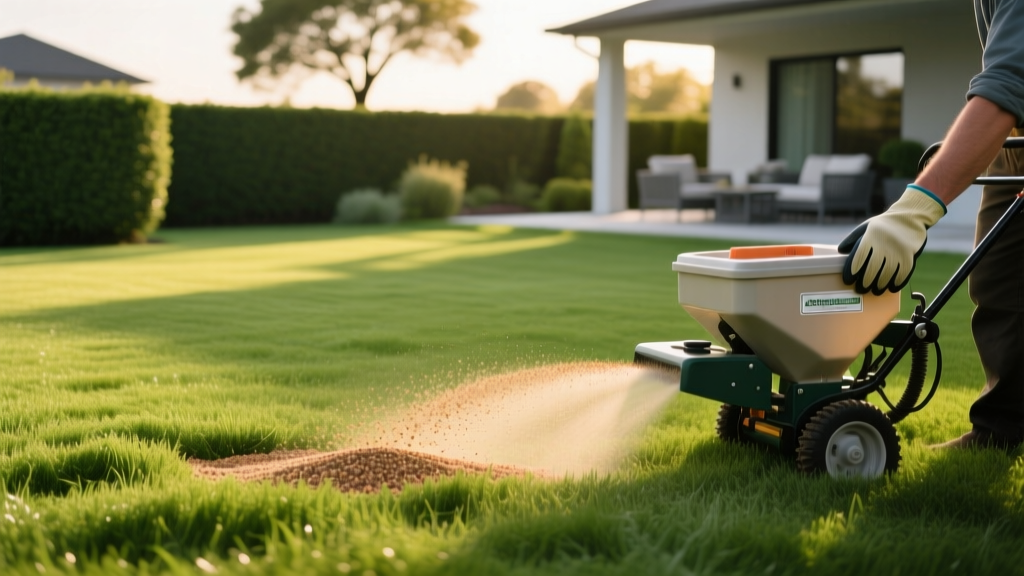
When and How to Use Fertilizer With Phosphorus on Lawns
Phosphorus (P) is the second macronutrient in the standard N-P-K fertilizer ratio, playing an irreplaceable role in turfgrass root development, seedling vigor, and cellular energy transfer. However, finding a fertilizer with phosphorus at your local garden center has become increasingly difficult due to widespread environmental regulations. Because excess phosphorus runoff triggers severe algal blooms in freshwater ecosystems, many states and municipalities have banned the sale of phosphorus-containing lawn fertilizers for general maintenance.
This guide provides a precise, agronomic framework for understanding when phosphorus is legally and biologically necessary, how to interpret your soil test data, and exactly which starter fertilizers deliver the best results for lawn establishment in 2026.
The Biological Role of Phosphorus in Turfgrass
Unlike nitrogen, which drives rapid vertical leaf growth and chlorophyll production, phosphorus operates below the surface and within the cell. It is a primary structural component of adenosine triphosphate (ATP), the molecule responsible for storing and transferring energy within plant cells.
- Root Proliferation: Phosphorus stimulates early root mass development, allowing new grass seedlings to anchor into the soil and access deeper water reserves.
- Tillering and Stolon Growth: Warm-season grasses like Bermuda and Zoysia rely on adequate P levels to produce lateral runners (stolons and rhizomes) that knit the lawn together.
- Stress Tolerance: Adequate phosphorus levels improve a turfgrass stand's ability to survive winter dormancy and summer drought stress by maintaining robust cellular membranes.
Once a lawn is mature and established, its phosphorus requirements drop significantly. Mature turfgrass ecosystems recycle P efficiently through the decomposition of grass clippings and thatch. Therefore, applying a fertilizer with phosphorus to an established, healthy lawn provides zero agronomic benefit and only increases the risk of environmental runoff.
Navigating Phosphorus Fertilizer Bans and Exemptions
The restriction of phosphorus in turf fertilizers is a direct response to eutrophication. When P-rich runoff enters lakes and rivers, it acts as a catalyst for cyanobacteria (blue-green algae) blooms, which deplete dissolved oxygen and create aquatic dead zones. According to the U.S. Environmental Protection Agency, nutrient pollution remains one of the most widespread and costly environmental challenges in the United States.
⚠️ Regulatory Warning: The Starter Fertilizer Exemption
States like New York, Minnesota, Maryland, and Washington strictly prohibit the sale and application of phosphorus fertilizers for routine lawn care. However, virtually all of these jurisdictions include a legal exemption for new lawn establishment (seeding, sprigging, or sodding) and for remediating a proven soil deficiency. Always keep your soil test results and seed purchase receipts on hand if applying starter fertilizer in a restricted zone, as local code enforcement may require proof of exemption.
Interpreting Your Soil Test for Phosphorus (P)
Before purchasing any fertilizer with phosphorus, you must obtain a baseline soil test from a university extension or a certified agronomic lab. The test will measure your soil's available phosphorus using either the Bray P1 or Mehlich-3 extraction methods. Results are typically reported in parts per million (ppm).
| Soil Test P Level (ppm) | Agronomic Status | Action Plan for New Lawns |
|---|---|---|
| 0 - 15 ppm | Deficient | Apply 1.0 to 1.5 lbs of P₂O₅ per 1,000 sq ft at seeding. |
| 16 - 30 ppm | Marginal | Apply 0.5 to 1.0 lbs of P₂O₅ per 1,000 sq ft at seeding. |
| 31 - 50 ppm | Optimal | Use a low-P starter (e.g., 10-10-10) or rely on existing soil reserves. |
| > 50 ppm | Excessive | Do NOT apply phosphorus. Use a 0-N-K fertilizer for establishment. |
For a deeper understanding of regional soil baselines and turfgrass nutrient requirements, consult the Penn State Extension Turfgrass Fertilization Guidelines, which provide exhaustive data on macronutrient uptake rates for both cool- and warm-season species.
Top Fertilizers With Phosphorus for Lawn Establishment
When establishing a new lawn, you need a "starter fertilizer" characterized by a high middle number (the P₂O₅ percentage). Below is a comparison of the most effective, commercially available phosphorus fertilizers for residential and prosumer use in 2026.
| Product Name | N-P-K Ratio | Coverage & Price | Cost per 1,000 sq ft | Best Use Case |
|---|---|---|---|---|
| Scotts Turf Builder Starter Food | 24-25-4 | 5,000 sq ft / $24.99 | $5.00 | Small residential overseeding and patch repair. |
| Lesco Starter Fertilizer | 18-24-6 | 12,000 sq ft / $38.00 | $3.16 | Full lawn renovations; includes essential micronutrients. |
| Jonathan Green Love Your Lawn Starter | 10-18-10 | 15,000 sq ft / $45.00 | $3.00 | Large properties; lower nitrogen prevents seedling burn. |
Calculating Actual Phosphorus Application Rates
A common mistake homeowners make is blindly following the bag's coverage instructions without calculating the actual weight of P₂O₅ being applied to the soil. University agronomists recommend applying between 0.5 and 1.0 lbs of actual P₂O₅ per 1,000 square feet at the time of seeding.
The Math Framework: If you choose a 24-25-4 fertilizer, it contains 25% P₂O₅. To apply exactly 1.0 lb of P₂O₅ per 1,000 sq ft, divide 1.0 by 0.25. You must apply 4.0 lbs of the physical product per 1,000 sq ft. If the bag recommends a lighter application rate (e.g., 2.8 lbs per 1,000 sq ft), you are only delivering 0.7 lbs of actual phosphorus, which is perfectly adequate for marginal soils.
Precision Application Protocol for Starter Fertilizers
Phosphorus is highly immobile in the soil profile. Unlike nitrogen, which leaches easily, phosphorus binds tightly to soil particles (especially in high-clay or high-pH soils). If applied to the surface and left there, it will never reach the developing root zone.
- Soil Preparation: Conduct your core aeration or deep tilling before application. Breaking up soil compaction is mandatory for P integration.
- Spreader Calibration: Set your rotary broadcast spreader to the manufacturer's specified setting for the chosen product. For Lesco 18-24-6, the standard setting is typically 'H' or 'I' on a Scotts EdgeGuard spreader.
- Incorporation (Critical Step): If seeding, apply the fertilizer with phosphorus, then lightly rake the top 0.25 inches of soil to physically incorporate the granules. Alternatively, apply the fertilizer, spread your seed, and drag a piece of chain-link fence or a landscaping mat over the area to press both seed and fertilizer into the soil matrix.
- Initial Watering: Water the lawn immediately after application with approximately 0.25 inches of irrigation. This activates the prills, dissolving the P₂O₅ into the soil solution so it can be absorbed by germinating roots.
- Follow-Up Maintenance: Do not apply additional phosphorus after the initial establishment phase. Switch to a high-nitrogen, zero-phosphorus fertilizer (e.g., 32-0-4) for the lawn's first scheduled maintenance feeding 6 to 8 weeks after germination.
Frequently Asked Questions
Can I use bone meal instead of synthetic fertilizer with phosphorus?
Yes, bone meal is an excellent organic source of phosphorus (typically rated 3-15-0). However, bone meal requires soil microbes to break it down before the phosphorus becomes plant-available. In cold spring soils or highly alkaline soils (pH > 7.2), bone meal breaks down too slowly to support rapid seedling establishment. Synthetic starter fertilizers provide immediate water-soluble P, making them superior for time-sensitive seeding windows.
Will applying too much phosphorus burn my new grass seed?
Phosphorus itself has a very low salt index and will not cause osmotic stress or "fertilizer burn" to tender seedlings. The burn associated with over-applying starter fertilizers is almost always caused by the nitrogen component (the first number in the N-P-K ratio). Always adhere to the recommended nitrogen application limits of 0.5 to 1.0 lbs per 1,000 sq ft for newly germinated turf.
How long does phosphorus stay active in the soil?
Because phosphorus binds tightly to calcium, iron, and aluminum in the soil, it does not leach away like nitrogen. A single, properly calculated application of starter fertilizer will remain in the topsoil root zone for 12 to 24 months, which is why re-application on an established lawn is both biologically unnecessary and environmentally hazardous.

