
Lawn Care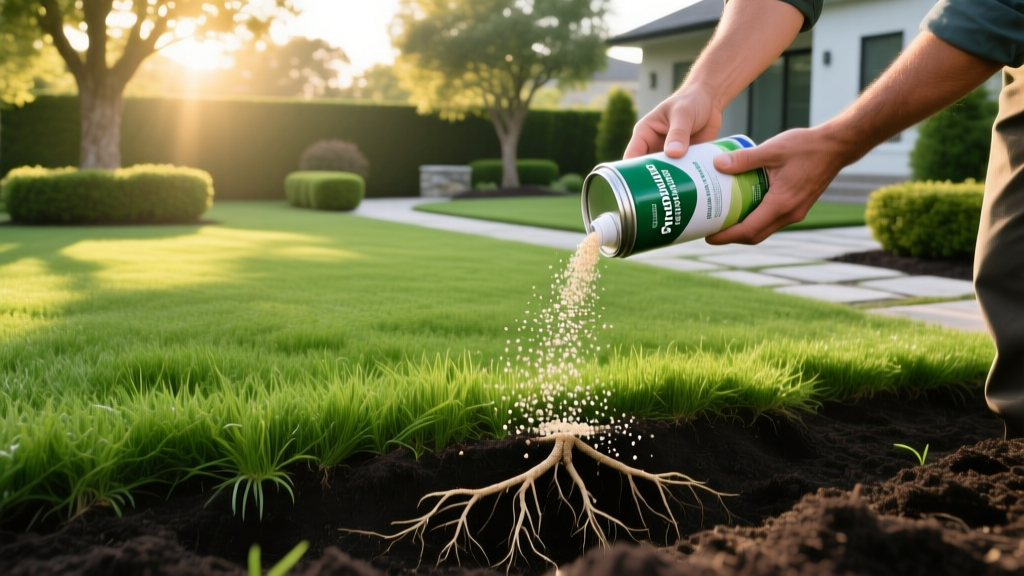
Phosphorus Fertilizer for Lawns: Root Growth & Application
The Role of Phosphorus in Turfgrass Physiology
Phosphorus (P) is the primary driver of early root system development, tillering, and energy transfer in turfgrass. Unlike nitrogen, which fuels rapid top-growth and chlorophyll production, phosphorus operates at the cellular level. It is a core structural component of ATP (adenosine triphosphate), the energy currency plants use to synthesize proteins and replicate DNA during cell division. When a lawn is established from seed or sod, the demand for phosphorus spikes to support the explosive root elongation required to anchor the grass and access deep soil moisture.
However, phosphorus behaves uniquely in the soil profile. It is highly immobile. Unlike nitrate nitrogen, which moves freely with water, phosphorus binds tightly to soil particles—specifically aluminum and iron in acidic soils, or calcium in alkaline soils. Because of this immobility, broadcast applications on established lawns with dense thatch layers often fail to reach the root zone, making targeted application strategies and proper soil pH management mandatory for effective uptake.
Navigating State Phosphorus Restrictions
Before purchasing a high-phosphorus fertilizer, you must verify local environmental regulations. To combat eutrophication (toxic algae blooms) in freshwater ecosystems, numerous states and municipalities have enacted strict bans on phosphorus fertilizer applications for established lawns.
⚠️ Regulatory Warning: States including New York, Minnesota, Michigan, and Wisconsin prohibit the use of phosphorus fertilizers on established turf. Exemptions are typically only granted if: (1) a soil test conducted within the last 36 months proves a phosphorus deficiency, or (2) you are establishing a new lawn via seed or sod. Always check your local Department of Agriculture or Department of Natural Resources guidelines before application.
Decoding Soil Test Results for Phosphorus (P)
Applying phosphorus without a recent soil test is both an environmental risk and a financial waste. Turfgrass requires a specific concentration of orthophosphate (H2PO4-) in the soil solution. Most university extension labs use the Mehlich-3 or Bray P1 extraction methods to measure available phosphorus, reported in parts per million (ppm).
| Mehlich-3 P Level (ppm) | Soil Status | Action Plan & Application Rate |
|---|---|---|
| 0 - 15 ppm | Deficient | Apply 1.0 to 1.5 lbs of P2O5 per 1,000 sq ft. Use a high-P starter fertilizer (e.g., 18-24-12). |
| 16 - 50 ppm | Optimal | Maintenance only. Apply 0.25 to 0.5 lbs of P2O5 per 1,000 sq ft annually to replace what is removed via mowing. |
| 51+ ppm | Excessive | Zero phosphorus application. Switch to a 0-0-0 or low-P organic alternative. Focus on nitrogen and potassium. |
The pH Factor: Phosphorus availability is heavily dictated by soil pH. If your soil pH drops below 6.0, phosphorus binds with aluminum and becomes locked up. If pH rises above 7.5, it binds with calcium. The optimal pH range for phosphorus uptake is 6.5. If your soil test reveals a pH imbalance, correct it with elemental sulfur (to lower) or calcitic lime (to raise) before investing in phosphorus fertilizer.
Selecting the Right Phosphorus Fertilizer NPK Ratio
Fertilizer bags display three numbers representing the percentage by weight of Nitrogen (N), Phosphorus (as P2O5), and Potassium (as K2O). For new lawns or deficient soils, you need a high middle number. Below is a comparison of professional-grade and consumer-grade phosphorus fertilizers available in 2026.
Product Comparison Matrix
- Lesco Professional Starter Fertilizer (18-24-12)
- Best For: Professional contractors and large-scale new seed/sod installations.
- Specs: 50 lb bag covers 12,500 sq ft at standard rates. Contains 18% Nitrogen (mostly slow-release methylene urea), 24% P2O5, 12% K2O.
- 2026 Pricing: ~$52 - $58 per bag at SiteOne or local landscape suppliers.
- Pros: Excellent granule uniformity (SGN 240) for even spreading; includes a robust nitrogen package for sustained top-growth alongside root development.
- Cons: High minimum purchase requirements at some distributors; overkill for established lawns.
- Scotts Turf Builder Starter Food for New Grass (24-25-4)
- Best For: DIY homeowners patching bare spots or seeding small yards.
- Specs: 15 lb bag covers 5,000 sq ft. High fast-release nitrogen for quick greening.
- 2026 Pricing: ~$38 - $42 per bag at big-box hardware stores.
- Pros: Widely available; features Scotts' EveryDrop technology for better soil penetration; beginner-friendly spreader settings printed on the bag.
- Cons: Low potassium (4%) leaves new grass vulnerable to drought and cold stress; high fast-release nitrogen can burn seedlings if over-applied.
- Milorganite (5-2-0)
- Best For: Established lawns in restricted states needing a微量 phosphorus boost and organic matter.
- Specs: 32 lb bag covers 2,500 sq ft. Heat-dried biosolids.
- 2026 Pricing: ~$22 - $26 per bag.
- Pros: Non-burning; improves soil microbiology; complies with most municipal phosphorus bans due to its low, naturally occurring P levels.
- Cons: Contains virtually no potassium; slow to show results in cool soils (requires microbial activity to break down).
Step-by-Step Application Protocol for New Lawns
When establishing a new cool-season lawn (e.g., Tall Fescue or Kentucky Bluegrass) or warm-season lawn (e.g., Bermuda or Zoysia) from seed, phosphorus must be placed in direct proximity to the germinating seed. Broadcast applications on the surface are inefficient because P will not migrate downward to the root zone.
- Prepare the Seedbed: Core aerate or heavily rake the top 2 inches of soil to break up compaction.
- Calibrate the Spreader: For a rotary spreader (e.g., Scotts EdgeGuard Mini) using a 18-24-12 granular product, set the dial to 4.5. For a drop spreader, use setting 6. Always verify calibration by measuring out the product for a 100 sq ft test strip.
- Apply Before Seeding: Broadcast the phosphorus fertilizer over the bare soil before dropping your grass seed. This ensures the P is integrated into the top 1-2 inches of the soil profile where the nascent roots will first explore.
- Sow Seed and Topdress: Apply your grass seed, followed by a light 1/8-inch topdressing of compost or peat moss to retain moisture.
- Watering In: Apply 0.25 inches of water immediately. This is enough to dissolve the fertilizer prills and move the orthophosphate into the soil matrix without washing away the seed or causing surface runoff.
Environmental Stewardship: Preventing Phosphorus Runoff
Phosphorus does not typically leach through the soil profile into groundwater; instead, it causes environmental damage via surface runoff into storm drains and waterways. When soil particles enriched with phosphorus erode into lakes and streams, they trigger cyanobacteria (blue-green algae) blooms that deplete oxygen and kill aquatic life.
Best Management Practices (BMPs):
- The Sweep-Up Rule: Always use a leaf blower or broom to sweep stray fertilizer granules off driveways, sidewalks, and streets back onto the lawn. Never hose off a driveway into a storm drain.
- Buffer Zones: Maintain a 3-foot unfertilized buffer zone between your lawn and any body of water, ditch, or storm drain inlet.
- Erosion Control: Never apply phosphorus fertilizer to frozen ground or heavily sloped, bare soil where rain will cause immediate sheet erosion.
Frequently Asked Questions
Can I use bone meal instead of synthetic phosphorus fertilizer?
Yes, bone meal (typically 3-15-0) is an excellent organic source of phosphorus. However, it breaks down slowly and requires active soil microbes to release nutrients. It is best incorporated directly into the soil during tilling rather than broadcast on the surface. Note that bone meal can attract digging wildlife like raccoons and dogs.
Will adding more phosphorus make my established lawn greener?
No. Turfgrass color is dictated by nitrogen, iron, and magnesium. If your soil test shows optimal phosphorus levels (above 25 ppm), adding more P will not improve color, density, or disease resistance. It will only increase the risk of nutrient runoff and can actually induce micronutrient deficiencies (like zinc and iron) through chemical antagonism.
How often should I soil test for phosphorus?
Phosphorus levels change very slowly in the soil compared to nitrogen. According to Penn State Extension, testing every three years is sufficient for established lawns. However, if you are actively amending a severely deficient soil, test annually until levels reach the optimal 25-50 ppm range.

