
Lawn Care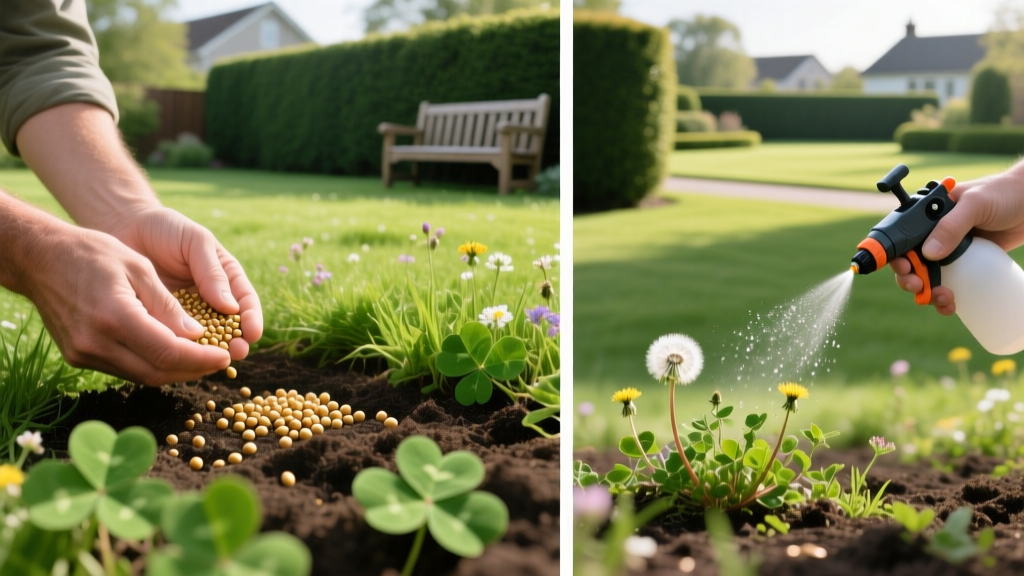
How to Plant Clover Lawn: Seed Selection and Weed Spot-Treatment
The Paradigm Shift: From Spot-Treating Clover to Planting It
For decades, the standard lawn care protocol involved aggressively spot-treating clover with broadleaf herbicides to maintain a sterile, monoculture turfgrass yard. However, as water restrictions tighten and fertilizer costs rise in 2026, homeowners are flipping the script. Instead of asking how to kill clover, the most common question we receive is how to plant clover lawn as a sustainable, nitrogen-fixing eco-turf.
Clover lawns require 70% less water than traditional Kentucky Bluegrass and eliminate the need for synthetic nitrogen fertilizers. But transitioning to a clover lawn introduces a unique agronomic challenge: weed management. Because clover is a broadleaf plant, the standard herbicides used to spot-treat dandelions or plantain will instantly destroy your new eco-lawn. This guide details the exact agronomic steps to establish a clover lawn and the specialized spot-treatment protocols required to maintain it.
Selecting the Right Clover Seed for Your Eco-Lawn
Not all clover is created equal. Standard White Dutch Clover (Trifolium repens) features large leaves and aggressive stolons that can create a bumpy, uneven surface if not mowed frequently. For a modern lawn alternative, turf professionals recommend microclover cultivars. According to Penn State Extension, microclovers blend seamlessly with turfgrass and tolerate lower mowing heights.
| Clover Variety | Cultivar Examples | Leaf Size & Growth Habit | Mowing Height | 2026 Seed Cost (per lb) |
|---|---|---|---|---|
| White Dutch Clover | 'New Zealand White', 'Will' | Large leaves, aggressive runners | 2.5 - 4.0 inches | $8.00 - $12.00 |
| Microclover (Coated) | 'Pirouette', 'Nano', 'Alice' | Tiny leaves, dense & compact | 1.5 - 3.0 inches | $22.00 - $35.00 |
| Strawberry Clover | Trifolium fragiferum | Low creeping, highly drought tolerant | 2.0 - 3.0 inches | $18.00 - $24.00 |
Expert Recommendation: Purchase pelleted or coated microclover seed. The coating includes rhizobium bacteria inoculant, which is mandatory for the plant to fix atmospheric nitrogen into the soil. Uncoated seed will germinate, but it will fail to produce the nitrogen benefits that make clover lawns valuable.
Step-by-Step: How to Plant Clover Lawn Successfully
Clover seeds are incredibly small (roughly 1/3 the size of fescue seed) and require shallow planting and consistent moisture to germinate. Follow this precise seeding protocol:
- Soil Preparation and pH Testing: Clover thrives in a soil pH between 6.0 and 7.0. If your soil is acidic (below 6.0), apply pelletized lime at a rate of 50 lbs per 1,000 sq ft three weeks before seeding. Core aerate the soil to relieve compaction.
- Calculate Seeding Rates: For a pure clover stand, sow at a rate of 1 to 2 lbs per 1,000 square feet. If you are overseeding into an existing thinning turfgrass lawn to create a 50/50 eco-blend, reduce the clover rate to 0.5 lbs per 1,000 sq ft.
- Distribution Technique: Because microclover seed is so fine, mix it with 10 lbs of dry sand or Milorganite to ensure even distribution through a rotary spreader. Set your spreader to the finest setting (often 1 or 2).
- Seed-to-Soil Contact: Do not bury clover seed. It requires light to germinate. Lightly rake the area with a flexible leaf rake so the seed is barely covered by 1/8 inch of soil, or simply press it into the aeration holes.
- Germination Watering Schedule: Water lightly 2 to 3 times daily for the first 14 days. The top 1/2 inch of soil must never dry out during germination. Expect sprouting in 7 to 10 days at soil temperatures above 55°F.
The Spot-Treatment Dilemma: Managing True Weeds in Clover
Once your clover lawn is established, you will inevitably face invasions from true nuisance weeds. This is where the Weed Species Spot-Treatment protocol must be entirely rewritten. Standard broadleaf herbicides (active ingredients like 2,4-D, Dicamba, Mecoprop, and Triclopyr) are designed to kill dicotyledonous plants. Clover is a dicot. Applying standard 'Weed B Gon' or 'Weed & Feed' products will obliterate your clover lawn in 48 hours.
Here is how to spot-treat specific weed categories in a clover lawn without causing collateral damage:
1. Spot-Treating Grassy Weeds (Crabgrass, Nutsedge, Poa Annua)
Grassy weeds are monocots, meaning they are biologically distinct from your broadleaf clover. You can safely use selective grass herbicides.
- Active Ingredient: Sethoxydim or Fluazifop-P-butyl.
- Recommended Product: Bonide Grass Beater Over-The-Top Grass Killer Concentrate or Ortho Grass B Gon.
- Application: Mix at 1.5 oz per gallon of water. Spot-spray directly on the crabgrass or nutsedge. The clover may experience slight, temporary tip-burn, but it will not be killed. The grassy weed will yellow and die within 10 to 14 days.
2. Spot-Treating Broadleaf Weeds (Dandelion, Bindweed, Thistle)
This is the most challenging aspect of maintaining a clover lawn. Because both the weed and the clover are broadleaf plants, chemical selectivity is impossible. You must rely on mechanical or highly targeted non-selective methods.
- Mechanical Extraction: Use a stand-up weeder with serrated claws (such as the Fiskars 3-Claw Stand-Up Weeder). Ensure you extract the entire taproot of the dandelion, as clover lawns cannot be chemically rescued if the weed regroups.
- Wick Application (Chemical): For deep-rooted perennial broadleaf weeds like bindweed, use a 20% horticultural vinegar solution or a highly diluted glyphosate solution applied only via a sponge wick or paintbrush directly onto the weed's leaves. Avoid spray drift entirely.
- Thermal Spot-Treatment: Use a propane flame weeder or a targeted boiling water pour directly on the crown of the invasive weed. The clover surrounding the weed will likely scorch but will regenerate from its stolons within two weeks.
⚠️ Critical Herbicide Warning: Never use pre-emergent herbicides like Prodiamine or Dithiopyr (commonly sold as Dimension) in the first year of a clover lawn. While these stop crabgrass seeds, they will also severely stunt the stolon (runner) growth of your clover, preventing it from forming a dense, traffic-tolerant mat. Wait until year two when the clover root system is fully mature.
Financial Breakdown: Clover vs. Traditional Turf Maintenance
While the initial seed cost for microclover is higher than turfgrass, the long-term ROI is substantial. Based on 2026 average landscaping costs for a 5,000 sq ft lawn:
| Maintenance Factor | Traditional Fescue/Bluegrass Lawn | Microclover Eco-Lawn |
|---|---|---|
| Annual Nitrogen Fertilizer | $180 - $250 | $0 (Fixes own nitrogen) |
| Summer Irrigation Costs | $300 - $500 | $50 - $100 (Drought tolerant) |
| Broadleaf Weed Control | $60 - $120 | $0 (Clover is the broadleaf) |
| Mowing Frequency | Weekly (25+ cuts/year) | Bi-weekly (10-12 cuts/year) |
Frequently Asked Questions
Will a clover lawn attract too many bees?
Microclover cultivars like 'Pirouette' and 'Nano' have been specifically bred to produce significantly fewer flowers than standard White Dutch Clover. If you mow your microclover lawn every 10 to 14 days at a height of 2 inches, you will remove the vast majority of flower heads before they bloom, minimizing bee traffic while maintaining a lush green carpet. For more on pollinator interactions, refer to the UC Davis IPM guidelines on clover management.
Can I mix clover seed with my existing grass?
Yes, overseeding clover into an existing thinning lawn is an excellent way to transition. Reduce your turfgrass mowing height to 1.5 inches, aerate heavily, and sow the microclover at 0.5 lbs per 1,000 sq ft. The clover will fill in the bare spots and begin feeding nitrogen to the surrounding grass roots.
How does clover handle heavy foot traffic and dog urine?
Clover is remarkably resilient to foot traffic once its stolon network is established (usually after 6 months). Furthermore, unlike Kentucky Bluegrass, which burns and turns yellow from the high nitrogen concentration in dog urine, clover is immune to urine burn and will remain green in high-traffic pet areas.

