
Lawn Care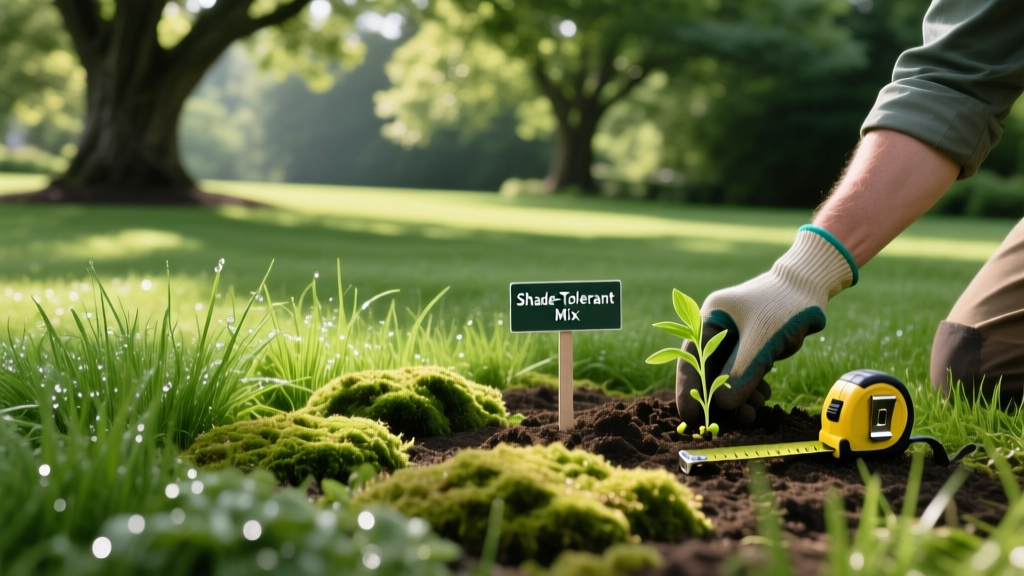
Planting Grass in Shade: Site-Condition Solutions and Seed Selection
Standard turfgrass thrives on direct sunlight, requiring a minimum of six to eight hours of unfiltered solar radiation daily. When site conditions restrict this light, attempting to grow traditional Kentucky Bluegrass or Bermuda grass results in thinning crowns, elongated internodes, and inevitable die-off. Successfully planting grass in shade requires abandoning full-sun assumptions and adopting a specialized, site-specific approach. This guide breaks down the exact diagnostic steps, National Turfgrass Evaluation Program (NTEP) rated cultivars, and altered maintenance protocols required to establish a durable lawn under a tree canopy or structural shadow.
Diagnosing Your Shade Profile
Before purchasing seed, you must quantify the light restriction. 'Shade' is not a monolith; it is a spectrum of light intensity and duration. Tree canopies filter light differently than the solid shadow cast by a two-story home. Use a sunlight meter or a time-lapse observation over a 12-hour period in mid-summer to categorize your site. According to University of Minnesota Extension, turfgrass viability drops precipitously once direct sunlight falls below four hours.
| Shade Classification | Direct Sun Hours | Canopy/Obstruction Type | Turfgrass Viability |
|---|---|---|---|
| Partial Shade | 4 to 6 hours | Dappled tree canopy, morning/afternoon sun blocks | High (Standard shade mixes thrive) |
| Filtered Light | 2 to 4 hours | High-branched mature oaks/pines, lattice structures | Moderate (Requires specific fine fescues) |
| Dense Shade | Less than 2 hours | Low-branched evergreens, north-facing building walls | Low (Pivot to groundcovers or moss) |
Selecting the Right Seed Cultivar
Generic 'Shade Mix' bags at big-box stores often contain cheap annual ryegrass or poorly adapted creeping bentgrass. For a perennial lawn, you must select specific species and, more importantly, specific shade-bred cultivars. As of 2026, premium shade-tolerant seed blends cost between $8 and $14 per pound, a necessary investment for site-condition problem solving.
Cool-Season Champions (Northern Zones)
Fine fescues are the undisputed leaders in low-light cool-season environments. They possess narrow leaf blades that maximize light capture and require significantly less nitrogen than their broadleaf counterparts.
- Creeping Red Fescue: Look for NTEP-rated cultivars like 'Banner III' or 'Navigator II'. These spread via rhizomes, helping to fill in bare spots under trees.
- Chewings Fescue: Cultivars like 'Shoreline' and 'Beacon' offer superior density and disease resistance against dollar spot, a common issue in humid, shaded microclimates.
- Hard Fescue: 'Discovery' and 'Razor' are exceptionally drought-tolerant, which is critical when competing with aggressive tree root systems for soil moisture.
Pro Tip: Avoid Tall Fescue in heavily shaded areas. While marketed as tough, it requires more light than fine fescues and will thin out rapidly under dense canopies.
Warm-Season Contenders (Southern Zones)
Warm-season grasses generally despise shade, but two species offer viable solutions for southern homeowners dealing with partial shade.
- St. Augustine: The most shade-tolerant warm-season grass. Cultivars 'Palmetto', 'Seville', and 'Sapphire' can survive with 4 to 5 hours of filtered light. Expect to pay $0.40 to $0.60 per square foot for sod, as seed is rarely viable.
- Zoysia: Fine-textured Zoysia varieties like 'Zeon' and 'Zorro' exhibit surprising shade tolerance, outperforming Bermuda grass entirely in low-light scenarios. They establish slowly but form a dense, weed-resistant mat once mature.
Soil Preparation and Planting Protocol
Shaded soils are often compacted, acidic, and depleted of nutrients by competing tree roots. The UMass Amherst Turf Program emphasizes that soil preparation in shaded environments must prioritize root zone aeration and pH balancing over heavy fertilization.
Site-Condition Prep Checklist:
- Raise the Canopy: Prune lower tree branches up to 8–10 feet from the ground to allow lateral morning and evening sunlight to penetrate the turf zone.
- Core Aeration: Extract 3-inch soil plugs on a 3-inch grid. This is non-negotiable to relieve compaction caused by foot traffic on soft, shaded soil.
- Amend the pH: Shaded soils under pines and oaks trend acidic. Apply pelletized lime at a rate of 40 lbs per 1,000 sq ft to raise the pH to the 6.2–6.8 optimal range for fescues.
- Seed Application: Sow fine fescue blends at a rate of 6 to 8 lbs per 1,000 sq ft. Use a drop spreader for precise placement under low-hanging branches where rotary spreaders bounce seed away.
- Mulch: Apply a thin layer (1/4 inch) of certified weed-free straw. Do not use hay, which introduces agricultural weeds that will outcompete slow-germinating shade grasses.
The Shaded Lawn Maintenance Matrix
Once established, shaded grass requires a fundamentally different maintenance schedule than full-sun turf. Applying standard sunny-lawn protocols to a shaded site is the primary cause of turf failure.
Mowing: The 1-Inch Rule
Shaded grass produces fewer tillers and relies on extended leaf surface area to photosynthesize. Always mow shaded zones exactly 1 inch higher than your sunny zones. If your front yard (full sun) is cut at 2.5 inches, set the deck to 3.5 inches for the shaded backyard. Never remove more than 1/3 of the leaf blade in a single pass.
Fertilization: Less is More
Excess nitrogen forces rapid, weak vertical growth that the limited sunlight cannot support, leading to cellular collapse and disease susceptibility. Limit nitrogen applications to 1.0 to 1.5 lbs per 1,000 sq ft annually (compared to 3.0+ lbs for full sun). Prioritize potassium (K) in your autumn fertilizer application; potassium thickens cell walls and improves the grass's ability to withstand environmental stress and cold temperatures.
Warning: The Overwatering Trap
Shaded soil evaporates moisture 50% to 70% slower than sun-baked soil. Watering a shaded lawn on the same automated schedule as a sunny lawn will saturate the root zone, depleting oxygen and triggering Pythium blight and powdery mildew. Use a 6-inch soil probe to check moisture. Only irrigate when the top 2 inches of soil are dry, and water deeply but infrequently (e.g., 0.5 inches twice a week rather than 0.2 inches daily).
When to Pivot: Shade-Tolerant Groundcover Alternatives
If your site diagnostic reveals less than two hours of direct sunlight, or if the tree root competition is too aggressive (common with shallow-rooted species like Norway Maples or Silver Maples), planting grass in shade becomes an exercise in futility. Recognizing this threshold is a hallmark of expert lawn care.
Instead of fighting the site condition, pivot to high-performance groundcovers that thrive in dense shade and eliminate the need for mowing:
- Creeping Jenny (Lysimachia nummularia): Excellent for moist, shaded areas. Spreads rapidly via stolons and provides vibrant chartreuse foliage.
- Japanese Spurge (Pachysandra terminalis): A woody evergreen groundcover that forms a dense, 8-inch tall carpet. Highly resistant to deer browsing and dry shade conditions.
- Moss Cultivation: For heavily compacted, acidic, and perpetually damp shade, stop fighting the moss. Rake the area smooth, maintain a pH below 5.5, and cultivate a lush, velvety moss lawn that requires zero mowing, fertilization, or supplemental watering.
Solving the shaded lawn puzzle requires accurate light measurement, precise cultivar selection, and a willingness to alter standard maintenance habits. By treating shade as a specific microclimate rather than a minor inconvenience, you can establish a resilient, attractive turf that anchors your landscape architecture.

