
Lawn Care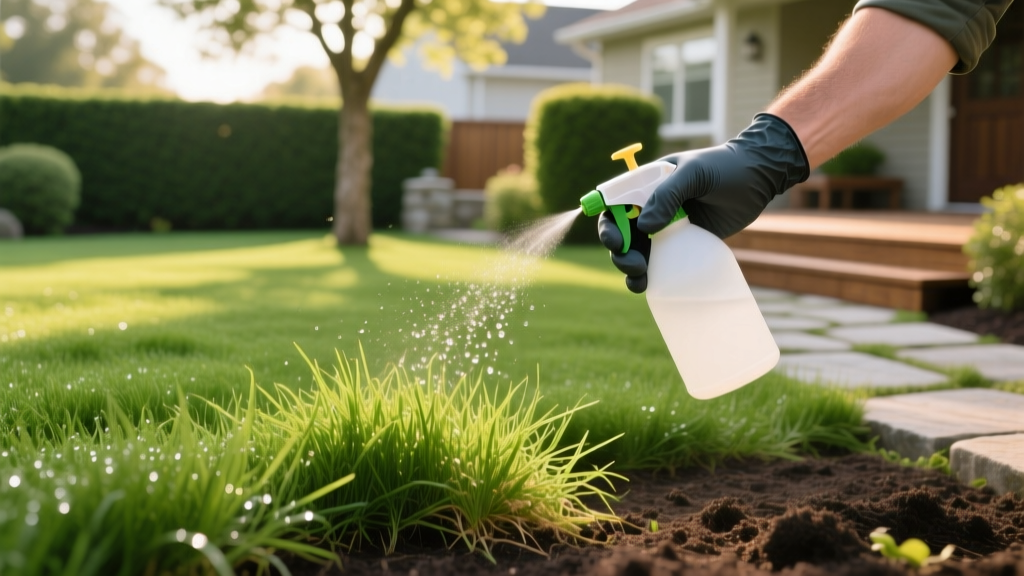
Effective Crabgrass Killer for Lawns: Spot-Treatment Guide
Identifying the Target: Smooth vs. Large Crabgrass
Before selecting a crabgrass killer for lawns, you must accurately identify the specific weed species and its growth stage. Crabgrass (Digitaria spp.) is an annual summer grass that germinates when soil temperatures consistently reach 55°F to 60°F. By mid-summer, it has typically reached the 4-tiller to mature seed-head stage, making it highly resistant to weak, broad-spectrum consumer herbicides.
The two primary culprits in residential lawns are Smooth Crabgrass (Digitaria ischaemum) and Large Crabgrass (Digitaria sanguinalis). Smooth crabgrass tends to stay lower to the ground with a purplish tint at the base of the stem, while large crabgrass grows aggressively upright with hairy leaves and stems. Both species require specific post-emergent active ingredients once they pass the 2-tiller stage, as standard pre-emergents like prodiamine are entirely ineffective on visible, mature plants.
Active Ingredients That Actually Kill Mature Crabgrass
Most big-box store 'weed and feed' products rely on 2,4-D, Dicamba, and MCPP. While excellent for broadleaf weeds like dandelions, these auxin-based herbicides do absolutely nothing to grassy weeds like crabgrass. To successfully spot-treat mature crabgrass, you need specialized graminicides or synthetic auxins specifically formulated for Digitaria.
The Big Two: Quinclorac and Fenoxaprop-p-ethyl
Quinclorac (found in professional products like Drive XLR8 and consumer options like BioAdvanced All-In-One) is the industry standard for post-emergent crabgrass control. It mimics plant hormones, causing rapid, abnormal growth that eventually exhausts and kills the weed. Fenoxaprop-p-ethyl (found in Acclaim Extra) is an aryloxyphenoxypropionate (APP) herbicide that inhibits fatty acid synthesis in grassy weeds, effectively starving them.
⚠️ Critical Turf Safety Warning
Never apply Fenoxaprop-p-ethyl to warm-season lawns (Bermuda, Zoysia, Centipede). It will cause severe phytotoxicity and can kill your turf. Quinclorac is generally safe for both cool- and warm-season grasses, except for St. Augustine and Centipede grass, which will suffer severe yellowing and stunting if treated with Quinclorac.
Turf Safety and Efficacy Matrix
Selecting the right crabgrass killer for lawns depends entirely on your specific turfgrass species. Use the matrix below to ensure you do not accidentally destroy your lawn while trying to kill the weeds.
| Turfgrass Species | Quinclorac Safety | Fenoxaprop-p-ethyl Safety | Recommended Spot-Treatment Approach |
|---|---|---|---|
| Tall Fescue / Kentucky Bluegrass | Excellent | Excellent | Use Quinclorac for heavy patches; Fenoxaprop for light spot-spraying. |
| Bermudagrass / Zoysiagrass | Excellent | SEVERE DAMAGE | Strictly use Quinclorac. Avoid all APP herbicides. |
| St. Augustinegrass | SEVERE DAMAGE | SEVERE DAMAGE | Manual removal or highly targeted, careful application of Atrazine (slow acting). |
| Centipedegrass | SEVERE DAMAGE | SEVERE DAMAGE | Manual removal; maintain thick canopy to shade out future germination. |
| Perennial Ryegrass | Good (may cause temporary stunting) | Excellent | Fenoxaprop is preferred to avoid Quinclorac-induced yellowing in ryegrass. |
Step-by-Step Spot-Treatment Protocol
Spot-treating is vastly superior to broadcast spraying when dealing with isolated crabgrass outbreaks. It saves money, reduces chemical load on your soil, and minimizes turf stress. Here is the exact protocol for mixing and applying a Quinclorac-based crabgrass killer for lawns.
Step 1: Calculate the Mix Rate
For a standard 18% Quinclorac liquid concentrate (like Drive XLR8), the broadcast rate is typically 0.73 fluid ounces per 1,000 square feet. For spot treatment, you must calibrate your sprayer to deliver this exact amount of active ingredient over the target area.
- Small 1-Gallon Pump Sprayer: Mix 0.36 fl oz (approx. 2.2 teaspoons) of Quinclorac concentrate per gallon of water. This will cover roughly 500 sq ft of targeted weeds.
- 2-Gallon Pump Sprayer: Mix 0.73 fl oz (approx. 1.5 tablespoons) of concentrate with 2 gallons of water to cover 1,000 sq ft.
Step 2: Add the Correct Surfactant (Do Not Skip)
Crabgrass leaves are coated in a waxy cuticle that repels water-based sprays. Quinclorac requires a surfactant to penetrate this barrier. According to Penn State Extension, using a Methylated Seed Oil (MSO) at a rate of 0.25% v/v (roughly 1/2 teaspoon per gallon of water) increases crabgrass mortality rates by over 40% compared to using no surfactant or a basic dish soap. Never use dish soap; it lacks the penetrative qualities of MSO and can cause leaf burn in high heat.
Step 3: Application Technique
Spray the crabgrass until the leaves are uniformly wet, but stop before the liquid begins to drip off the blades (the point of runoff). Avoid spraying the surrounding desirable turf if possible, though Quinclorac is safe for most cool-season and Bermuda lawns. Apply in the early morning when temperatures are between 65°F and 80°F.
Troubleshooting: Why Your Previous Attempts Failed
Homeowners frequently report that their crabgrass killer for lawns 'didn't work.' In 90% of cases, the failure is due to one of three specific edge cases:
The 'Purple Phase' Misunderstanding
When Quinclorac works, it causes the crabgrass to turn a deep, vibrant purple or red before it turns brown and dies. This color change happens within 3 to 5 days. Many homeowners see the purple weed, assume the chemical failed, and immediately re-spray. This double-dosing causes severe phytotoxicity to the surrounding desirable turf. Wait 14 to 21 days before evaluating if a second application is necessary.
Temperature Threshold Failures
Applying post-emergent crabgrass herbicides when daytime temperatures exceed 85°F drastically increases the risk of turf burn. The herbicide becomes overly active in the heat, and the desirable grass is already under environmental stress, reducing its ability to metabolize the chemical safely. If it is mid-July and hitting 95°F, wait for a cooler morning or rely on manual pulling until the late-summer cooldown.
The 4-Tiller Resistance Wall
Once crabgrass develops 4 or more tillers (side shoots), its vascular system becomes robust enough to sequester and detoxify single applications of Quinclorac. As noted by weed scientists at Clemson University Extension, mature crabgrass requires a sequential application. Apply your first spot-treatment, wait exactly 21 days, and apply a second treatment to any surviving green tissue.
Post-Treatment Lawn Recovery and Overseeding
Killing the crabgrass is only half the battle; crabgrass leaves behind bare, circular patches in your lawn that will quickly be colonized by new weeds if left exposed.
Overseeding Timelines: Quinclorac has a residual soil activity that can inhibit the germination of desirable cool-season grass seeds. If you plan to overseed your lawn with Tall Fescue or Kentucky Bluegrass in the fall, you must wait at least 21 to 28 days after your final Quinclorac application before dropping seed. If you applied a second sequential treatment in late August, you may need to push your fall overseeding window back to late September or early October to avoid seedling mortality.
For immediate bare-spot repair during the summer, consider laying down a small piece of matching sod, or applying a heavy layer of compost and keeping the area shaded to prevent new crabgrass seeds from germinating in the exposed soil. Maintaining a mowing height of 3.5 to 4 inches for cool-season grasses is the ultimate biological defense, as the dense canopy shades the soil, keeping soil temperatures below the 55°F threshold required for crabgrass germination.

