
Lawn Care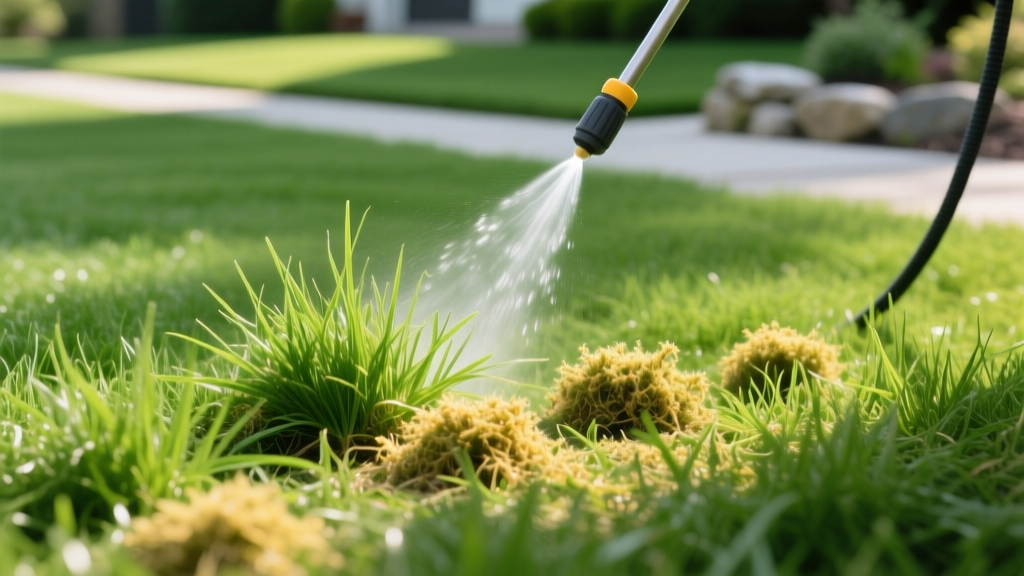
How to Choose the Right Crabgrass Killer for Spot Treatment
The Biology of Crabgrass: Why Spot Treatment is Tricky
Crabgrass (Digitaria species) is an aggressive annual weed that thrives in high-heat environments and exploits thin, compacted, or under-fertilized turf. Homeowners typically encounter two primary variants: hairy crabgrass (Digitaria sanguinalis) and smooth crabgrass (Digitaria ischaemum). Both species germinate when soil temperatures consistently reach 55°F to 60°F at a 2-inch depth, usually in mid-to-late spring. Because crabgrass completes its entire life cycle in a single year, the window for effective post-emergent spot treatment is narrow and highly dependent on the plant's physiological growth stage.
Unlike broadleaf weeds such as dandelions, crabgrass is a monocot, meaning it shares a similar cellular structure and metabolic pathway with your desirable turfgrass. This biological similarity makes selective chemical control difficult. The herbicide must be toxic enough to disrupt the weed's photosynthesis or amino acid synthesis without causing fatal phytotoxicity to the surrounding lawn. According to the University of California Statewide Integrated Pest Management Program, successful eradication relies entirely on matching the correct active ingredient to the specific tiller stage of the weed.
Active Ingredients That Actually Work
The residential market has shifted significantly in recent years following the complete phase-out of MSMA (monosodium methanearsonate) for home lawn use. Modern post-emergent crabgrass killers rely on highly specific synthetic auxins, aryloxyphenoxypropionates, or HPPD inhibitors. Below is a comparison matrix of the most effective active ingredients available for spot treatments.
| Active Ingredient | Common Brand Names | Target Grass Types | Efficacy Stage | Adjuvant Required? |
|---|---|---|---|---|
| Quinclorac | Drive XLR8, Quinclorac 75 DF | Kentucky Bluegrass, Tall Fescue, Bermudagrass | 1-2 leaf, 5+ tillers | Yes (MSO or COC) |
| Fenoxaprop-p-ethyl | Acclaim Extra | Kentucky Bluegrass, Tall Fescue, Ryegrass | All post-emergent stages | No |
| Dithiopyr | Dimension 2EW | Most cool and warm-season grasses | Pre-emergent to 1-tiller | No |
| Mesotrione | Tenacity | Kentucky Bluegrass, Tall Fescue, Centipedegrass | Seedling to 2-tiller | Yes (NIS) |
Crucial Warning: Mesotrione acts as a bleaching herbicide. While highly effective on young crabgrass in Kentucky Bluegrass and Tall Fescue lawns, it will severely damage or kill Bermudagrass, St. Augustine, and Zoysia. Always verify your turf species before selecting an HPPD inhibitor.
The "Tiller Stage" Trap: Why Quinclorac Fails
The most common failure in DIY crabgrass spot treatment occurs when homeowners apply Quinclorac to mid-stage weeds. Quinclorac exhibits a bizarre efficacy gap: it is highly lethal to 1-leaf and 2-leaf seedlings, and it effectively kills mature plants with 5 or more tillers. However, it notoriously fails on plants in the 3-tiller and 4-tiller stages. During this specific developmental window, the plant's vascular system and waxy leaf cuticle thicken just enough to restrict the translocation of the synthetic auxin to the root crown, but not enough to trigger rapid tissue necrosis. If your crabgrass is in the 3-to-4 tiller stage, switch to Fenoxaprop-p-ethyl or wait two weeks until the plant reaches the 5-tiller stage before spraying.
Step-by-Step Spot Treatment Protocol
Achieving a complete kill requires precise mixing, proper surfactant selection, and optimal environmental conditions. Follow this protocol to maximize herbicide translocation.
Step 1: Preparation and Mowing
Mow your lawn 24 hours before application. This removes excess leaf tissue from the desirable turf, reducing chemical interception and allowing the spray to penetrate the canopy and reach the low-growing crabgrass rosette. Do not water the lawn for 24 hours prior to spraying; slightly moisture-stressed crabgrass absorbs systemic herbicides more aggressively as it attempts to pull water and dissolved chemicals into its vascular system.
Step 2: Mixing the Solution
For a standard 1-gallon pump sprayer used for spot treatments, precision is critical. Using too much herbicide will burn the leaf tissue before the chemical can translocate to the roots.
- Quinclorac (Drive XLR8): Mix 0.5 oz of herbicide per 1,000 square feet. For a 1-gallon spot sprayer, use approximately 0.15 oz (roughly 1 teaspoon) of product.
- Surfactant Selection: You must use a Methylated Seed Oil (MSO) or Crop Oil Concentrate (COC) at a rate of 0.5% v/v (approx. 1.3 oz per gallon of water). Standard Non-Ionic Surfactants (NIS) only reduce surface tension; MSO actively penetrates the lipid-rich waxy cuticle of mature crabgrass leaves, which is mandatory for Quinclorac efficacy.
- Fenoxaprop-p-ethyl (Acclaim Extra): Mix 0.3 oz per 1,000 square feet. This formulation contains built-in emulsifiers and does not require an additional adjuvant.
Step 3: Application Technique
Apply the solution using a fine fan nozzle, holding the wand 12 to 18 inches above the canopy. Spray until the crabgrass leaves are uniformly wet, but stop before the liquid begins to drip off the leaf tips. Drip-off wastes chemical and increases the risk of soil-level phytotoxicity to the surrounding turf roots. Apply only when ambient temperatures are between 65°F and 85°F. Spraying during mid-day heat (above 85°F) causes rapid evaporation of the water carrier, leaving crystallized herbicide on the leaf surface where it cannot be absorbed.
Step 4: Post-Application Hydration
Wait at least 24 hours before watering or irrigating the lawn. This allows the herbicide sufficient time to translocate from the leaf tissue down to the root crown. According to University of Minnesota Extension, premature irrigation is the leading cause of poor weed control in residential settings.
Common Spot-Treatment Failures and Troubleshooting
Even with the correct product, environmental variables and biological resistance can alter outcomes. Use this decision tree to diagnose and correct application failures.
- Symptom: Leaves turn bright yellow or white, but the plant remains alive after 3 weeks.
- Cause: Insufficient surfactant or application during high humidity. The chemical penetrated the outer cuticle but stalled in the epidermal layer.
- Fix: Reapply using a higher concentration of MSO, or switch to a contact-systemic blend like Fenoxaprop-p-ethyl. Ensure application occurs in the early morning when stomata are open.
- Symptom: Surrounding desirable turf shows severe bleaching or necrosis.
- Cause: Herbicide drift or misidentification of turfgrass species. This is exceptionally common when using Mesotrione (Tenacity) on lawns containing creeping Bentgrass or Bermudagrass.
- Fix: Immediately apply a fast-release nitrogen fertilizer (0.5 lbs N per 1,000 sq ft) to stimulate rapid cellular division in the desirable turf, helping it outgrow the chemical damage. Avoid using Mesotrione for spot treatments in mixed-grass lawns.
- Symptom: Crabgrass dies, but new seedlings emerge in the exact same spot 4 weeks later.
- Cause: Post-emergent herbicides do not provide residual pre-emergent soil barriers (with the exception of Dithiopyr). The dying mother plant drops thousands of seeds into the bare soil.
- Fix: Once the initial plant is dead and removed, apply a localized pre-emergent barrier containing Prodiamine or Dithiopyr to the bare spot, or immediately overseed the area with a fast-germinating perennial ryegrass to outcompete the seed bank.
Post-Treatment Lawn Recovery
Killing the weed is only half the battle. Crabgrass thrives in areas where the desirable turf canopy is broken. Once the spot treatment has successfully eradicated the weed, the bare soil must be addressed to prevent a secondary invasion of broadleaf weeds like prostrate spurge or knotweed.
If you used Quinclorac, be aware of its soil residual activity. The product label mandates a 14-day waiting period before overseeding most cool-season grasses, and up to 28 days for certain fine fescues. Tall Fescue and Kentucky Bluegrass can generally be seeded safely after this two-week window. For immediate repair without waiting, lay down a plug of your existing turfgrass species or apply a thin layer of compost mixed with a starter fertilizer to encourage lateral stolon and rhizome spread from the surrounding healthy grass.

