
Lawn Care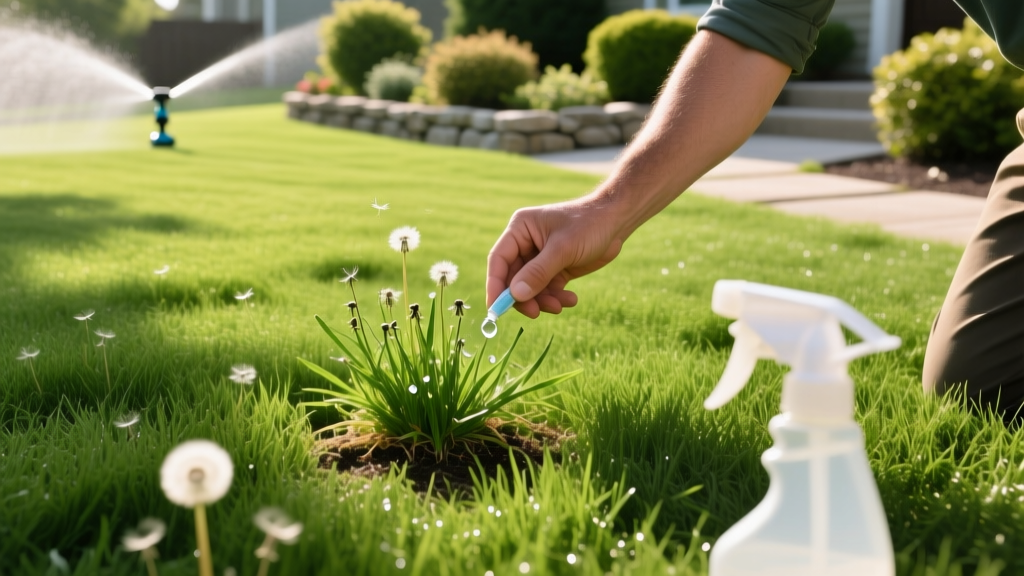
How to Spot-Treat Crabgrass Weed Without Killing Your Lawn
The Economics of Targeted Eradication
Crabgrass weed (Digitaria species) is an opportunistic annual invader that exploits thin turf, compacted soil, and heat-stressed lawns. While broadcast herbicide applications are common, they are economically inefficient and ecologically wasteful when infestation levels remain below 15% of the total lawn area. Spot-treating crabgrass weed minimizes chemical load, reduces the risk of phytotoxicity to desirable cool- and warm-season grasses, and lowers annual maintenance costs. In 2026, with post-emergent herbicide prices averaging $85 to $120 per commercial-grade container, precision application is a financial necessity for homeowners managing isolated outbreaks.
Identifying the Enemy: Smooth vs. Hairy Crabgrass Weed
Accurate identification dictates your chemical selection and application timing. The two primary culprits in residential lawns are smooth crabgrass (Digitaria ischaemum) and hairy crabgrass (Digitaria sanguinalis). Both are summer annuals, but their morphological differences affect herbicide uptake.
| Characteristic | Smooth Crabgrass (D. ischaemum) | Hairy Crabgrass (D. sanguinalis) |
|---|---|---|
| Leaf Blade Width | Narrow (1/8 to 1/4 inch) | Wider (1/4 to 1/2 inch) |
| Collar Region | Smooth, no hairs present | Dense, long white hairs |
| Ligule | Short, membranous, jagged edge | Long, membranous, pointed |
| Growth Habit | Low-growing, prostrate tillers | Upright, aggressive clumping |
| Herbicide Susceptibility | Highly susceptible to Quinclorac | Requires higher surfactant rates for cuticle penetration |
According to the UC Statewide IPM Program, smooth crabgrass is significantly more prevalent in irrigated, closely mowed lawns, while hairy crabgrass dominates neglected, dry, and compacted areas.
The Spot-Treatment Decision Matrix
Before mixing chemicals, evaluate the spatial distribution of the crabgrass weed. Use this framework to determine your eradication strategy:
Infestation Density Framework
- Isolated Patches (<5% coverage): Manual extraction or targeted 1-gallon pump sprayer application.
- Localized Clusters (5% - 15% coverage): Spot-treatment with shielded nozzle post-emergent herbicides.
- Widespread Infestation (>15% coverage): Abandon spot-treatment. Transition to a full-lawn pre-emergent program the following spring and consider fall renovation.
Chemical Spot-Treatment Protocols
Post-emergent control of crabgrass weed requires specific active ingredients that translocate through the plant's vascular system to kill the root crown. Timing is critical: applications are most effective when the weed is in the 1- to 2-leaf tiller stage. Once crabgrass develops multiple tillers and seed heads, chemical control drops below 60% efficacy.
Quinclorac (Drive XLR8 / Ortho WeedClear)
Quinclorac is the industry standard for post-emergent crabgrass weed control. It mimics auxin hormones, causing uncontrolled growth that exhausts the plant.
- Target Grasses: Safe for Kentucky Bluegrass, Tall Fescue, Bermudagrass, and Zoysiagrass.
- Mixing Rate: 1.45 fluid ounces per 1,000 square feet.
- Surfactant Requirement: Quinclorac requires a Methylated Seed Oil (MSO) at 0.25% v/v (roughly 1/2 teaspoon per gallon of water) to penetrate the waxy leaf cuticle.
- Cost: Commercial-grade Drive XLR8 costs approximately $85 for a 12 oz bottle (covers ~8,000 sq ft at spot-treatment dilution rates).
Phytotoxicity Warning: Do not apply Quinclorac to St. Augustinegrass, Centipedegrass, or Bahiagrass. Severe yellowing and stunting will occur. For these warm-season species, use Sethoxydim (Vantage) or spot-treat manually.
Fenoxaprop-p-ethyl (Acclaim Extra)
For cool-season lawns where Quinclorac might cause temporary stunting during high-heat periods, Fenoxaprop-p-ethyl is a premium alternative. It is an aryloxyphenoxypropionate (APP) herbicide that inhibits fatty acid synthesis.
- Target Grasses: Exceptional safety profile on Kentucky Bluegrass and Fine Fescues.
- Mixing Rate: 0.4 to 0.6 fluid ounces per 1,000 square feet.
- Advantage: Does not require an MSO surfactant; the formulation includes built-in adjuvants.
- Cost: Priced higher at roughly $110 for a 2.5-gallon jug, but a little goes a long way for spot treatments.
Application Technique for Precision Targeting
Drift is the primary cause of collateral damage to desirable turf during spot treatments. Follow these mechanical protocols:
- Equipment: Use a 1-gallon or 2-gallon polyethylene pump sprayer.
- Pressure: Keep pressure low (20 to 30 PSI). High pressure creates fine aerosol droplets that drift onto adjacent desirable grass.
- Nozzle Selection: Equip the wand with a flat-fan nozzle or a specialized bell-shield attachment to physically block wind drift.
- Visual Tracer: Add a few drops of blue turf-marking dye to the tank. This ensures you do not double-spray the same patch, preventing herbicide overdose and soil residual buildup.
Non-Chemical Spot Eradication Techniques
For homeowners managing organic lawns or dealing with isolated weeds near vegetable gardens, mechanical and thermal spot treatments offer viable alternatives.
Manual Extraction
Crabgrass weed has a shallow, fibrous root system with a central crown. Pulling the leaves without extracting the crown results in rapid regeneration. Use a stand-up weeder with a 3-claw serrated base (such as the Fiskars 3-Claw Weeder, retailing around $35). Push the claws directly over the central crown, step on the platform, and lever the handle back to extract the entire root mass. This is highly effective when the soil is moist (e.g., 24 hours after a rain event).
Thermal Eradication (Boiling Water)
Thermal shock destroys plant cell walls instantly. Pouring boiling water directly onto the crabgrass weed crown will kill it. However, this method is non-selective. It will also kill any desirable grass within a 3-inch radius. Reserve this method for crabgrass growing in driveway cracks, sidewalk edges, or gravel borders.
Post-Treatment Lawn Recovery and Overseeding
Eradicating the weed is only half the process; the Penn State Extension emphasizes that leaving bare soil invites a second flush of weed seeds. You must fill the void.
Managing Herbicide Residuals
If you used Quinclorac, be aware of its soil residual activity. Quinclorac can inhibit the germination of Kentucky Bluegrass and Bermudagrass seed for up to 3 to 4 weeks post-application. Tall Fescue and Ryegrass are more tolerant and can be seeded 7 to 14 days after treatment. Always check the specific product label for reseeding intervals.
Soil Preparation for Overseeding
- Rake the Void: Use a steel leaf rake to aggressively scratch the bare soil left by the dead crabgrass weed. Break the top 1/4 inch of soil to ensure seed-to-soil contact.
- Seed Selection: Match your existing turf. Apply seed at 1.5x the normal rate for that specific bare patch to accelerate canopy closure.
- Topdressing: Apply a 1/8-inch layer of screened compost over the seed to retain moisture and protect from birds.
Frequently Asked Questions
Will pre-emergent herbicides kill existing crabgrass weed?
No. Pre-emergents like Prodiamine or Dithiopyr create a chemical barrier in the top 1/2 inch of soil that stops seed germination. They do not have post-emergent activity on mature plants. The exception is Dithiopyr (Dimension), which exhibits early post-emergent activity on crabgrass weed in the 1-leaf stage, but it will not kill larger, tillered plants.
Why did my crabgrass turn purple after spraying Quinclorac?
Purple or red discoloration is a normal phytotoxic response. Quinclorac disrupts the plant's hormonal balance, causing abnormal cell division and the accumulation of anthocyanin pigments. This indicates the herbicide is translocating and the plant is dying. Expect complete desiccation within 7 to 14 days.
Can I spot-treat crabgrass weed during a summer heatwave?
Applying post-emergent herbicides when daytime temperatures exceed 85°F (29°C) drastically increases the risk of vapor drift and turf burn. The herbicide vaporizes and settles on surrounding desirable grass. If you must treat during July or August, apply the chemical at dawn when temperatures are below 75°F and the plant's stomata are open for maximum absorption.

