
Lawn Care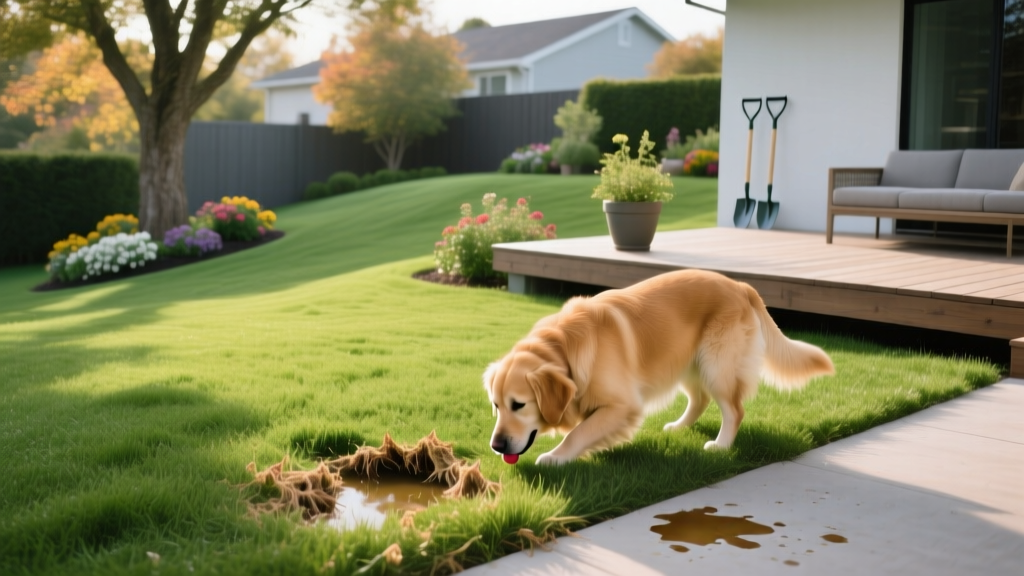
How Do You Keep Dog Urine From Killing Grass? Step-by-Step
The Science of Urine Burn: Why Grass Dies
To understand how do you keep dog urine from killing grass, you must first understand the chemical mechanism causing the damage. The primary culprit is not the pH level of the urine, but the extreme concentration of urea (a nitrogen compound) and soluble salts. Dog urine typically contains 15 to 20 grams of urea per liter. When a dog relieves itself in the same spot repeatedly, the soil receives a massive, localized dose of nitrogen—often exceeding 400 lbs of nitrogen per acre equivalent in that single footprint.
This creates severe osmotic stress. The high salt concentration in the soil draws water out of the grass roots, causing rapid desiccation and cell death, commonly known as 'fertilizer burn.' The center of the spot dies, while the outer ring may turn dark green due to a diluted, beneficial nitrogen dose.
⚠️ The pH Myth: A pervasive landscaping myth claims dog urine is highly alkaline and that feeding dogs tomato juice or apple cider vinegar will acidify their urine to save the lawn. Veterinary science disproves this. Dog urine pH is naturally between 6.0 and 6.5 (slightly acidic to neutral). Attempting to alter your dog's urine pH with supplements like DL-Methionine can cause life-threatening urinary tract stones (struvite or calcium oxalate). Always consult a veterinarian before altering a pet's diet.
Step 1: Immediate Dilution Protocol (The 8-Hour Window)
Dilution is the only proven, immediate solution to prevent urea from burning the root zone. However, a light sprinkle from a hose is insufficient. You must flush the salts past the active root zone (typically 6 to 8 inches deep for cool-season grasses).
- Volume: Apply 1.5 to 2 gallons of plain water per urination spot.
- Timing: Dilution must occur within 8 hours of urination. Once the grass blades show yellowing (usually within 24-48 hours), the cellular damage is irreversible.
- Soil Type Adjustment: For heavy clay soils, apply the water in two 1-gallon intervals spaced 10 minutes apart to prevent surface runoff. Sandy soils can absorb the full 2 gallons immediately.
Step 2: Soil Amendment and Gypsum Application
Repeated urination introduces high levels of sodium into the soil, which destroys soil structure by causing clay particles to bind tightly together, eliminating oxygen and drainage. To counteract this, apply pelletized gypsum (calcium sulfate).
Gypsum works through cation exchange. The calcium ions displace the sodium ions on the soil colloids, allowing the sodium to be flushed away while the calcium improves soil flocculation (crumb structure). Apply a high-quality product like Espoma Organic Garden Gypsum at a rate of 50 lbs per 1,000 square feet in the spring and fall. Water it in deeply with at least 0.5 inches of irrigation to activate the soil chemistry.
Step 3: Selecting Urine-Resistant Grass Cultivars
If you are renovating a lawn or overseeding dead patches, choosing the right turfgrass species is critical. Some grasses possess deeper root systems and higher salt tolerance, allowing them to survive localized urea spikes.
| Grass Species | Urine Tolerance | Root Depth | Best Climate |
|---|---|---|---|
| Tall Fescue (e.g., Jonathan Green Black Beauty) | High | 24 - 36 inches | Cool-season / Transition |
| Perennial Ryegrass | Moderate-High | 12 - 18 inches | Cool-season |
| Bermudagrass | Moderate | 18 - 24 inches | Warm-season |
| Kentucky Bluegrass | Low (Highly Susceptible) | 6 - 12 inches | Cool-season |
According to turfgrass researchers, Tall Fescue (Festuca arundinacea) is the premier choice for dog owners in cool-season and transition zones due to its bunch-type growth habit and deep root mass, which dilutes the impact of surface salts. For warm-season zones, Zoysia grass offers moderate resistance and recovers via stolons, though it is slower to fill in dead spots than Bermudagrass.
Step 4: Landscape Design and Potty Training Interventions
The most effective long-term maintenance procedure is spatial management. Designating a specific 'potty zone' removes the variable of random lawn damage entirely.
- Location Selection: Choose a shaded, low-traffic corner of the yard. Dogs prefer privacy and cooler surfaces for elimination.
- Substrate Preparation: Excavate the area to a depth of 4 inches. Lay down commercial-grade landscape fabric to prevent weed growth, then fill with 3 inches of washed pea gravel or large cedar mulch. Avoid sand, which retains odor, and small gravel, which can be ingested or stuck in paw pads.
- Pheromone Training: Use a commercial dog potty training spray (containing synthetic pheromones) on the substrate daily for the first 14 days. Lead the dog to the spot on a leash immediately after meals and upon waking, rewarding with high-value treats (like freeze-dried liver) immediately upon elimination.
Step 5: Dietary Hydration (Safe Internal Dilution)
While you should never use pH-altering supplements, you can safely reduce the urea concentration in your dog's urine by increasing their baseline water intake. More water intake results in larger urine volume, which naturally dilutes the nitrogen concentration per square inch of lawn.
- Wet Food Integration: Substitute 25% to 50% of your dog's dry kibble with high-quality canned wet food, which contains up to 78% moisture compared to kibble's 10%.
- Kibble Soaking: Add 1/2 cup of warm water or low-sodium, onion-free chicken bone broth to dry meals 10 minutes before serving.
- Ice Cube Treats: Offer frozen ice cubes or frozen low-sodium broth cubes as afternoon treats, especially during summer months when grass is already heat-stressed and more susceptible to burn.
Step-by-Step Recovery Plan for Existing Dead Spots
For spots that have already suffered necrosis (turned completely brown and brittle), dilution will not revive the dead tissue. You must execute a targeted repair protocol. Penn State Extension recommends the following localized renovation steps for optimal seed-to-soil contact:
- Excavation: Use a steel bow rake to aggressively scratch the dead spot, removing all dead thatch and loosening the top 1/2 inch of soil. If the soil is hard-packed from salt accumulation, use a hand cultivator to break the crust.
- Soil Flushing: Drench the bare spot with 2 gallons of water to leach any residual sodium and urea salts out of the seed bed.
- Compost Topdressing: Apply a 1/4 inch layer of screened, aged compost over the bare soil. This introduces beneficial microbes that help break down residual urea.
- Seeding: Sow Tall Fescue seed at a rate of 6 to 8 lbs per 1,000 sq ft (roughly a heavy pinch per 6-inch dead spot). Press the seed into the compost with the back of a rake.
- Moisture Management: Water the spot lightly 3 times a day (morning, noon, and late afternoon) for 14 days. The seed must never dry out during germination. Avoid using the surrounding lawn for dog traffic during this 2-week window.
Frequently Asked Questions
Will baking soda neutralize dog urine on grass?
No. Baking soda (sodium bicarbonate) adds more sodium to the soil, which exacerbates soil compaction and osmotic stress. It does not neutralize urea.
Are commercial 'lawn-saving' dog supplements effective?
Most commercial supplements marketed to save lawns contain Yucca schidigera extract or DL-Methionine. While Yucca may slightly reduce fecal odor, it does not prevent nitrogen burn. DL-Methionine alters urine pH and poses severe urinary stone risks to dogs, as noted by the American Kennel Club. Stick to simple hydration strategies instead.
How long does it take for grass to recover from urine burn?
If the roots are entirely dead, natural recovery via surrounding rhizomes (in Kentucky Bluegrass or Bermudagrass) can take 4 to 8 weeks. For bunch-type grasses like Tall Fescue, the spot will remain bare indefinitely unless manually reseeded using the recovery protocol above.

