
Lawn Care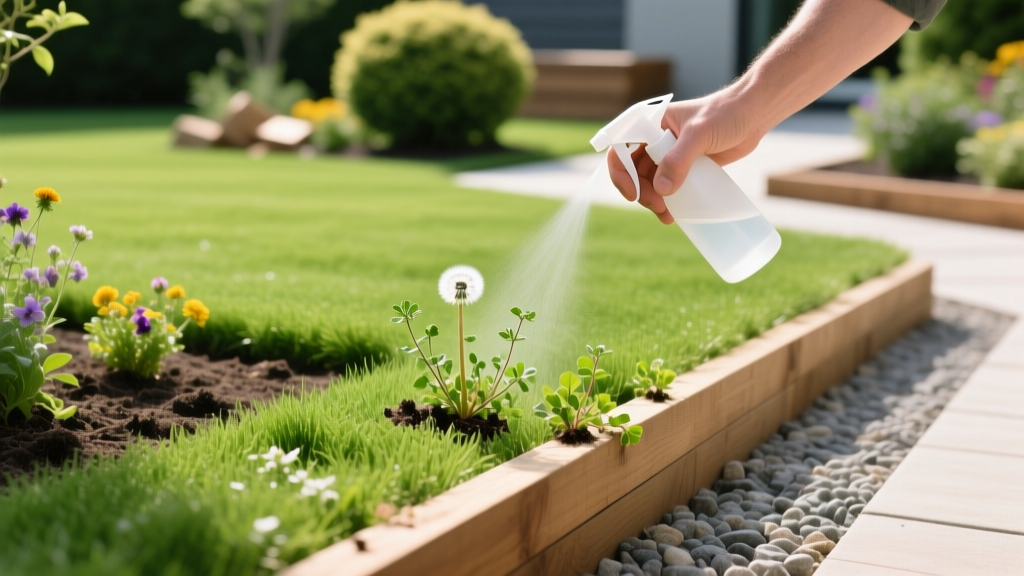
How to Prevent Weeds in Garden Borders: Spot-Treatment Guide
The Anatomy of the Lawn-Garden Weed Invasion
The transition zone between your turfgrass and ornamental garden beds is the most vulnerable vector for weed invasion. Rhizomatous grasses and creeping broadleaves exploit the microclimate shifts, soil disturbances, and irrigation overlaps at these borders. When figuring out how to prevent weeds in garden spaces adjacent to your lawn, you must address the "edge creep" phenomenon. According to the UC Agriculture and Natural Resources IPM program, landscape borders account for over 60% of persistent perennial weed infestations in residential properties because standard broadcast lawn treatments rarely penetrate the dense root zones of garden ornamentals.
⚠ The Edge Creep Data: Bermudagrass (Cynodon dactylon) rhizomes can travel up to 6 feet per season under optimal irrigation. Quackgrass (Elymus repens) can push through 2 inches of standard mulch in just 14 days. Surface-level barriers fail; sub-surface intervention is mandatory.
Pre-Emergent Barrier Strategies for Garden Borders
To stop weed seeds from germinating in the 3-to-5-foot buffer zone between your lawn and garden beds, you need a targeted pre-emergent strategy. Broadcast spraying the entire lawn is inefficient and risks chemical runoff into garden root zones. Instead, use a handheld or backpack sprayer to lay down a concentrated chemical barrier along the perimeter.
Chemical Pre-Emergents: Prodiamine vs. Dithiopyr
For cool-season lawn borders (Fescue, Kentucky Bluegrass), Prodiamine 65 WDG (the active ingredient in Barricade) is the gold standard. It creates a water-insoluble barrier in the top 1/2 inch of soil. Apply at a rate of 0.5 oz per 1,000 square feet for a 4-month barrier. For warm-season borders (Bermuda, Zoysia), Dithiopyr (Dimension) offers a distinct advantage: it provides pre-emergent control but also exhibits early post-emergent activity on crabgrass and annual bluegrass up to the tillering stage, forgiving slight delays in your spring application window.
| Product / Active Ingredient | Cost per 1,000 sq ft | Barrier Duration | Ornamental Safety Profile |
|---|---|---|---|
| Prodiamine 65 WDG | $12.50 | 4 - 6 Months | High (Safe around established trees/shrubs) |
| Dithiopyr (Dimension) | $15.00 | 3 - 4 Months | Moderate (Avoid direct spray on shallow roots) |
| Corn Gluten Meal (Organic) | $28.00 | 4 - 6 Weeks | High (Acts as mild nitrogen fertilizer) |
Spot-Treatment Protocols for Escaped Perennials
When pre-emergents fail or rhizomes bypass physical barriers, you must deploy post-emergent spot-treatments. The challenge at the lawn-garden border is avoiding drift onto sensitive ornamentals. The University of Minnesota Extension emphasizes that shielded spraying and wick applicators are critical for border maintenance.
The Border Weed Decision Tree
- Identify the Invader:
- Sedges (Nutsedge/Kyllinga): Look for triangular stems and rapid growth in moist border zones.
- Rhizomatous Grasses (Bermuda/Quackgrass): Look for thick, white, jointed underground runners crossing the edge line.
- Creeping Broadleaves (Bindfield/Bindweed): Look for vining habits wrapping around garden ornamentals.
- Select the Chemistry:
- For Sedges: Use SedgeHammer+ (Halosulfuron-methyl). Mix one 13.5g packet with 1 gallon of water and 0.5 oz of non-ionic surfactant. Cost: ~$18 per packet. Apply directly to the sedge foliage; it is safe if slight drift hits most warm-season turfgrasses, but shield garden hostas.
- For Creeping Broadleaves in Warm-Season Lawns: Use Celsius WG (Thiencarbazone + Iodosulfuron + Dicamba). Mix 0.085 oz per 1,000 sq ft. This is highly effective against stubborn broadleaves without stunting Bermuda or Zoysia.
- For Rhizomatous Grasses in Cool-Season Lawns: Use Fenoxaprop-p-ethyl (Acclaim Extra) for selective grassy weed control, or deploy a rope wick applicator loaded with 41% Glyphosate to physically wipe the weed blades without spraying the surrounding desirable fescue or garden plants.
- Execute the Application: Spray during early morning when dew is present but drying, and wind speeds are below 5 mph to eliminate particulate drift into the garden beds.
Physical Edging and Mulch Depth Calculations
Chemical controls are temporary without structural reinforcement. To permanently alter the physical environment and deter weed migration, implement the 6/3 Rule for lawn-garden borders.
🔧 The 6/3 Rule for Border Defense
- 6-Inch Trench Edge: Use a half-moon edger or a motorized stick edger to cut a vertical trench 6 inches deep and 4 inches wide along the lawn side of the border. This severs shallow rhizomes and creates a physical void that creeping stolons cannot bridge.
- 3-Inch Mulch Layer: Apply exactly 3 inches of double-shredded hardwood mulch on the garden side. Research shows that less than 2 inches allows light penetration (triggering weed seed germination), while more than 4 inches creates anaerobic conditions that harm ornamental roots and encourage fungal pathogens.
Seasonal Spot-Treatment Calendar
Timing your border interventions is just as critical as the products you use. Follow this seasonal framework to maintain a pristine lawn-garden interface.
- Early Spring (Soil Temp 50°F - 55°F): Re-cut the 6-inch trench edge after winter frost heave. Apply Prodiamine pre-emergent to the border zone. Do not aerate the border zone after this application, or you will break the chemical barrier.
- Early Summer (June): Inspect for Nutsedge and Dallisgrass breakthroughs. Spot-treat with SedgeHammer+ or Celsius WG. Replenish mulch if the layer has decomposed below 2.5 inches.
- Late Fall (Post-First Frost): Apply a post-emergent broadleaf herbicide containing 2,4-D and Triclopyr to the border zone to eliminate overwintering rosettes of dandelion and henbit before they establish deep taproots for the following spring.
Frequently Asked Questions
Can I use landscape fabric under my garden border mulch?
Avoid using woven or non-woven landscape fabric directly adjacent to lawn edges. While it suppresses initial weed growth, wind-blown soil and organic debris accumulate on top of the fabric, creating a perfect seedbed for weeds. Furthermore, aggressive rhizomes like Bermudagrass will simply grow through the fabric's weave, making extraction nearly impossible without tearing the material. Rely on the 3-inch shredded mulch layer and pre-emergent chemicals instead.
Will pre-emergent herbicides harm my newly planted garden perennials?
Prodiamine and Dithiopyr are generally safe around established ornamentals, but they can severely stunt the root development of newly planted perennials, seeds, or bare-root transplants. Maintain a 12-inch buffer zone around new plantings where you rely solely on manual cultivation and mulch, keeping the pre-emergent strictly to the outer lawn-facing perimeter.
How do I treat weeds in the garden bed without killing the adjacent lawn?
If you are treating a weed inside the garden bed and are worried about overspray drifting onto your turfgrass, use a systemic herbicide like Glyphosate applied via a sponge-tipped paint wand or a shielded spray cone. This ensures the chemical only contacts the target weed's foliage and prevents soil residual activity that could harm the lawn's root system.

