
Lawn Care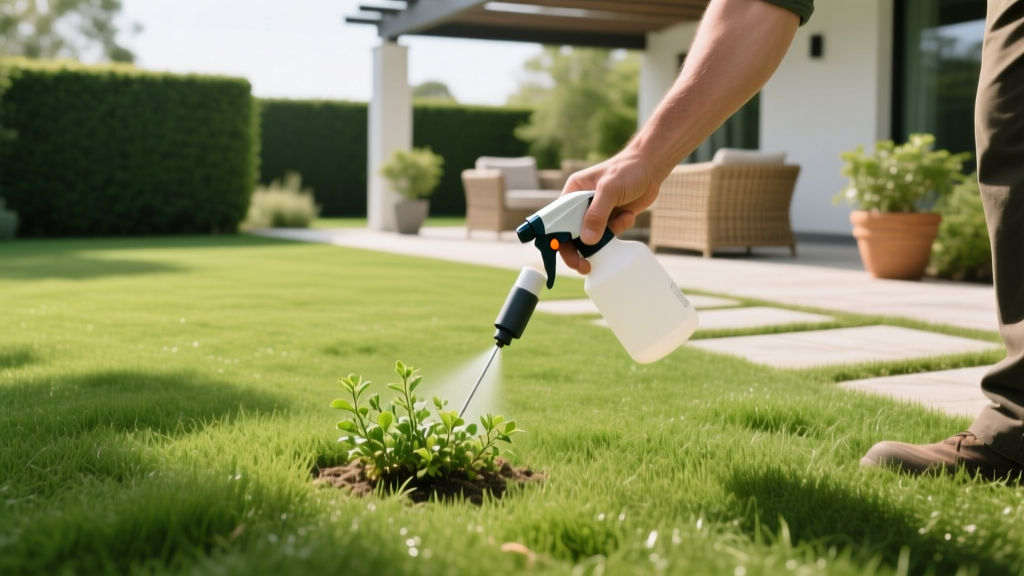
How to Prevent Weeds From Growing Using Spot-Treatment Methods
Learning how to prevent weeds from growing requires shifting from reactive, blanket-spraying to proactive, targeted spot-treatments. Broadcast applications of herbicides waste chemical inputs, stress desirable turfgrass, and accelerate herbicide resistance. By understanding weed life cycles, soil temperature thresholds, and specific active ingredients, homeowners and turf managers can eliminate weeds at their most vulnerable stages while preserving soil health and beneficial microbes.
This guide breaks down the exact chemistry, timing, and application mechanics required to stop weed germination and eradicate existing intruders using precision spot-treatment protocols.
The Soil Temperature Threshold: Timing Your Pre-Emergents
The most critical factor in preventing summer annual weeds like crabgrass (Digitaria sanguinalis) and goosegrass (Eleusine indica) is soil temperature, not calendar dates. According to research from the NC State University Turfgrass Program, crabgrass germination initiates when soil temperatures at a 2-inch depth reach 50°F to 55°F for 48 consecutive hours.
Pro Tip: The 55°F Rule
Do not rely on air temperature. Purchase a dedicated digital soil probe thermometer. Insert it 2 inches into the soil in a sunny, south-facing area of your lawn. Once it reads 53°F consistently in the morning, you have a 7-to-10-day window to apply your pre-emergent barrier before germination begins.
Do not rely on air temperature. Purchase a dedicated digital soil probe thermometer. Insert it 2 inches into the soil in a sunny, south-facing area of your lawn. Once it reads 53°F consistently in the morning, you have a 7-to-10-day window to apply your pre-emergent barrier before germination begins.
Pre-Emergent Active Ingredients for Spot and Perimeter Treatment
While pre-emergents are often broadcast, spot-treating high-risk zones (driveway edges, thin turf areas, and south-facing slopes) saves money and reduces chemical load.
- Prodiamine (Barricade 65 WDG): Creates a vapor barrier in the top 1 inch of soil. Apply at 0.4 oz per 1,000 sq ft for a 4-month residual. Requires 0.5 inches of irrigation within 48 hours to activate.
- Dithiopyr (Dimension 2EW): Unique because it offers early post-emergent control. If you miss the pre-emergent window and crabgrass has reached the 1- to 2-tiller stage, Dimension at 0.5 oz per 1,000 sq ft will abort the seedling's root development.
Spot-Treatment Decision Matrix: Matching Herbicide to Weed Species
When weeds breach the pre-emergent barrier, post-emergent spot-treatment is required. Misidentifying the weed category (broadleaf vs. grassy vs. sedge) is the leading cause of treatment failure. The matrix below outlines the exact active ingredients required for specific turf intruders in cool-season and warm-season lawns.
| Weed Category | Target Species | Active Ingredient | Commercial Brand | Rate per 1,000 sq ft |
|---|---|---|---|---|
| Broadleaf | Dandelion, Clover, Plantain | Carfentrazone + 2,4-D + MCPP + Dicamba | SpeedZone Broadleaf | 1.5 fl oz |
| Grassy | Nimblewill, Creeping Bentgrass | Mesotrione | Tenacity | 1/3 tsp (0.08 oz) |
| Sedge | Yellow Nutsedge, Purple Nutsedge | Halosulfuron-methyl | SedgeHammer+ | 0.9 grams (1 packet) |
| Broadleaf | Wild Violet, Ground Ivy | Triclopyr + Fluoroxypyr | T-Zone SE | 2.0 fl oz |
Post-Emergent Spot Spraying: The 3-Leaf Rule and Surfactant Chemistry
Applying the correct herbicide is only half the battle; the physical application mechanics dictate success. Post-emergent systemic herbicides must be absorbed through the foliage and translocated to the root system.
The 3-Leaf Rule
According to Penn State Extension, treating annual weeds when they are mature significantly reduces herbicide efficacy. The optimal window for spot-treatment is the 3-leaf to 5-leaf stage. At this stage, the weed's cuticle (waxy outer layer) is thin, allowing rapid chemical absorption, and the plant is actively translocating nutrients to its developing root system, carrying the herbicide directly to the crown.
Surfactant Selection: NIS vs. MSO
Water alone has high surface tension and will bead up on waxy weed leaves, rolling off and wasting the chemical. You must use a surfactant (surface-active agent) to break this tension.
- Non-Ionic Surfactant (NIS): Use for standard broadleaf weeds (dandelions, clover). NIS reduces surface tension, allowing the spray droplet to spread flat across the leaf. Mix at 0.25% v/v (approx. 1 teaspoon per gallon of water).
- Methylated Seed Oil (MSO): Use for stubborn, thick-cuticle weeds like wild violet or mature goosegrass. MSO actively dissolves the waxy cuticle, driving the active ingredient into the plant tissue. Mix at 0.5% to 1.0% v/v (approx. 1 to 2 tablespoons per gallon).
Warning: Herbicide Resistance and Rotation
Repeatedly using the same Mode of Action (MoA) on the same patch of weeds leads to genetic resistance. Annual bluegrass (Poa annua) and goosegrass have developed widespread resistance to ALS-inhibitor herbicides. Always check the Herbicide Resistance Action Committee (HRAC) group number on the label and rotate chemical classes annually.
Repeatedly using the same Mode of Action (MoA) on the same patch of weeds leads to genetic resistance. Annual bluegrass (Poa annua) and goosegrass have developed widespread resistance to ALS-inhibitor herbicides. Always check the Herbicide Resistance Action Committee (HRAC) group number on the label and rotate chemical classes annually.
Equipment Calibration for Precision Spot Spraying
Most homeowners guess their pump sprayer output, leading to under-dosing (which breeds resistance) or over-dosing (which burns desirable turf). Calibrating a 1-gallon or 2-gallon pump sprayer takes exactly five minutes.
- Mark a 100 sq ft area: Measure a 10x10 foot square on your driveway using chalk.
- Spray with water: Fill your sprayer with plain water. Walk at your normal, steady spraying pace, covering the 10x10 area evenly.
- Measure the output: Pour the remaining water from the sprayer into a measuring cup. If you used 20 ounces of water to cover 100 sq ft, your output is 20 ounces per 100 sq ft.
- Calculate the mix: To treat 1,000 sq ft, you need 200 ounces (1.56 gallons) of total solution. If the herbicide label calls for 1.5 fl oz per 1,000 sq ft, mix 1.5 fl oz of chemical into 1.56 gallons of water in your tank.
Cultural Defenses: Thickening the Canopy to Block Germination
Chemical spot-treatments manage existing problems, but cultural practices dictate how to prevent weeds from growing long-term. Weeds are opportunistic; they require sunlight hitting the soil surface to trigger germination.
Mowing Height and Canopy Density
Raising your mower deck is the single most effective non-chemical weed prevention strategy. Research demonstrates that mowing Tall Fescue at 3.5 to 4.0 inches reduces crabgrass germination by up to 45% compared to mowing at 2.0 inches. The taller grass blades cast a dense shadow over the soil, physically blocking the photoblastic germination signals that weed seeds require to sprout.
Overseeding with Competitive Cultivars
When spot-treating large dead patches left by weeds, do not leave bare soil. Overseed immediately with aggressive, rhizomatous turfgrass cultivars. For cool-season lawns, look for RTF (Rhizomatous Tall Fescue) or Midnight Kentucky Bluegrass. These varieties spread laterally via rhizomes, knitting the canopy together and physically choking out late-season weed seedlings before they can establish a taproot.
Frequently Asked Questions
Can I mix pre-emergent and post-emergent herbicides in the same sprayer?
Yes, this is known as a 'tank mix' and is highly effective for spring applications. Mixing Prodiamine (pre-emergent) with a broadleaf post-emergent like SpeedZone allows you to kill existing spring dandelions while simultaneously laying down a chemical barrier to prevent summer crabgrass. Always add the water first, then the dry flowables (WG), then the liquid concentrates (EC/SL), and finally the surfactant, agitating between each addition.
How long after a spot-treatment can I mow my lawn?
Wait at least 48 hours after applying a post-emergent systemic herbicide. Mowing too soon removes the treated leaf tissue before the chemical has time to translocate down to the weed's root crown, resulting in a failed treatment and a rapid regrowth of the weed.

