
Lawn Care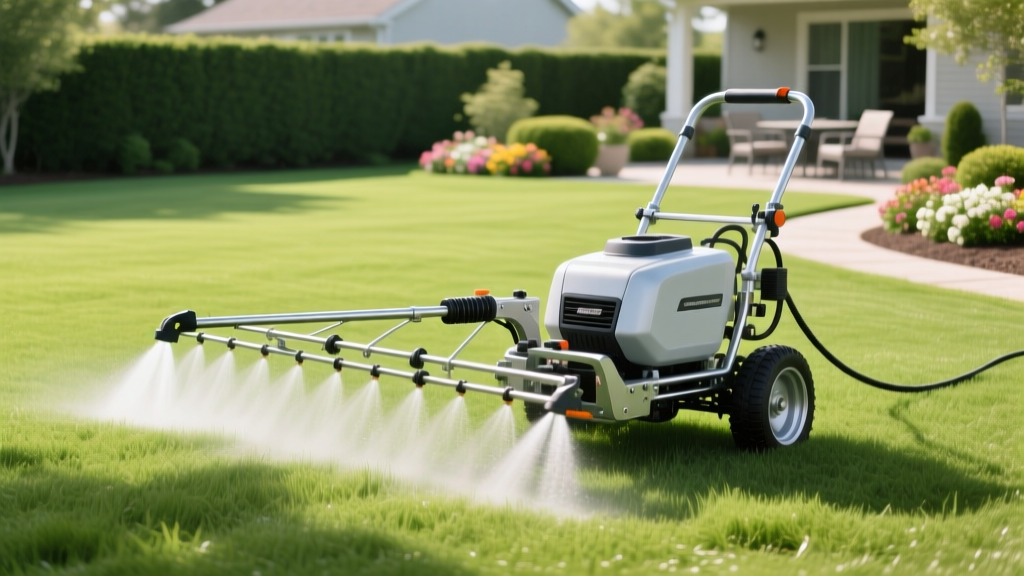
Top Pull Behind Sprayer with Boom Setups for Large Lawns (2026)
Why a Pull Behind Sprayer with Boom Beats Spot Spraying
Managing turfgrass health across properties exceeding one acre requires precision that handheld wands and broadcast spreaders simply cannot deliver. A pull behind sprayer with boom transforms your lawn tractor or ATV into a commercial-grade application rig. The primary advantage is application uniformity. When applying post-emergent herbicides like Tenacity (mesotrione) or liquid nitrogen solutions (UAN 28%), uneven overlap from handheld spraying leads to chemical burn in some zones and untreated weeds in others. A properly calibrated boom setup guarantees consistent droplet distribution, reducing chemical waste by up to 22% compared to manual spot-spraying methods.
Furthermore, modern 12V diaphragm pump systems paired with poly-folding booms allow homeowners to cover 2 to 3 acres per hour at a steady 3 MPH walking pace. This efficiency is critical during the narrow 10-day application windows required for pre-emergent crabgrass barriers in early spring and fall grub control treatments.
2026 Equipment Matrix: Top Pull-Behind Boom Configurations
Selecting the right chassis and tank size depends on your property topography and storage constraints. Below is a comparison of the most reliable pull behind sprayer with boom configurations available for the 2026 season, focusing on pump durability and boom stability.
| Model / Setup Configuration | Tank Capacity | Pump Type & Pressure | Boom Width | Avg. Price (2026) | Best Application Scenario |
|---|---|---|---|---|---|
| Master MFG 25-Gal Deluxe Boom | 25 Gallon | 12V Diaphragm (60 PSI Max) | 46 inches | $380 - $420 | Flat suburban lawns (1-2 acres) |
| Northern Tool Ironton 15-Gal | 15 Gallon | 12V Diaphragm (70 PSI Max) | 40 inches | $290 - $330 | Small lots with tight gate clearances |
| Custom Bigham Ag 7ft Boom Kit | User Supplied (50+ Gal) | Flojet LFP3112 (100 PSI) | 84 inches | $450 - $600 (Kit only) | Large estates, pastures, and sports fields |
| Chapin 20-Gallon Tow-Behind | 20 Gallon | 12V Centrifugal (45 PSI) | 54 inches | $250 - $280 | Budget-conscious liquid fertilization |
Expert Insight: Pump Selection
Always prioritize 12V diaphragm pumps (like those made by Flojet or Shurflo) over cheap centrifugal pumps for herbicide applications. Diaphragm pumps can run dry without immediate catastrophic failure and maintain consistent pressure at low flow rates, which is essential when spraying viscous liquid fertilizers or suspended wettable powders.
The Nozzle Matrix: Matching TeeJet Tips to Herbicides
The most critical component of your pull behind sprayer with boom is not the tank or the pump; it is the nozzle. Using the wrong nozzle tip will result in herbicide drift, poor canopy penetration, or severe turf burn. For residential lawn care, we exclusively recommend TeeJet Technologies nozzles due to their precise manufacturing tolerances.
Recommended Nozzle Configurations
- TeeJet AIXR11003 (Air Induction Extended Range): The gold standard for systemic herbicides like glyphosate or 2,4-D amine. These produce large, air-filled droplets that resist wind drift while providing excellent coverage. Ideal operating pressure: 30-40 PSI.
- TeeJet XR11004 (Extended Range Flat Fan): Best for liquid fertilizers (UAN) and soil-applied pre-emergents like Prodiamine. The smaller droplet size ensures better soil penetration and uniform distribution. Ideal operating pressure: 20-30 PSI.
- TeeJet TT11004 (Turbo TeeJet): Excellent for contact fungicides (like Azoxystrobin) where dense canopy penetration is required to coat the grass blade from tip to soil line.
Never mix nozzle types or sizes on the same boom. Even a slight variance in flow rate across the boom will create visible striping in your turfgrass within 48 hours of application.
Step-by-Step Calibration: The Ounce-Catching Method
According to Penn State Extension's guide on boom sprayer calibration, the 1/128th acre method remains the most accurate field calibration technique. This method mathematically simplifies the process so that the number of ounces caught from a single nozzle directly equals the Gallons Per Acre (GPA) output of the entire boom.
Calibration Procedure
- Measure the Course: Determine the distance required to spray 1/128th of an acre based on your nozzle spacing. For standard 20-inch nozzle spacing, measure a course exactly 204 feet long. For 18-inch spacing, measure 227 feet.
- Time the Drive: Fill the tank with clean water. Drive the measured course at your exact application speed (usually 3 MPH) and record the time in seconds.
- Catch the Output: Park the tractor. Place a calibrated graduated cylinder under one nozzle. Turn on the boom and catch the spray for the exact number of seconds it took to drive the course.
- Calculate GPA: The number of fluid ounces collected equals your GPA. If you catch 15 ounces, your sprayer is applying 15 Gallons Per Acre.
Adjusting for Target GPA
If your target label rate requires 20 GPA but you are only catching 14 ounces, do not simply increase the pump pressure. High pressure shatters droplets, creating drift-prone mist. Instead, either slow your driving speed to 2.2 MPH or step up to a larger nozzle orifice (e.g., moving from a 03 tip to a 04 tip).
For a deeper dive into the mathematical formulas behind sprayer calibration, the University of Minnesota Extension provides excellent worksheets for adjusting flow rates based on varying tractor speeds and nozzle spacing configurations.
Winterization and 12V Diaphragm Pump Maintenance
The leading cause of pull behind sprayer failure is cracked pump housings due to freezing water. A replacement Flojet 12V diaphragm pump costs upwards of $180, making proper winterization a mandatory end-of-season task.
The RV Antifreeze Protocol
Never use automotive antifreeze (ethylene glycol) in your lawn sprayer. It is highly toxic to soil biology, pets, and local waterways. Always use pink RV antifreeze, which is formulated with propylene glycol and is environmentally safe.
- Drain the main tank completely and rinse it with clean water to remove chemical residues.
- Disconnect the suction hose from the tank and place it into a jug of pink RV antifreeze.
- Turn on the pump and engage the boom until you see the pink fluid exiting all nozzles on the boom.
- Shut off the boom valve, but leave the pump running for 10 seconds to bypass the antifreeze through the pressure relief valve, ensuring the internal bypass chambers are also protected.
- Disconnect the battery leads to prevent parasitic drain and accidental dry-running over the winter.
Troubleshooting Common Boom Pressure Drops
If your pull behind sprayer with boom is experiencing pressure fluctuations, streaking, or failure to prime, run through this diagnostic checklist before replacing parts:
- Suction Strainer Clogs: Located between the tank and the pump. If you are spraying wettable powders or granular liquid suspensions, the 50-mesh strainer can blind over. Remove and rinse it after every third tank load.
- Voltage Drop at the Harness: 12V diaphragm pumps require a solid 12.5V to reach rated pressure. If your tractor's accessory port is outputting only 11V due to long, thin-gauge wiring, the pump will stutter. Upgrade the sprayer wiring harness to 12-gauge copper wire and install a dedicated 15-amp inline fuse.
- Pressure Regulator Bypass Leaks: If the boom pressure gauge reads 20 PSI but the pump sounds like it is working at 60 PSI, the bypass valve is stuck open. Disassemble the bypass housing and clean out any crystallized fertilizer deposits blocking the check valve.
- Nozzle Check Valve Failure: If nozzles continue to drip after the boom is shut off, the internal diaphragm check valves (if equipped) are fouled with debris. Replace the EPDM rubber seals to prevent chemical dripping that causes localized turf burn when the rig is parked.
Investing in a high-quality pull behind sprayer with boom and maintaining it with commercial-grade discipline will yield a turfgrass canopy that rivals professionally managed golf course fairways. Precision calibration, correct nozzle selection, and rigorous winterization are the three pillars of long-term equipment reliability.

