
Lawn Care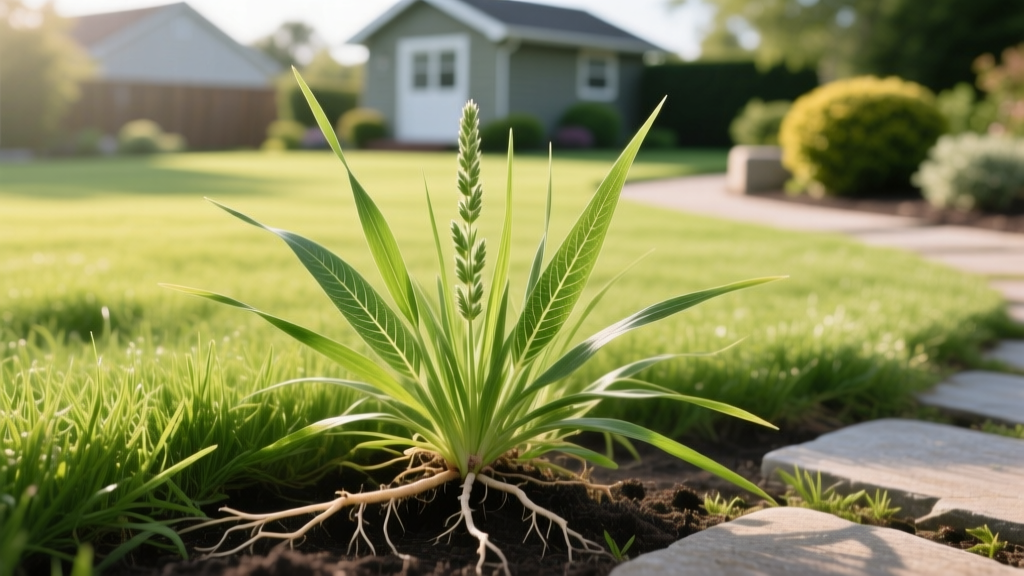
Quackgrass Picture Guide: Step-by-Step Identification and Control
The Challenge of Quackgrass in Modern Lawns
Quackgrass (Elymus repens, formerly Agropyron repens) is one of the most aggressive and difficult-to-control cool-season perennial weeds in North America. Unlike annual weeds that die off with the first frost, quackgrass survives and spreads through a massive, deep underground network of rhizomes. When homeowners search for a quackgrass picture online, they are usually trying to confirm an infestation after noticing thick, coarse, pale-green blades overtaking their desirable turf. However, visual identification from a distance is notoriously unreliable. To properly identify and eradicate this weed, you must look at specific microscopic and structural features, then execute a targeted, multi-step removal protocol.
Visual Identification Checklist
When examining a quackgrass picture or inspecting your lawn, look for these three definitive markers:
- Clasping Auricles: This is the most reliable identifier. Pull a leaf blade away from the stem and look at the collar (where the leaf meets the stem). Quackgrass has distinct, claw-like, whitish appendages called auricles that clasp the stem. No other common lawn weed has this feature.
- Hollow Stems: Roll the stem between your fingers. Quackgrass stems are round and hollow, whereas many grassy weeds like crabgrass have flattened or solid stems.
- Rhizome Network: Dig up a small clump. You will see thick, white or pale-yellow, scaly underground stems (rhizomes) that snap cleanly when broken.
Quackgrass vs. Look-Alike Weeds: A Comparison Matrix
Misidentifying quackgrass as crabgrass or tall fescue leads to failed control attempts. Crabgrass is an annual controlled by pre-emergents, while tall fescue is a desirable (though sometimes clumpy) cool-season turfgrass. Use this matrix to differentiate them before applying any herbicides.
| Feature | Quackgrass | Crabgrass | Tall Fescue |
|---|---|---|---|
| Life Cycle | Perennial | Summer Annual | Perennial |
| Auricles (Collar) | Present (Clasping) | Absent | Absent |
| Root Structure | White scaly rhizomes | Fibrous, shallow roots | Deep fibrous roots |
| Growth Habit | Upright, spreading patches | Prostrate, star-like | Upright, bunch-type |
| Primary Control | Non-selective herbicide + digging | Pre-emergent herbicide | Mowing & overseeding |
For authoritative botanical profiles and regional spread data, consult the University of Minnesota Extension and the Penn State Extension turfgrass databases.
Step-by-Step Quackgrass Eradication Protocol
Because quackgrass is a perennial grassy weed, selective broadleaf herbicides (like 2,4-D or Dicamba) will not harm it. You must use a non-selective systemic herbicide or rigorous mechanical removal. Follow this exact procedure to ensure the rhizome network is destroyed.
Step 1: Targeted Chemical Application
- Select the Herbicide: Use a glyphosate-based product with at least a 41% active ingredient concentration (e.g., Roundup Pro Concentrate or Compare-N-Save Grass and Weed Killer).
- Mix the Solution: For spot treatments, mix 2.5 fluid ounces of 41% glyphosate concentrate per 1 gallon of water. Add a non-ionic surfactant (0.5 oz per gallon) if the product does not already contain one; this breaks the surface tension of the waxy quackgrass leaf blade.
- Apply Carefully: Use a pump sprayer with a shield attachment or a sponge applicator to paint the herbicide directly onto the quackgrass blades. Warning: Glyphosate is non-selective and will kill your desirable turfgrass on contact.
- Wait 7 to 10 Days: Glyphosate is systemic. It must translocate from the leaves down into the rhizomes. Do not mow or water the treated area during this window.
Step 2: Mechanical Rhizome Extraction
Chemical treatment alone rarely kills 100% of the rhizome network, especially in compacted soils where herbicide translocation is stunted. Once the foliage turns completely brown and brittle (usually day 10-14), mechanical removal is required.
- Moisten the Soil: Water the dead patch deeply the night before to soften the soil.
- Dig Deep: Use a sharp, flat-edged garden spade. You must dig at least 6 to 8 inches deep. Quackgrass rhizomes typically reside in the top 4 inches of soil, but drought conditions can drive them deeper.
- Sift and Remove: Shake the soil from the root mass. Every white, scaly fragment left behind can generate a new plant. Dispose of the rhizomes in municipal yard waste bags; never compost them, as home compost piles rarely reach the 140°F required to kill perennial weed propagules.
Step 3: Soil Solarization (For Large Infestations)
If quackgrass has overtaken more than 20% of your lawn, spot treatment and digging become economically and physically unfeasible. In this scenario, utilize soil solarization during the peak heat of July and August.
- Mow the infested area as short as your mower allows (under 1 inch).
- Water the soil deeply to a depth of 12 inches.
- Cover the area with clear, 2-mil to 4-mil thick polyethylene plastic sheeting. Bury the edges in a 6-inch trench to seal it.
- Leave the plastic in place for 4 to 6 weeks. The trapped solar radiation will raise soil temperatures to 130°F+ in the top 2 inches, effectively cooking the rhizomes and sterilizing the soil.
Post-Eradication Lawn Recovery
Once the quackgrass is dead and removed, you must immediately establish desirable turf to prevent new weeds from colonizing the bare soil.
Recovery Action Plan
- Soil Amendment: Add 1 inch of high-quality compost or topsoil to the excavated areas to level the grade.
- Seeding: Overseed with a competitive, rhizomatous turfgrass like Kentucky Bluegrass (KBG). KBG spreads via rhizomes and will naturally outcompete future weed incursions. Apply seed at a rate of 2 to 3 lbs per 1,000 sq ft.
- Fertilization: Apply a phosphorus-rich starter fertilizer (e.g., Scotts Turf Builder Starter Food 24-25-4) at the time of seeding to accelerate root development.
- Pre-Emergent Defense: Do not apply a pre-emergent herbicide like Prodiamine (Barricade) if you are planting new grass seed, as it will inhibit turfgrass germination. Wait until the new grass has been mowed at least three times before applying a pre-emergent to protect against future weeds.
Frequently Asked Questions
Can I use selective herbicides like Tenacity or Mesotrione on quackgrass?
No. Tenacity (mesotrione) is highly effective against creeping bentgrass, nimblewill, and crabgrass, but it provides only temporary suppression of quackgrass, not complete control. Glyphosate remains the only reliable chemical option for home lawn owners.
Will vinegar or organic herbicides kill quackgrass?
Horticultural vinegar (20% to 30% acetic acid) acts as a contact burn-down agent. It will rapidly desiccate the leaf blades of quackgrass, but it will not translocate to the rhizomes. The weed will simply regrow from the root system within 10 to 14 days. Organic contact herbicides are ineffective against deep-rooted perennial grasses.
How does quackgrass spread between lawns?
Quackgrass spreads locally via its aggressive rhizomes, which can grow up to 4 feet per year laterally. Long-distance spread occurs via seed, but more commonly through contaminated sod, shared aeration equipment, or topsoil deliveries. Always inspect new sod and soil amendments for the tell-tale white, scaly rhizomes before laying them on your property.

